
‘Only rich people can afford pets’
Another Auckland pet owner told the Herald that “only rich people can afford pets” after she spent close to $20,000 trying to keep her beloved older cat alive after an accident.
Her two small dogs and a young cat are also an ongoing expense, and she says it pays to shop around for quotes from vet clinics. She got two quotes to immunise her young cat: $120 and $160.
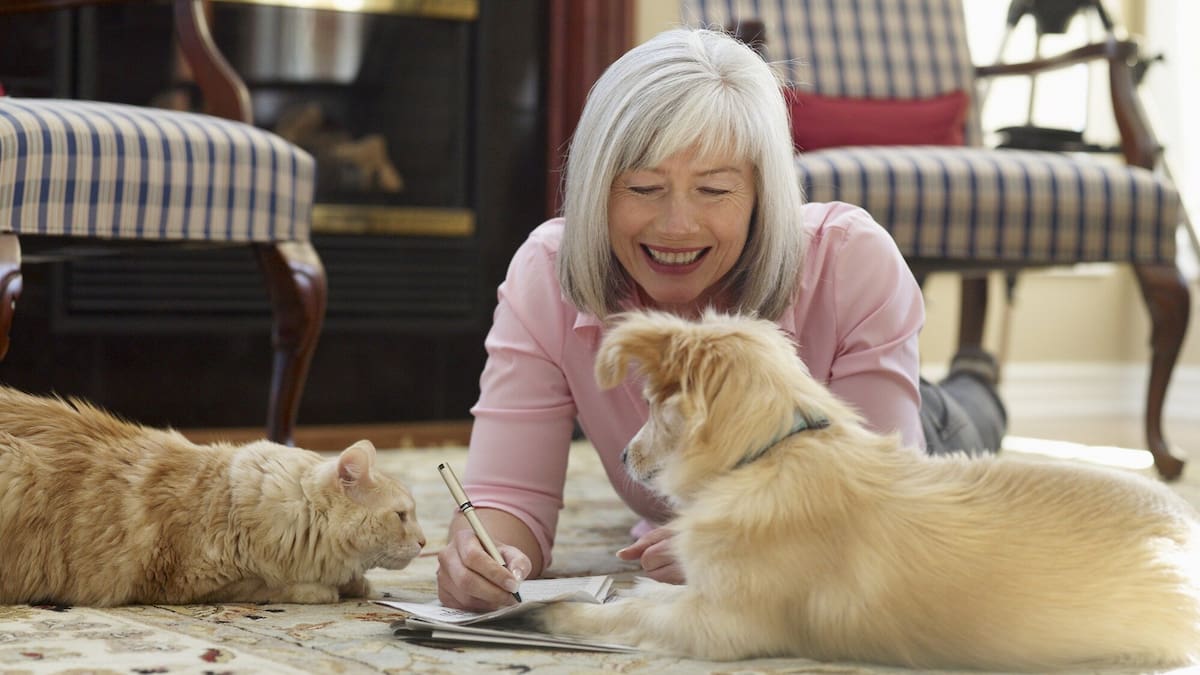
Pets are cute when they’re young and in good health, but can become costly when things go wrong. Photo / 123rf
When her local vet quoted $1500, including an anaesthetic, for dental work on one of her dogs, she found another who did the procedure under anaesthetic for $400.
This year, she was charged nearly $170 to have a prescription emailed to an online pet pharmacy, and another $150 for the medication itself.
She questioned how an elderly person on superannuation could afford to keep a pet.
“I hate to think what the mental health statistics would be without these companions. How can they afford that sort of money? Who’s missing out here? It’s the animals.”
She also questioned whether there was an element of “opportunism” involved in vet charges, depending on the location of the clinic.
A retired Auckland businessman was astounded to find thousands of dollars’ difference in quotes from two vets for the same operation on his dog. After his Border Collie-cross developed an occasional limp in a hind leg, he was charged $400 by a specialist Auckland vet for a consultation, and quoted $8000 if an operation to fix a stifle joint (like a human knee) was needed.
Seeking a second opinion, he drove 50 minutes to a Franklin vet who charged $95 for a consultation and quoted $4000 for the operation. However, after an examination and X-rays, that vet concluded the operation wasn’t needed.
Former companion animal vet Felicity Jefferies says pet owners need to feel they are getting value from the services the vet is providing. She’s now head of veterinary services, companion animals, for the New Zealand Veterinary Association and advises owners to have “open and frank conversations” with their vets about treatment options and costs.
Felicity Jefferies, pictured with her Golden Retriever Aoife, recommends having open and frank discussions with vets about treatment options and costs.
As a life-long pet owner in Manawatū – currently one dog, one cat and two horses – Jefferies is well used to the cost of animal care.
“Most importantly, people need to find a vet that they click with and that they trust.”
If not, they should shop around, but not just consider the price, she says. Ask about different treatment options and compare what is included in the price. Pet owners can also use payment facilities such as Vetcare Finance or Q Card to help with costs.
The veterinary industry is quick to point out that bills are high because they reflect the cost to vets, including:
running clinics, many of which are as sophisticated as small hospitals specialist vets and staff hi-tech equipment like X-rays, CT and MRI scans and ultrasound unlike humans, who may enjoy subsidised or free medical treatment and drugs, nothing in the animal world is subsidised.
Rebecca Dobson, head of community operations for the SPCA, has worked as a vet nurse in New Zealand, Australia and the United Kingdom, all countries in which people benefit from a subsidised medical system.
“People are used to a public system that is paid for by the government, so when they get a bill for their pet, often for very similar treatments, they are shocked. It can be very expensive.”
Get pet insurance
Dobson’s advice is to take out insurance as soon as the pet arrives in the household. Most pet insurance companies won’t cover pre-existing conditions that may develop as the animal gets older, and won’t insure pets after a certain age.
Rebecca Dobson, head of community operations for the SPCA, with her Golden Retriever Piper, who died from kidney disease.
Shop around, compare policies and choose one that is right for you and your pet.
Dobson insured her own dog, a move she says has been a lifesaver. “I am incredibly grateful because he’s had some skin allergies and I don’t know what I would have done if I didn’t have pet insurance.”
One young pet owner took out insurance for $56 a month when she got her Cocker Spaniel Huffalump (Hef). Within the first year of his life, Hef had clocked up hefty vet bills for a dog attack, a urinary tract infection, irritable bowel disease, embedded grass-seed injuries and neutering.
Heffalump the Cocker Spaniel racked up thousands of dollars in vet bills in the first year of his life.
The owner told the Herald that, without pet insurance, which had now risen to $84 a month because of the number of claims, her plans to buy a home would have been derailed.
Jefferies agrees that pet insurance helps to ease financial pressure when medical issues arise.
“There are so many things like our cars and homes that we insure without thinking about it.”
She points out that vet practices have become more sophisticated, offering “human-grade” technology and specialist treatment in areas like oncology. But those treatments come at a higher cost, and expectations are higher.
Southern Cross Pet Insurance, which insures 65,000 Kiwi pets, reports claims of between $10,000 and $15,000 (for an issue with a Pomeranian) paid out last year for various breeds of dogs. High-end claims for cats ranged from $5000 to $11,000 (for an issue with a Ragdoll).
But the actual costs can be much higher. Australian insurance company Petsure’s 2025 Pet Health Monitor lists the three most common health conditions for dogs, aged between 1 and 8, and the highest claims in a 12-month period: skin infections/allergies, $25,620; ear infections, $24,950; gastrointestinal conditions, $45,420.
For cats, aged between 1 and 8, the three most common conditions and highest costs were gastrointestinal, $32,600; urinary tract disorders, $40,190; and eye conditions, $23,870.
Anne Batley-Burton, founder of the cat rescue organisation the New Zealand Cat Foundation, knows all too well the cost of caring for cats. She runs a sanctuary at Huapai and, at one stage, was paying between $10,000 and $15,000 a month in vet bills, which she found through sponsorship, fundraising and SPCA subsidies. But more often than not, she made up the shortfall herself.
Anne Batley-Burton, founder of the New Zealand Cat Foundation, runs a cat sanctuary in Huapai.
She told the Herald she was inundated with calls from people wanting her to take their unwanted cats and kittens.
Most were unvaccinated and needed a “snip and chip”: desexing and microchipping.
More recently, she had relied on the services of a cat-loving in-house vet, which helped to lower the monthly bills.
Spending millions on desexing
The SPCA spends millions of dollars a year on desexing more than 30,000 animals, including those that have later been adopted out.
The organisation runs a voucher system for cat rescue groups. However, Batley-Burton says that, even with a $70 or $80 voucher, many vets charge extra: $70 for desexing and an additional $55 for the microchipping, even when her organisation supplies the microchip and registers the cat on the New Zealand Companion Animal Register (NZCAR). Added to that is $75 each for two vaccinations.
She wants the Government and local bodies to fund free desexing and microchipping so that pet owners can at least get the basics done.
“It would make a massive difference. There are thousands of cats out there that aren’t desexed.”
The New Zealand Cat Foundation sanctuary for stray and rescued cats at Huapai, run by Anne Batley-Burton.
The SPCA also runs a voucher system to help owners struggling with the cost of desexing and microchipping. Its Snip ‘n’ Chip campaigns run throughout New Zealand at different times of the year, allocating vouchers towards desexing, microchipping and registration. Cat owners pay $30 to vets affiliated with the scheme, and the voucher covers the rest.
This month, the SPCA launched a $1.2 million programme to desex roaming dogs in Auckland and Northland over the next 12 months. Almost $500,000 will come from the Lottery Minister’s Discretionary Fund, and the SPCA has contributed $700,000.
In an effort to reduce the stray dog and cat populations in South Auckland, vet Jo Lin Chia opened the cut-price Mog and Dog Desexing Clinic in Manukau last month. Chia, who owns Lynfield Vets and another Mog and Dog clinic in Whangārei, charges $60 for microchipping, including registration, in the new clinic. By comparison, one Auckland vet quoted $115 for the same service.
Veterinarian Jo Lin Chia outside her Mog and Dog Desexing Clinic in Whangārei.
Desexing a female cat at Mog and Dog is $95, and $70 for a male. Other clinics charge up to $300 for a female cat and $160 for a male. Desexing a female dog weighing 10kg or more is $350, and $300 for a male at Mog and Dog. Other clinics charge $600 or more.
Dr Justine Alley, a lead vet for The Strand Veterinarian in Parnell, Auckland, points out that different clinics operate with different resources and philosophies. Each serves a purpose for different families’ needs and budgets.
Lower‑cost clinics often rely on high daily caseloads, meaning less time for each patient and fewer staff available at each stage of care, she says. Higher-cost clinics typically invest in more team members, advanced equipment, and longer appointment times.
Higher fees don’t necessarily mean higher profits, because of the extra costs involved, she says. Her clinic’s current prices for desexing reflect the true cost of providing a safe and comfortable procedure.
“Especially for females, where the procedure is more involved – think hysterectomy for a woman.”
The clinic’s vets decided to provide high-level care, rather than cut-price procedures, after going through such surgeries with their own pets, she says.
Owning a pet is not a right
Jefferies says pet ownership is a responsibility and not a right, and should be considered carefully. That includes caring for a pet for as long as 16 years, paying for insurance or medical costs, food and expenses such as vaccinations and registration, and providing shelter, exercise and companionship.
“It’s not just a financial commitment, it’s a family member.”
Dobson agrees, saying people need to prioritise their pet rather than spending money on other things.
“They are a living, breathing sentient animal. We want them to be looked after.”
Debbie considers herself lucky to have had the means to pay her beloved dog’s vet bills.
“It has set me back paying my mortgage, but I didn’t have to take out a loan or spend on my credit card.
“There was no way I could lose another dog in such a short space of time. Because of the revolving credit, I didn’t have to make a decision based on finances. To have him still here with me is more a blessing than anything. I wouldn’t be without him.”
* Name has been changed to protect identity
Jane Phare is a senior journalist based in Auckland.