
The Greens have not said exactly how much the rest of the package costs or how it should be paid for, but they have suggested redirecting the $130m in funding not yet spent by NZ Transport Agency Waka Kotahi (NZTA) on state highway improvements, the line of funding the transport agency uses to build new roads.
Axing that funding line would put a stop to some road construction, at least until the next transport budget was agreed by NZTA.
The Green Party also suggested six other infrastructure projects it believed should be axed, with about half in the Auckland area. t
They include:
• Liquified Natural Gas import terminal – $1 billion
• Second Mount Victoria Tunnel – $2.9-$3.8b
• SH1 Warkworth to Te Hana – $1.7–$2.1b
• Mill Road – $1.8b
• East-West Link – $3.7-4.1b
• Subsidising oil and gas exploration (the Government disputes these are subsidies) – $200m
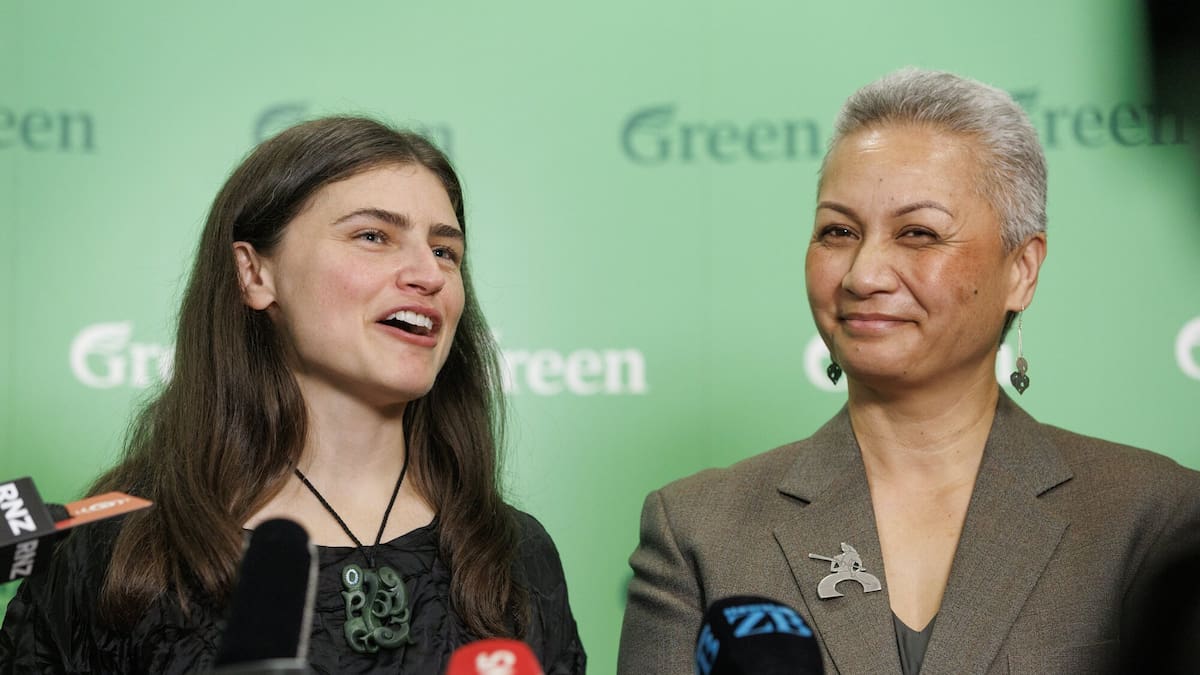
In the letter, Green co-leaders Chlöe Swarbrick and Marama Davidson noted the Greens and National had sufficient votes in Parliament to pass the package without needing the votes of other parties.
They said the package would “support our country through the fossil-fuel crisis, targeting support to those who need it most and reducing demand for petrol”.
It is unlikely the offer will be taken up, however. The letter takes a jab at Luxon over the currently high unemployment rate. Tongue-in-cheek letters are often used by parties, including National, to make political points without their authors believing their offers will ever be taken up.
It is unclear how much support the letter would get among other parties. Labour has prosecuted the coalition Government over disrupting the infrastructure pipeline and declining job numbers in the construction sector. The Greens’ proposals would further disrupt the pipeline and potentially employment in the sector.
There are thorny politics behind the letter, with Transport Minister Chris Bishop saying that “hard choices lie ahead” when speaking about how and when the Government’s roading programme will be delivered. It’s widely understood the Government will delay and re-phase some of its roads when Bishop publishes the Major Transport Projects Pipeline shortly.
Separately, the Government announced $52.7m in zero-interest loans to help increase the EV charging network, with co-investment from ChargeNet and Meridian Energy.
Senior National MPs posing beside their transport plan on the 2023 campaign. Photo / Mike Scott
Bishop, announcing the scheme with Finance Minister Nicola Willis and Energy Minister Simon Watts, compared it to the ultrafast broadband rollout under the last National-led Government.
ChargeNet and Meridian Energy were selected to partner with the Government through a contestable, value-for-money bid process, the ministers said. Both companies are co-investing a combined $60m, bringing the total investment, including the loans, to over $110m.
“Concessionary loans bring forward private investment in public EV [electric vehicle] charging infrastructure by lowering the cost of capital, while keeping the taxpayer’s contribution to a minimum,” Bishop said.
The Government said the new charge points will include 1374 DC fast chargers, which can charge a car in 20 to 60 minutes.
Bishop said about half of the new chargers will be spread across Auckland, Hamilton, Tauranga, the Wellington region, Christchurch and Dunedin, with the other half in the regions.
The Government said there were currently just over 1800 public charge points, which is among the lowest charger-to-EV ratios in the OECD. Another 161 charge points are also in progress. The Government says that the investment announced would more than double the total to around 4550.
National’s coalition agreement with Act commits to deliver a nationwide network of 10,000 public EV chargers by 2030 but this must “specifically take into account Act’s concern that there be robust cost benefit analysis to ensure maximum benefit for government investment”.