
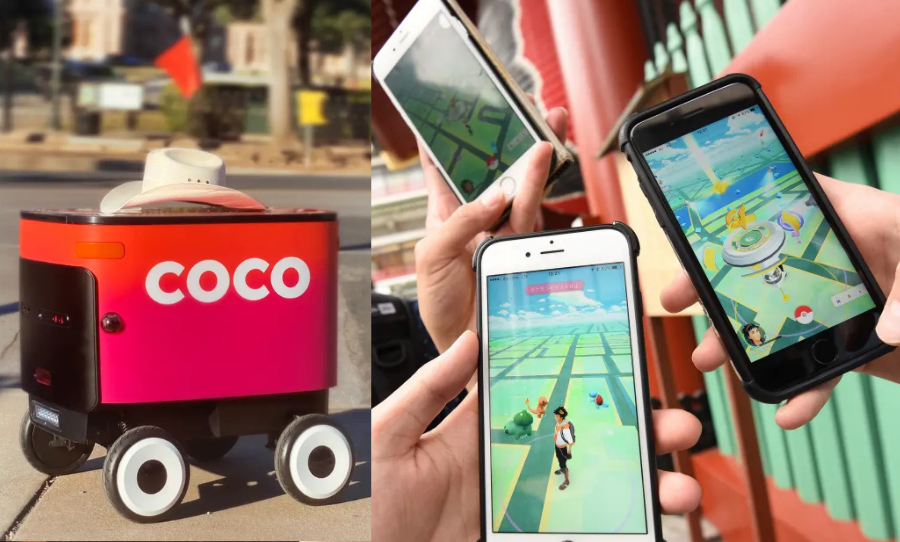
Have you unknowingly trained a robot to deliver pizza?
Remember back in 2016 when Pokémon could be anywhere, at any time? Pikachus and Charizards lay just beyond the reach of your phone, a peek into a world of childhood fantasy.
Using real-world locations and AR, players can interact with their favourites, battle it out and even take their team to the gym.
The urge to quench millennial nostalgia was strong; At its peak, it hosted 200 million users. Like most good things in the world, its real, far more evil, purpose was recently revealed.
Niantic, the company behind the popular app, was using each moment of gameplay to build street-level images, GPS data, and movement patterns.
The map comprises of 30 billion images and trillions of data points, thanks to countless in-game battles, gyms and poke-stops.
Now, Niantic is taking this data to train their AI delivery robots. With unrestricted access to unique 3D scans of parks, shopfronts, monuments, and every crevice and corner a robot could trip on, Pokémon GO players have unknowingly created the greatest data set for robotic navigation.
With naive optimism, players have done a job that would have otherwise cost millions and taken far longer.
Teaming up with tech-startup Coco, Niantic’s 3D scans of our cities will be fed to a fleet of robot delivery drivers, little boxes on wheels that, thanks to the in-depth scans, have a greater advantage over their competitors.
Privacy concerns have long clouded the AI discussion. Most recently, Meta’s AI glasses were revealed to be sending all footage filmed with them to an external office for review.
Players are not made aware their cameras are inadvertently working for Niantic, however the company as assured that any user generated visual data was “anonymised and optional … without any player personal data associated.”