
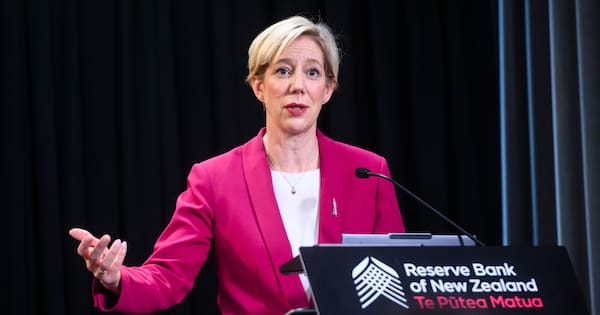
Reserve Bank governor Anna Breman has explained why New Zealand is likely to see higher inflation and weaker growth in the short term due to the ongoing conflict in the Middle East.
In speech notes published to the Reserve Bank website this morning, ahead of her address to Business NZ’s CEO Forum, Breman warned: “We are likely to see higher headline inflation over the near-term, and somewhat weaker growth momentum.”
She said the conflict, which began last month, has already sent a “shock” through the “complex global supply chains”, but more impacts are still yet to be felt.
Live updates: Government to announce details of fuel support package
“It will take time for the full effects of this shock on the global economy to play out.”
Before outlining the full impact the conflict could have on New Zealand, Breman said the Reserve Bank should try to avoid acting too early or too late to any economic fallout of the crisis.
“We should try to avoid reacting too early to near-term inflation pressures that monetary policy can do little about – or reacting too late if above-target inflation becomes embedded in the economy.
“To meet our core mandate of price stability, monetary policy can and should ensure that a near-term inflation spike does not turn into enduring inflationary pressures. The Committee will be vigilant to this risk.”
In the December 2025 quarter, inflation was recorded at 3.1% – just over the 3% target band the Reserve Bank is tasked with.
Breman acknowledged headline inflation was above the target range, but said “core inflation has been steady at 2.4% for some time” and the Reserve Bank had the tools to meet the 2% target midpoint over the medium term.
“We are at the early stages of an economic recovery. Inflation expectations over the medium term remain well anchored, and wage growth is subdued.”
Breman said she would not to pre-empt the OCR decision scheduled for April 8, but added the committee would “look through” first round direct and indirect effects when making their call, and instead focus on medium-term second round effects.
“As such, I will also discuss our approach to assessing risks to inflation expectations, and the data used in that assessment.”
Higher inflation – and where it will come from

Breman said the near-term higher inflation would primarily come through higher petrol and diesel prices, which she said make up about 4% of the Consumer Price Index.
“First, there is direct impact to petrol prices at the pump.
“For example, the average price of 91 Octane across New Zealand was about $3.29 per litre on Monday morning – compared to $2.50 in late February.”
She said indirect first-round effects would also ensue due to higher oil prices, which are “crucial” for transport and a wide range of other industries.
“So, an increase in oil prices tends to feed into higher prices for other goods and services. One example is higher air fares, where both higher fuel costs and the closure of important airport hubs in the Middle East are pushing up domestic and international air fares.”
She also said higher fertiliser prices could take up to nine-months to pass through to the supermarket for some foods.
“Autumn fertiliser requirements are already on-hand in New Zealand, and fertiliser imports usually decrease over the winter months. We expect fertiliser use to pick up for spring planting, which is when we may see more direct impacts on farms.
“In the northern hemisphere, the spring planting season is just starting, meaning higher fertilizer prices could pass through more quickly into on-farm costs and consumer prices. New Zealand is a price-taker for certain foods, so we may see some price impacts in coming months.”
Somewhat weaker growth, and why

In the medium-term Breman said higher production costs often result in squeezed margins and lower real incomes, which would dampen economic growth.
“A slowdown in growth may in turn dampen inflationary pressures over the medium-term.”
In addition to prices impacts, Breman said reduced access to Middle East markets for exports would have a direct impact on firms if they were unable to find alternative buyers.
She said Middle Eastern exports primarily are made up of dairy and meat products, and were about 4-to-5% of total goods and services which New Zealand sells internationally.
“Oil shortages and shipping disruptions could lengthen the time it takes for us to receive inputs for production and can disrupt our ability to ship exports. This would soften economic activity until disruptions are resolved.”

Passenger travel disruptions would also impact the tourism sector, she said, but this could be offset somewhat if “New Zealanders and Australians look to travel closer to home”.
“Turning to financial market impacts, higher wholesale interest rates and lower equity prices are already tightening global financial conditions, meaning higher borrowing and financial costs for some households and firms. This could also dampen growth in the near term.”
She also added the rising uncertainty would weigh on both business investment and household spending.
“This is something that we saw last year when there was heightened uncertainty around global trade policy.
She said all of this meant New Zealand may see somewhat weaker economic growth in 2026 than was previously laid out.
The morning’s headlines in 90 seconds, including audio from the moments before a deadly collision at a New York airport, and the long list of rules about where mobile speed cameras can go. (Source: 1News)