
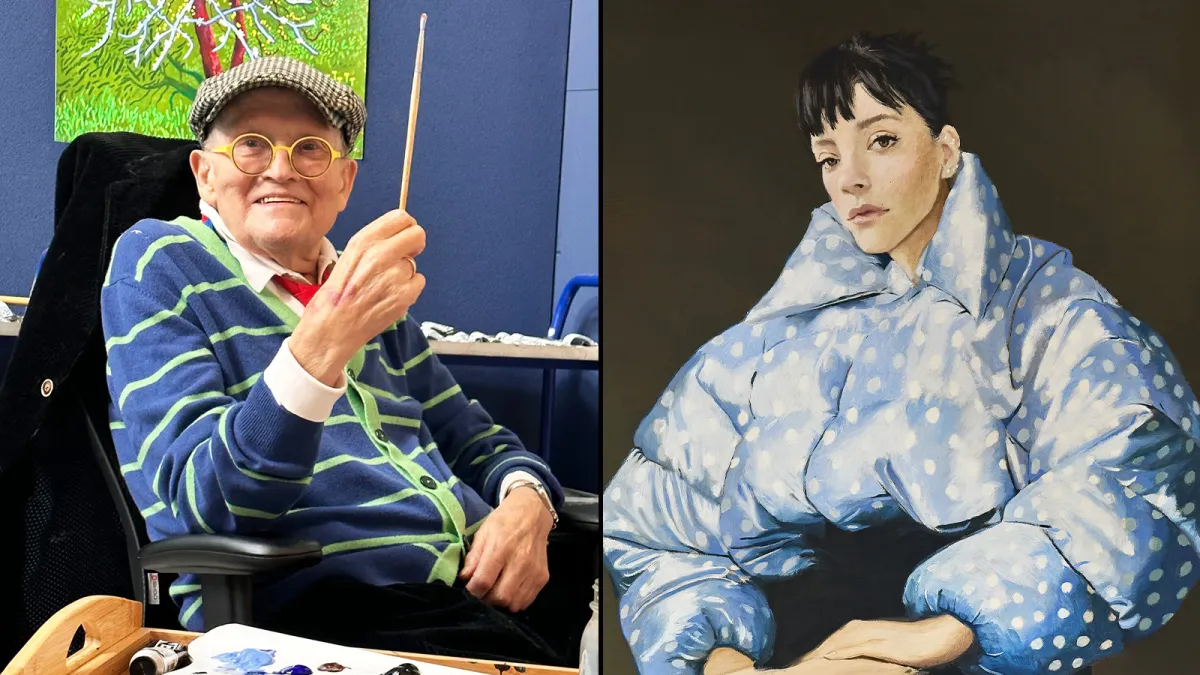
There are many ways to rebel. You can smash the status quo, tear up the rule book, do it like it’s never been done before. Or, if you’re feeling really revolutionary, you can go conservative.
When David Hockney, then an outrageous young turk with peroxide hair, now a nearly nonagenarian national treasure, first showed his Love paintings at the Royal College of Art in the early 1960s, the really shocking thing about them wasn’t that they were images of young men in love and intimately enmeshed, but that they were paintings.
Proper, old-fashioned, oil-on-canvas paintings. Nothing could have been more counter-cultural, out-there and obscene. Not just paintings, but figurative paintings. Somewhat abstracted, sure, but recognisably paintings of human figures more or less as we see them.
In 1961, representative painting was dead. Buried under a black slab Malevich-style. Abstract Expressionism was still the biggest beast. Jackson “splatter” Pollock had died in 1956, but Mark Rothko was painting his fearsome colour fields and Willem de Kooning was going strong.
Elsewhere, Minimalism was whispering its way into public consciousness. In 1966, Carl Andre would present Equivalent VIII: 120 firebricks stacked in a rectangle two-bricks high. Robert Ryman was making white paintings to hang on white walls in white cube galleries.
If you’d said to the average graduating art student in Hockney’s year, “Abstraction’s had it. What the buyers of the future are really going to want on their walls are lyrical pictures celebrating the changing of the seasons in the Yorkshire Wolds,” they’d have rolled their eyes. Sure, grandad. How Edwardian.
After 65 years championing the infinite expressive possibilities of figurative art, Hockney still hasn’t come round to abstraction. In an interview in the Sunday Times, to discuss his new exhibition at the Serpentine, the artist told Andrew Marr: “There’s too much abstract painting being done now.”
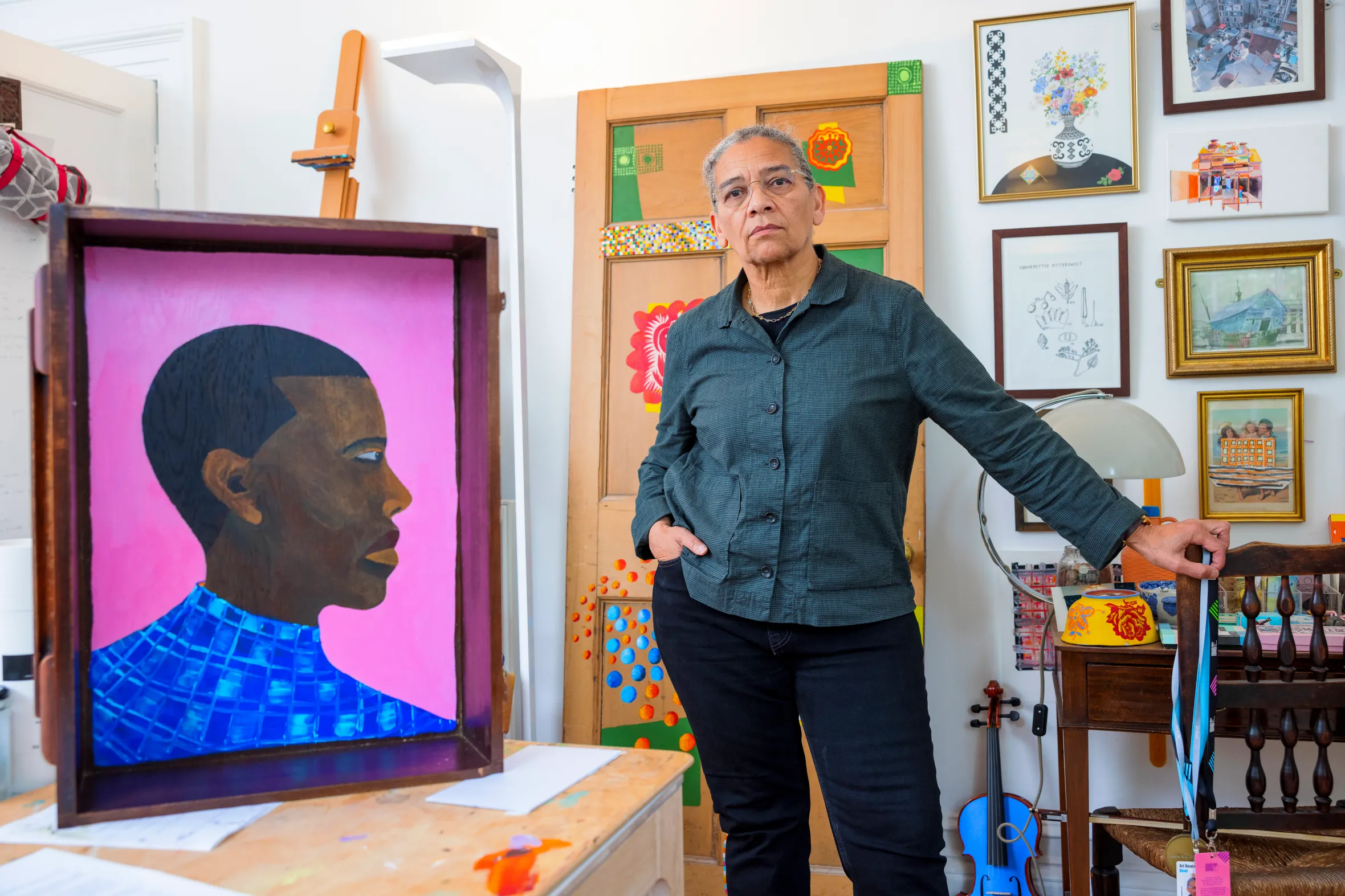 Lubaina Himid in her studio in Prestonjames glossop for The Times
I hate to pick a quarrel with David Hockney, RA, OM, Distinguished Honouree and best beloved painter of the British public, but: you’re wrong on this one. Abstract art’s old hat. At least for now. The most surprising story of the last decade or so has been the triumphant return of painting — and figurative painting at that.
Who is representing Britain at the Venice Biennale this year? Not a video artist, not a piler-up of reclaimed rubbish, but Lubaina Himid, a woman who knows her way around a paintbrush and who puts figures, reclaimed from history, at the centre of her work.
At Tate Britain, the big contemporary spring show is Hurvin Anderson, painter of barbershops and gardens and public swimming pools. Over the bridge from Hockney at Serpentine South, Cecily Brown is about to open an exhibition of paintings, that while not strictly photorealistic, are unmistakably landscapes with all ye olde landscape paraphernalia of riverbanks, fallen logs, willows and reeds. John Constable would get them in a way he wouldn’t necessarily have got Andre’s firebricks.
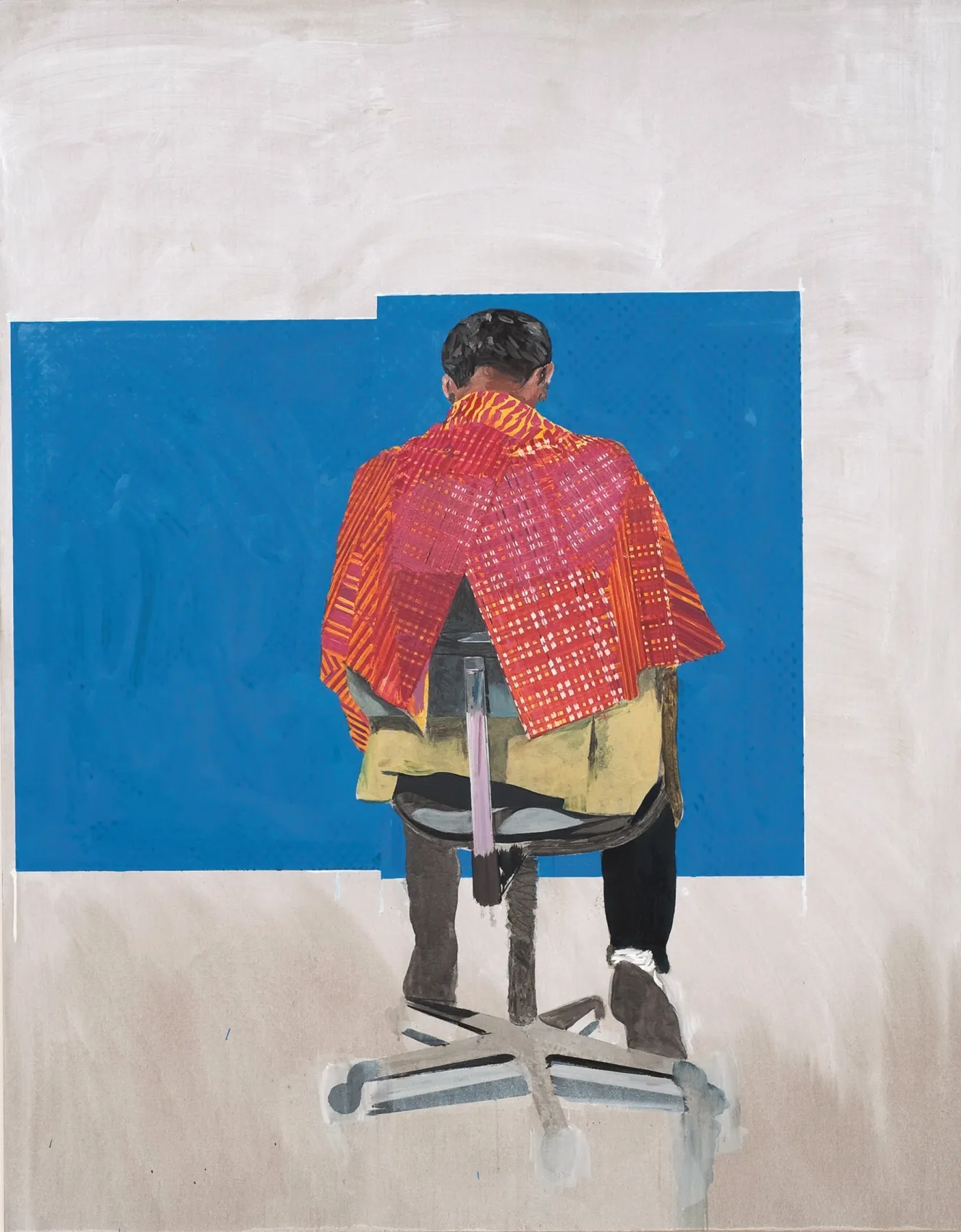 Peter’s Sitters II by Hurvin Anderson, 2009© Hurvin Anderson. Courtesy the artist and Thomas Dane Gallery. Photo: Catherine Wharfe
At the London Art Fair in January, the biggest crowds gathered under one of Nikoleta Sekulovic’s gorgeously overdone portraits of historical figures reclining in interiors that make Vuillard look restrained.
At Frieze last autumn, the buzz was about Sarah Ball, a painter of crystalline clarity hailing from — God’s and Hockney’s own country — Yorkshire. A month ago, every third post on my Instagram feed seemed to be another rapturous recommendation of the sensuously sinister, poisonously particular paintings of Georg Wilson on show at the West End gallery Pilar Corrias.
The American artist Kerry James Marshall was a hit for the RA last year, with his immaculate paintings in the manner of Ingres. When Lily Allen wanted an image for her Spotify-smashing album West End Girl last year, she turned not to a Condé Nast photographer, but to the young Spanish painter Nieves González who gave Allen’s Miu Miu puffer and polka-dot Valentino boots the Velázquez treatment.
The Allen portrait has just gone on display at the National Portrait Gallery. For my part, I can’t get enough of the tumbledown, overgrown California gardens and flowers of Hayley Barker. Not forgetting Caroline Walker, Lynette Yiadom-Boakye, Chantal Joffe… Figuration is the hottest show in town.
He’s right, of course, that there’s still a lot of abstraction around. The star lots at Christie’s forthcoming New York auctions this spring are a Rothko and a Cy Twombly. Paintings by the abstract expressionists go on breaking records year after year.
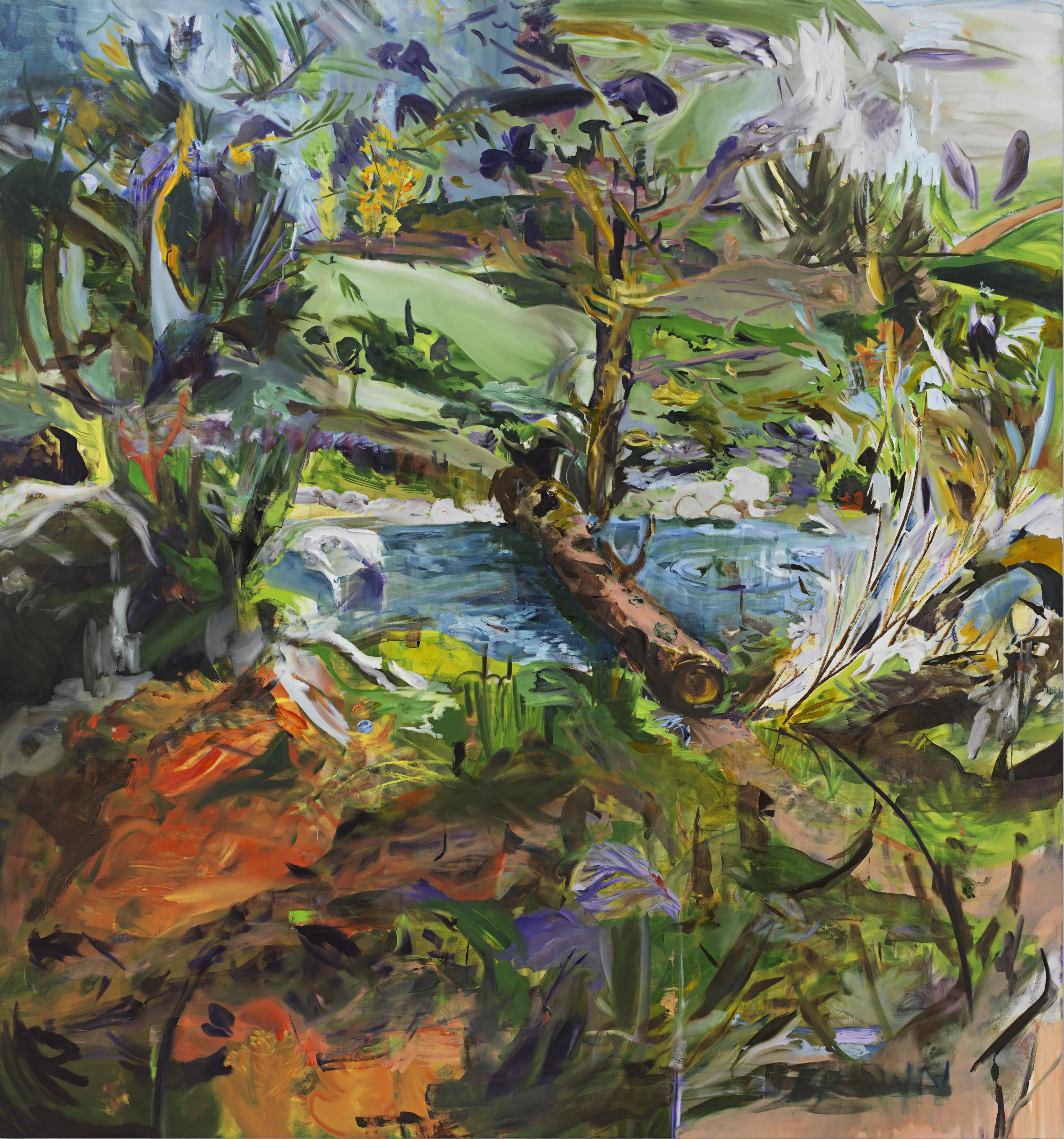 Cecily Brown’s Nature Walk with Paranoia, 2024Cecily Brown, 2026. Photo: Genevieve Hanson
In his interview, Hockney takes a pot-shot at Rothko. It was Rothko, note well, who had the big Fondation Louis Vuitton exhibition in Paris in 2023, the year before Hockney’s own mighty retrospective at the same venue. In his present Serpentine show, Hockney riffs on a series of abstract painters, including Rothko. He told Marr: “I did that because they made a book of Rothko’s paintings and when you see a whole book… Well, Francis Bacon said when he committed suicide, ‘I’m surprised it took so long.’”
My take on Rothko would be slightly different. I came away from the Rothko show almost vibrating with the strange, glowering power of it all. Not depressing, at least not for the viewer, but inspiriting.
That’s Rothko. I’ll admit that a tour of print-to-order abstract art on the walls of offices and hotels will remind you just how bad bad abstraction can be.
There’s a common misconception that abstract art is easy. It’s just a squiggle, a square, a smear. My toddler could do that. Etc. etc. Actually, it’s the other way around. Abstraction is hard. With a bunch of daffodils there’s leeway. We fundamentally like daffodils and are inclined to like a daffodil picture. Much harder to make a single square sing.
Hockney, who seems to have a gift for looking on the bright side, should take heart. Too much abstract art? I’d say it’s the opposite. Begone black slab. It’s the representation resurrection! And it might never have happened if the young Hockney hadn’t dared to be so damned old-fashioned.
David Hockney: A Year in Normandie and Some Other Thoughts about Painting is at Serpentine North to Aug 23, serpentinegalleries.org