
She spent a term as a parliamentary employee between 2017 and 2020, working with Seymour on getting enough support to pass the assisted dying bill.
It ended up as public law but it can hardly be called public service; it was private employment.
While van Velden’s move will come as a shock to many of her Act colleagues, there will have been some celebration at the news in some quarters.
It’s no secret that unions have had a strained relationship with her as Workplace Relations Minister, and regard her in similar terms to Sir Bill Birch, who ushered in the Employment Contracts Act in 1991.
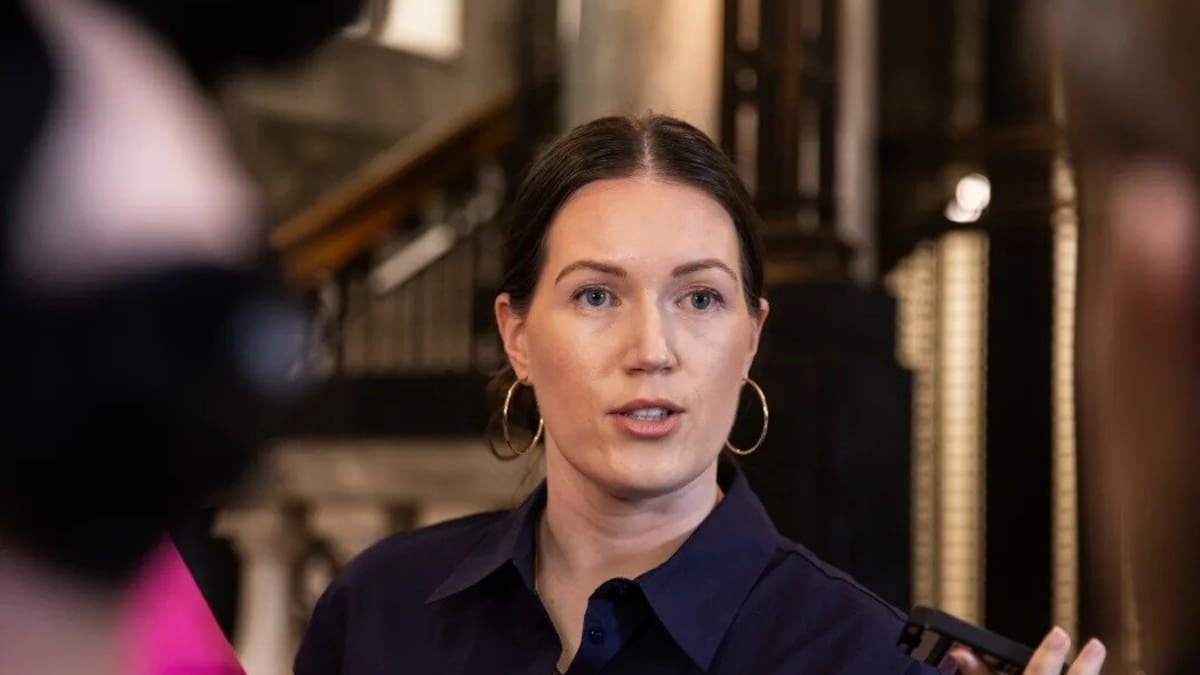
In October, Brooke van Velden said she was frustrated at the expectation that women should be emotive – instead of the way she sees herself: an analytical woman, taking tough decisions and standing by them. Photo / Mark Mitchell
They have felt sidelined and ignored as she has rammed through changes to weaken pay equity laws, changed the Employment Relations Act to give greater advantage to employers and tabled changes that unions say will weaken health and safety laws that were passed in the wake of the Pike River disaster.
Van Velden has succeeded, however, in putting together the least-worst resolution to the Holidays Act debacle – a problem that plagued many ministers before her.
She will also be remembered as the MP who dropped the C-word in Parliament, in what she has described as a move to stand up for other right-wing women in the heat of the pay equity row.
Act Party deputy leader Brooke van Velden has announced she will not stand for re-election in the 2026 general election. Photo / Mark Mitchell
Van Velden and her women colleagues in the centre-right Cabinet had been described as “c***s” by a woman columnist, and the column had been referred to by Labour in the House.
In an interview with the Herald last October, she expressed a sense of frustration at what she senses is an expectation of how women should behave, outwardly emotive, instead of the way she sees herself, an analytical woman, taking tough decisions and standing by them.
“My response was in defence of women … who are sick of being told they’re the wrong kind of woman.”
Her self-analysis wasn’t too far off. Van Velden is a different kind of female politician.
She is not an emotive tub-thumper, like many of the women in Labour. She is deliberate, controlled and analytical to the point of being almost robotic.
Her biggest cheerleader has been David Seymour, who has often talked her up as a potential future leader of Act, something many others could not quite envisage.
That security blanket has gone for him now and it is not evident that anyone else in the current caucus has what it takes to take over from him, whenever that day might come.
That being said, list MP Nicole McKee is considered the strongest contender to replace van Velden as Act deputy. The party’s new candidate for Tāmaki will be selected in the next month, and that will be a golden opportunity for the party to promote a strong, fresh face.
It certainly elevates the electorate as one to watch at the November election. National has already selected Mahesh Muralidhar, its 2023 Auckland Central candidate, to stand in the seat, and Labour has just announced the young intellectual Max Harris as its candidate.
Van Velden has achieved a lot of change in politics in a short time, especially for someone so young. Now, with her trademark resolute spirit, she has determined to leave on her own terms.