

Tuesday, 24 March 2026, 7:29 pm
Press Release: Skoltech
Researchers from Skoltech, the International Maize and
Wheat Improvement Center in Mexico, the Research Centre for
Cereal and Industrial Crops in Italy, and other
international organizations have developed new durum wheat
lines capable of surviving freezing temperatures while
maintaining the grain quality required for premium pasta
production. The study, published
in the Frontiers in Plant Science journal, presents a new
breeding framework that could help make durum wheat
production more resilient to climate
variability.
Durum wheat is the primary raw material
used to produce pasta worldwide, yet it remains highly
vulnerable to sudden freezing events. As climate variability
increases, unpredictable cold spells pose a growing risk to
wheat production. At the same time, breeders must preserve
the high gluten quality that gives pasta its characteristic
texture and cooking properties.
To address this
challenge, the research team analyzed 250 durum wheat
accessions from across Europe, integrating genomic and
phenotypic data to identify key genetic regions controlling
freezing tolerance and grain quality. The analysis revealed
a clear genetic division between Southern European
varieties, bred primarily for pasta quality, and Eastern
European accessions, adapted to colder climates.
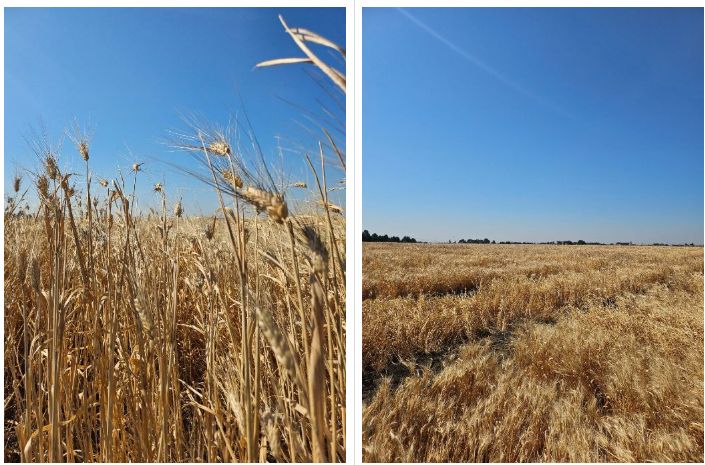 Research
team’s fieldwork. Source: Yawar Habib, Skoltech /
Supplied
Advertisement – scroll to continue reading
The researchers paid
particular attention to a well-characterized genetic region
on chromosome 5A, corresponding to the Fr-A2 locus, which
plays a major role in freezing tolerance and explained more
than a quarter of the variation in cold survival between
different wheat varieties. They also confirmed a genetic
marker linked to gluten strength, a key trait for pasta
quality. Building on these findings, the researchers applied
multi-trait genomic selection, using genome-wide marker
information to predict the performance of breeding lines,
and combined this with simulated crosses to identify optimal
parental combinations. This approach allowed them to select
the best parental pairs before field evaluation,
significantly reducing the need for trial-and-error breeding
which costs huge money and time. Notably, this represents
one of the first implementations of genomic selection
integrated into a practical breeding pipeline for durum
wheat in Russia.
“The approach was validated in real
breeding populations, where molecular markers from
genome-wide association studies were used to identify
progeny lines carrying favorable alleles for both freezing
tolerance and gluten strength. The results confirmed that
the genomic breeding pipeline can successfully combine these
traits, providing a scalable strategy for developing
climate-resilient durum wheat,” commented Junior Research
Scientist Yawar Habib from the Skoltech
Biomed Technologies Center, the lead author of the paper,
who came to study at Skoltech from India and graduated from
the Agrobiotechnologies and Engineering PhD
program.
As a result of the study, approximately
60 new durum wheat lines were selected that combine cold
tolerance with superior gluten properties. This work
represents an important step toward developing varieties
capable of ensuring stable production of high-quality pasta
in the face of increasing climate instability. The proposed
methodology can also be applied to improve other complex
traits in agricultural
crops.
Using Scoop for work?
Scoop is free for personal use, but you”ll need a licence for work use. This is part of our Ethical Paywall and how we fund Scoop. Join today with plans starting from less than $3 per week, plus gain access to exclusive Pro features.
Join Pro Individual
Find out more