
March 23, 2026
By Karan Singh
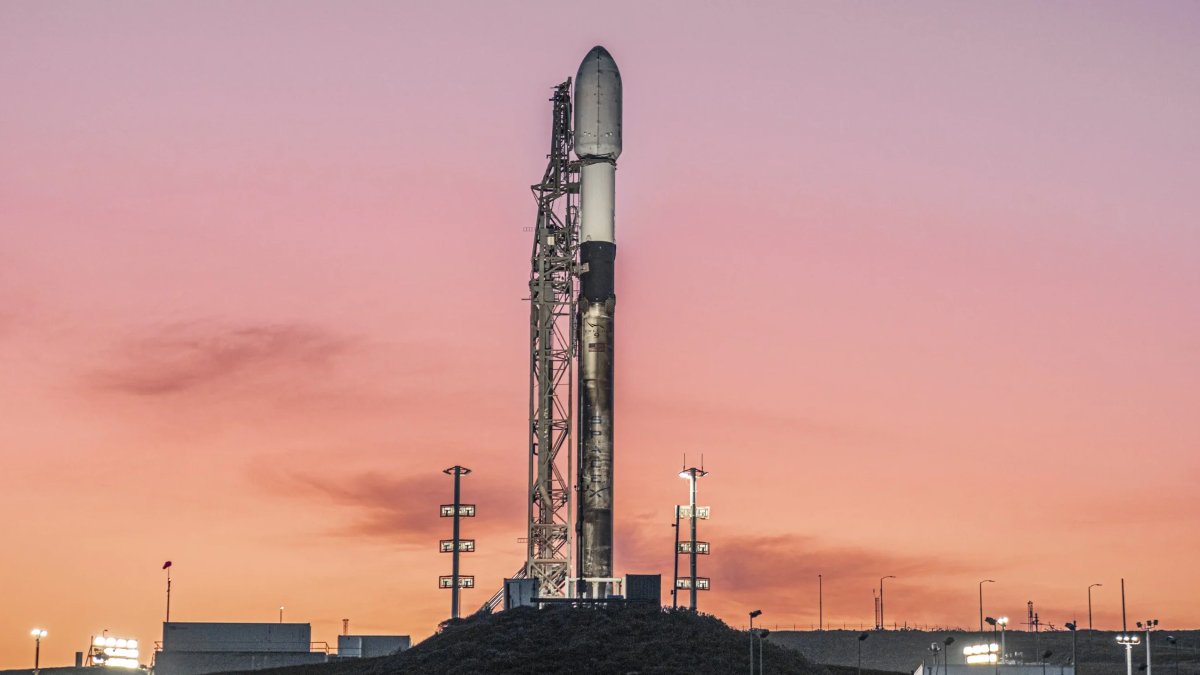
SpaceX has officially crossed a monumental threshold in Low Earth Orbit. As SpaceX continues its relentless launch cadence, the Starlink constellation has finally surpassed 10,000 active satellites, clearly showing its dominance in the internet satellite market.
The milestone was officially crossed on March 17, following a successful Falcon 9 launch that pushed the operational fleet into five-digit territory.
There are currently about 15,000 satellites in space, with SpaceX owning more than 67% of active satellites.
NEWS: @SpaceX has officially crossed 10,000 active Starlink satellites in orbit tonight!
Over two-thirds (66%) of all satellites currently in orbit are now a SpaceX satellite.
Falcon 9 lifted off from Vandenberg in California moments ago with 29 Starlink Satellites onboard.… pic.twitter.com/VIcSTzD7CZ
— Sawyer Merritt (@SawyerMerritt) March 17, 2026 10,000 Strong
The record-breaking launch lifted off from Vandenberg Space Force Base in California, carrying a payload of 29 Starlink satellites. The deployment of this batch brought the total number of active Starlink satellites in orbit to exactly 10,019 that evening.
However, SpaceX’s launch cadence is so rapid that this number is already outdated. Following this week’s launches, including a second double-header launch, the total operational constellation currently stands at an incredible 10,097 satellites.
Commanding Two-Thirds of Earth’s Orbit
Crossing the 10,000 mark isn’t just a psychological milestone for CEO Elon Musk and the SpaceX team; it highlights a staggering shift in the orbital landscape.
With this latest batch of deployments, SpaceX now owns and operates over two-thirds of all active satellites currently orbiting the Earth. No other nation, government agency, or private corporation comes remotely close to this level of orbital presence.
To put that into perspective, for every three active satellites flying overhead right now, two of them belong to SpaceX. The next largest satellite constellation currently in orbit is Europe’s OneWeb, which operates a mere 654 satellites.
Goal of 42,000 Satellites
The original vision for the Starlink constellation was capped at 12,000 satellites. However, as global demand for the service skyrocketed, SpaceX expanded its plans and ultimately received regulatory approval to deploy a staggering 42,000 satellites.
At their current, accelerated launch cadence, SpaceX will likely hit that original 12,000-satellite goal by the end of this year. With Falcon 9 launch rates continuing to speed up and the massive Starship vehicle getting ready for operational payloads soon, realizing the full 42,000-satellite mega-constellation is likely only a few years away.
Expanding the Constellation
This dense, ever-expanding constellation is the backbone of the Starlink network, providing high-speed, low-latency internet to millions of users across the globe. As the network grows denser, Starlink is able to offer increased bandwidth, lower latency, and support for massive new initiatives like its Direct to Cell service, which beams connectivity directly to standard, unmodified smartphones.
With the massive Starship launch vehicle progressing rapidly through its flight test campaign, SpaceX will soon be able to deploy the much larger, next-generation Starlink satellites at an unprecedented scale, ensuring that their two-third market share is just the beginning.
Ordering a New Tesla?
Use our referral code and get 3 months free of FSD or $1,000 off your new Tesla.
March 23, 2026
By Karan Singh
Winter driving has always been the Achilles’ heel of electric vehicle efficiency, as blasting the defroster to clear the windshield can eat into your vehicle’s battery range quickly. Now, Tesla has patented a new trick to try to solve that problem.
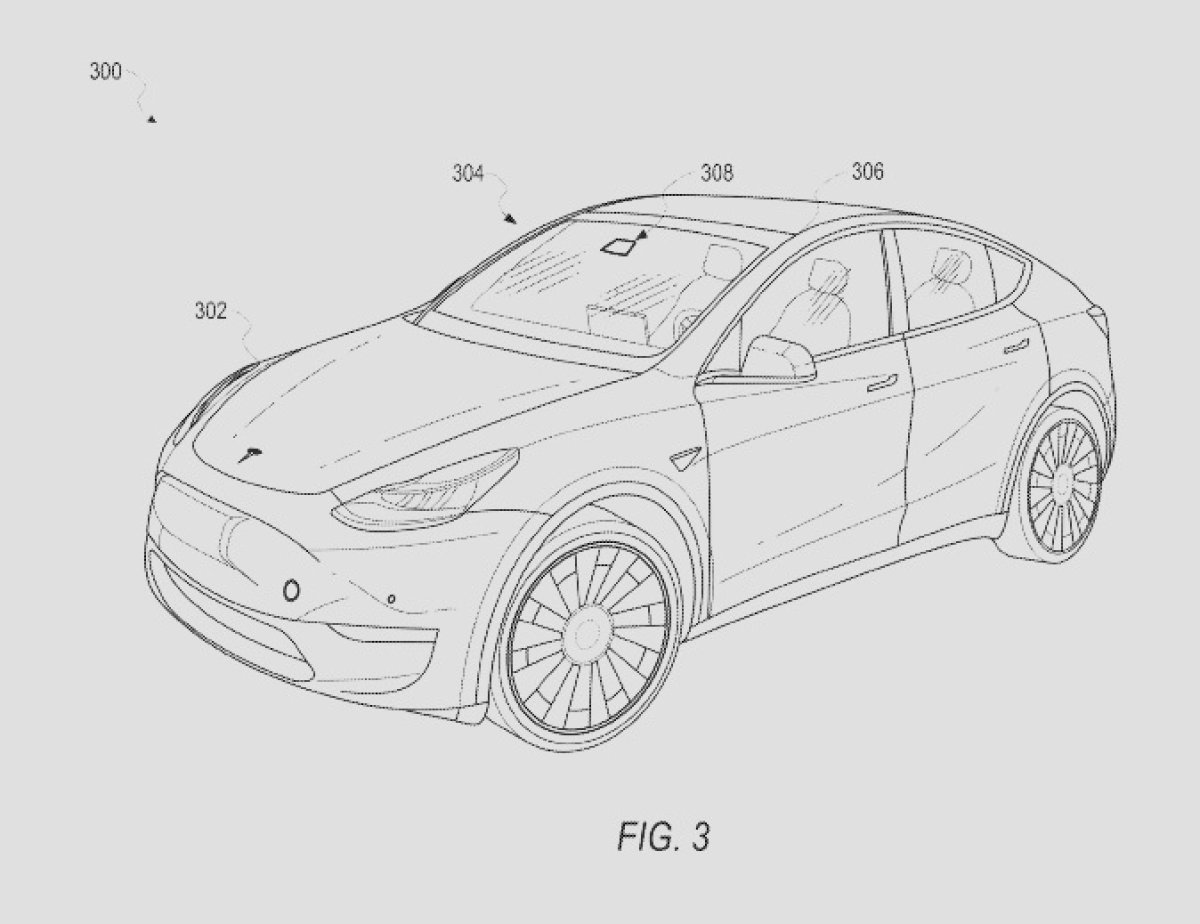
In a newly published patent application titled “Automotive Glazing Heating System with Independent Zone Activation” (US 2026/0046983 A1), Tesla outlines a highly efficient, targeted approach to windshield heating. Instead of warming the entire sheet of glass, the system isolates and heats only the specific zones that actually need it.
Let’s take a look at exactly how this new patent will maximize efficiency – and also keep your windshield clean.
The Problem with Current Defrosters
Traditional automotive heating systems are relatively blunt instruments. They utilize uniform heating elements embedded in or applied to the glass to defrost or defog the entire pane at once.
For an EV, this lack of precision presents some major challenges. Heating an entire windshield requires a significant amount of energy, leading to massive, unnecessary low-voltage power consumption.
In addition, the metallic coatings often used in these traditional heating systems can interfere with the signal transmission of embedded antennas and reduce optical clarity when placed near cameras. You can read about how Tesla intends to solve at least part of those two particular problems with another patent on printed circuit glass here.
How Zoned Heating Works
Tesla’s proposed solution replaces the uniform heating element with a conductive layer that is segmented into multiple distinct heating zones, spread across your windshield.
These zones are physically and electrically isolated from one another by precise, unheated gaps. These gaps would be created during the glass manufacturing process, potentially through laser ablation, mechanical etching, or masking processes detailed in the patent.
The key here is that each of these independent zones draws power individually. According to the patent, each zone has its own dedicated set of bus bars to supply it with electrical power, ensuring that only the zone that needs defrosting or defogging is powered, rather than the whole thing.
Finally, a central control unit will manage the entire zonal system, capable of activating specific zones based on real-time data. The system will be able to trigger zonal heating based on manual user inputs, real-time weather conditions, vehicle speed, and data from vehicle sensors.
Precise Efficiency for Cameras & Wipers
While one of the larger heating zones can be activated to cover the driver’s general field of view, the true genius of the patent lies in its smaller, specialized zones.
The patent highlights a specific heating zone positioned exactly to match the field of view of your Tesla’s forward-facing cameras. If onboard sensors detect moisture, ice, or fog interfering with the cameras, the control unit can instantly activate just that specific zone to clear the glass. That ensures uninterrupted operation of FSD – even if your windshield is covered in snow.
After all, when no humans are driving, there is no need to clear the whole windshield of snow or fog.
Similarly, Tesla details additional targeted heating zones located exactly where the windshield wipers rest. The system could automatically activate these specific lower zones when temperatures drop, preventing the wiper blades from freezing to the glass.
Tesla already implements wiper heaters, which warm a portion of the windshield to prevent it from sticking. This new patent simply integrates that existing concept into a much more advanced, windshield-wide zonal system, completely isolating it from the rest of the pane.
The Bigger Picture
When combined with the patent on Printed Circuit Glass, you can see where Tesla is going with this. By printing conductive traces directly onto the windshield to eliminate wiring harnesses and heat only the portions of the glass that need heating. It’s all about efficiency in both manufacturing and operation. As Tesla moves into owning the vehicles themselves through the Robotaxi network, efficiency plays an even larger role, since these vehicles become even cheaper to operate, whereas the consumer would normally eat this cost.
In short, Tesla is rethinking many of the old legacy systems one step at a time, working to optimize where every single watt of energy from your battery goes. By acting like a surgeon’s scalpel rather than a butcher’s knife, Tesla can conserve battery range while guaranteeing that FSD hardware remains fully operational even in harsh environments.
March 22, 2026
By Karan Singh
Last night, Elon Musk hosted the TERAFAB launch at the Seaholm Historic Power Plant in Austin, Texas. The presentation outlined the most ambitious chip-building and compute-scaling exercise in human history, bringing together the combined technological forces of Tesla, xAI, and SpaceX.
We’ve wrapped up the entire presentation in an easy-to-read bullet-point format in case you missed the event or want to recap what was announced.
In order to understand the universe, you must explore the universe pic.twitter.com/sVlpy5NePk
— Tesla (@Tesla) March 22, 2026 Galactic Civilization
Elon’s ultimate aim is to transition humanity into a galactic civilization and a multi-planet species.
The primary goal is to make science fiction into science fact
To contextualize this scale, Elon explained the Kardashev Scale:
Type I: Harnessing all the energy on a planet
Type II: Harnessing all the energy from a star
Type III: Harnessing all the energy in a galaxy
Currently, humanity is not even a Type 1 civilization yet
To illustrate our current energy scale, fusion on Earth produces less energy than 99% of the sun’s energy.
Furthermore, electricity production on Earth is merely a trillionth of the Sun’s production; even if we increased our current production by 1 million, it would still only be one millionth of the Sun’s output.
Compared to the grandness of the Universe, the small squabbles on Earth are incredibly tiny.
Scaling civilization ultimately means scaling power in space.
This expansion includes building cities on the Moon and Mars.
It will also involve sending spaceships to other starships, allowing humanity to get a ride to wherever they want to go.
 Three Pillars of the Vision
Harnessing the power of the sun and achieving these goals requires the combined efforts of all three of Elon’s major companies.
These companies have consistently done things people did not believe were possible, whether it be EVs, reusable rockets, or a GW-scale training cluster.
Tesla
Has delivered 8 million vehicles to date and is currently producing 2 million per year.
Is developing AI vehicles and the Optimus humanoid robot.
Has deployed 109GWh of energy storage globally.
Has successfully scaled up Gigafactories in record time.
Operates the first and only lithium refinery in the US.
xAI
Built the first GW-scale AI training cluster.
Operates the largest coherent supercomputer.
Is the only company capable of building orbital AI compute at scale.
SpaceX
Developed humanity’s first reusable rockets.
Successfully returned human spaceflight capabilities to the US.
Currently launches 90% of global mass to orbit.
Operates the world’s largest space-based internet network.
Houses the largest PCB manufacturing site in the US.
Built Starship, which is the world’s most powerful rocket.
Scaling Challenge & the TERAFAB Solution
Scaling to this level requires massive numbers: 1 billion Optimus robots to do physical work, 10 million tons of mass launched to orbit per year, and over 1 TW of solar power needed.
The expected compute demand from Tesla and SpaceX in the future is 1TW.
Currently, Earth builds about 100-200GW of compute per year, which is constrained by local grids.
Current global AI compute production is only around 20GW per year.
Existing fabs can only achieve 2% of Elon’s ultimate goal.
TERAFAB: the next step to becoming a galactic civilization
Together with @Tesla & @xAI, we’re building the largest chip manufacturing facility ever (1TW/year) – combining logic, memory & advanced packaging under one roof pic.twitter.com/p6bX3VotXl
— SpaceX (@SpaceX) March 22, 2026
While Tesla and SpaceX are handling solar production and launch capacity, respectively, a terawatt of compute is the missing item.
Elon will continue to work with suppliers like TSMC and Samsung, and will continue buying as many chips as possible as they expand.
However, because these suppliers will not expand fast enough, Terafab is the solution.
The TERAFAB project is a joint effort between Tesla and xAI/SpaceX.
It represents the largest chipbuilding exercise in history by far.
The scale is larger than any other level envisioned, and is out of context by several orders of magnitude.
The ultimate goal is to reach a terawatt of compute production per year.
Advanced Technology Fab
The facility will be an Advanced Technology Fab located in Austin, just outside Giga Texas.
It will include chips, memory, and lithography masks.
Having logic, memory, and packaging in one site leaves it ready for rapid testing and iteration.
A single building can make the mask, make the chip, test the chip, and then make improvements.
This cycle of recursive improvement is what will make a difference.
The fab won’t stick to regular chips; it will try other types of chips that push the limits of physics.
Next-Gen Chips & Space Compute
The Terafab will produce several new chips:
Looking at future chips, humanoid robots will require 10 to 100 times more chips than cars.
Ultimately, space compute will be the vast majority of compute.
To achieve this, Starship will enable a massive payload to space specifically for space-based compute.
AI Sat Mini
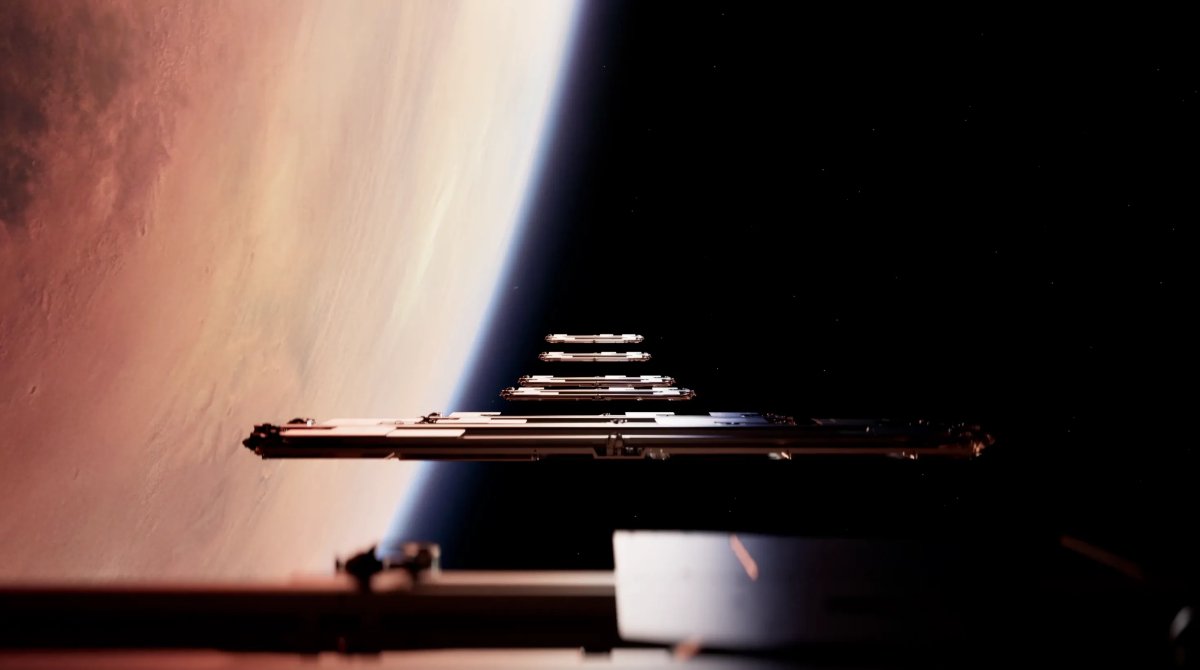
The AI Sat Mini will be a 100kW unit, while future satellites will go to the megawatt range.
Each AI Sat Mini should be approximately 1 ton.
When unfolded, including the solar panels and radiators, it will be wider than Starship V4 is tall.
SpaceX knows how to deal with heat projection in space and can handle the cooling issues.
Advantages of Space Compute
Chips designed for space will be hardened for the hostile environment and optimized for space.
They can be a higher power chip and can run hotter in space.
Space compute has no power constraint like on Earth.
Because space is always sunny, these chips can run 24/7.
Therefore, there is no need for battery backups to keep the chips running.
Space solar costs less than terrestrial solar due to not needing framing or heavy glass for weather protection.
There are increased economies of scale in space, while on Earth, you get challenges with real physical locations.
It is likely only a few years before it’s cheaper to send chips up to space, rather than build a facility on the ground.
Lunar Mass Driver & Future Abundance
After the Terafab, the obvious next question is achieving a petawatt of compute.
To reach this, Optimus and humans on the moon will be used to send compute to deep space.
There is no need for rockets on the moon; payloads can accelerate using an electromagnetic mass driver to space.
Electromagnetic mass drivers on the Moon pic.twitter.com/NNDY6L2jSx
— SpaceX (@SpaceX) March 22, 2026
This infrastructure reduces costs even further.
The overarching goal is to complete this within Elon’s lifetime.
Ultimately, an era of Amazing Abundance will become possible, driven by sustainable energy, space travel, and AI & Robotics.
This will allow humanity to go beyond the Moon, go beyond Mars, and take a trip through the rings of Saturn.
You can watch the entire video here:
Announcing TERAFAB: the next step towards becoming a galactic civilization https://t.co/xTA70LOU0e
— SpaceX (@SpaceX) March 22, 2026