
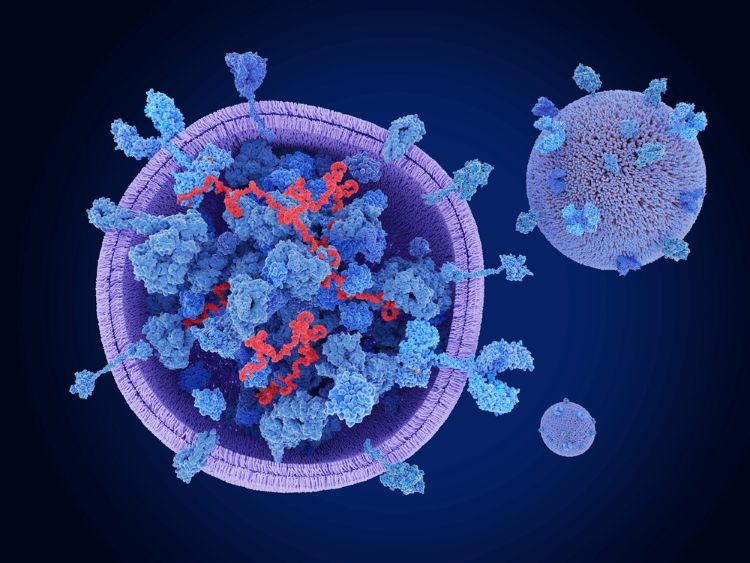
Novel, end-to-end process improves all four steps of exosome production simultaneously, supporting the design of more effective treatments.
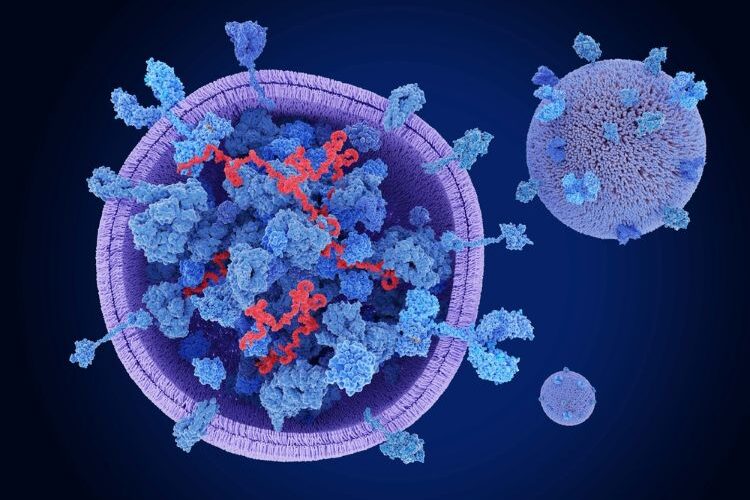
Researchers in China have developed a nanoparticle-based process that could enhance the production of engineered exosomes as a novel class of cell therapy.
Dr Gang Ruan, the study’s lead, said: “We have seen successes with stem cells repairing damaged tissues and immune cells fighting cancer. An engineered exosome is like a supercharged version of a natural exosome.”
Conventional methods slow down as production scale increases and existing technologies improve only one or two of the four exosome production steps. Dr Xiaowei Wen, a co-first author of the study, noted that their novel manufacturing system “improves all four steps at once”.
The technique involved isolating exosomes using mobile internal magnetic separation (MIMS), a magnetic technique that enables rapid and efficient collection of exosomes even at large scales.
In their study, the team grew mesenchymal stem cells with these nanoparticles, which enabled the cells to release a higher quantity of exosomes than normal. Drugs and magnetic particles were automatically packed into the exosomes as they formed. This facilitated imaging and tracking in a biological environment. Additionally, the engineered exosomes were stable during storage, following rehydration after being freeze-dried.
The manufacturing process works because we combined three new ideas: a new interaction between nanoparticles and cells, a new type of nanomaterial, and a new design for the manufacturing equipment. This is the first time the entire process has been integrated in this way.”
Dr Wen added that the manufacturing process “works because we combined three new ideas: a new interaction between nanoparticles and cells, a new type of nanomaterial, and a new design for the manufacturing equipment. This is the first time the entire process has been integrated in this way”.
The technology has only reached pre-clinical testing, however Dr Ruan highlighted that the proposed process is “not only practical and scalable but also maintains consistent quality, which is essential for industrial use, and could help patients gain faster access to safer and more effective engineered exosome therapies”.
The paper was published in Advanced Science.