
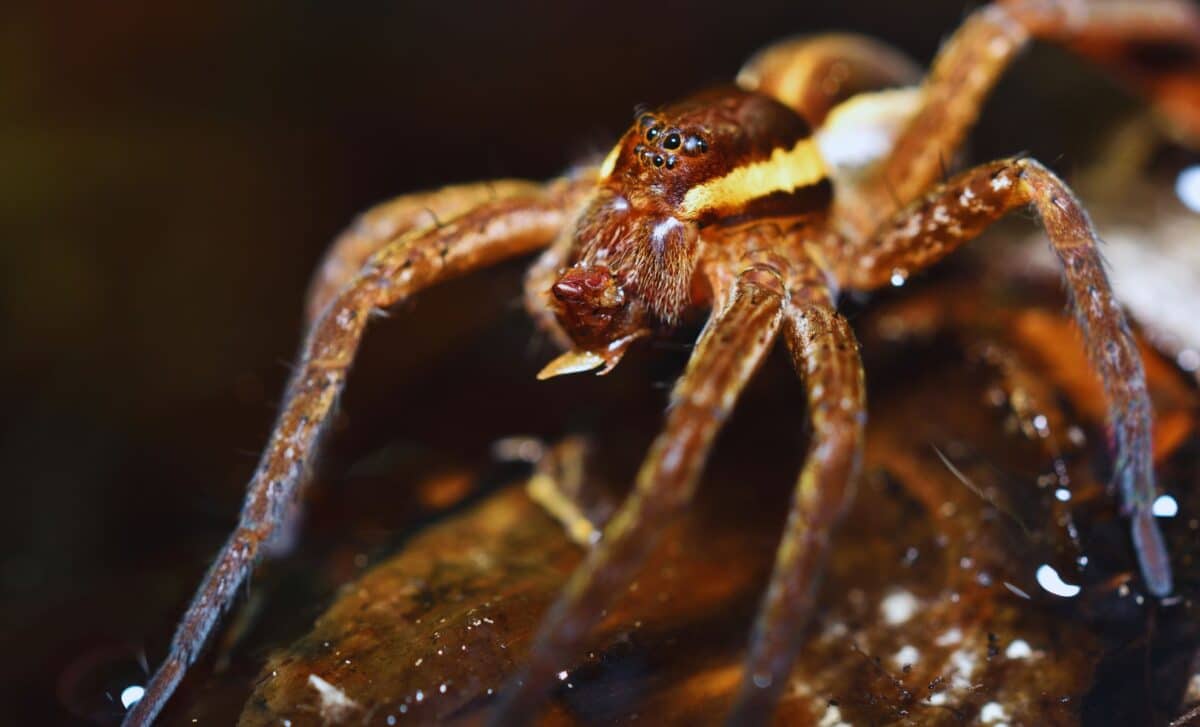
The fen raft spider, one of the largest spiders in the United Kingdom, is making a strong comeback after nearly disappearing. Today, thousands are back in the wild thanks to a long-running breeding and reintroduction program.
The species, known for its large size and semi-aquatic lifestyle, had been pushed to the edge by habitat loss. Its recovery is tied directly to both controlled breeding and the restoration of wetland environments.
The project, led by Chester Zoo with the RSPB and other partners, combined captive breeding with habitat restoration. The goal was simple: rebuild the population and ensure it could last.
A Species Driven Close to Extinction
Roughly 15 years ago, the fen raft spider (Dolomedes plantarius) was facing extinction in the UK due to the loss of unpolluted fens and marshes. According to the Chester Zoo, the species had declined to critically low numbers before intervention began.
These spiders rely on clean wetland ecosystems to survive, making them particularly vulnerable to environmental change. The species was first identified in the UK in 1956 by arachnologist Eric Duffey at the source of the River Waveney in East Anglia, where its population remained highly localized for decades.
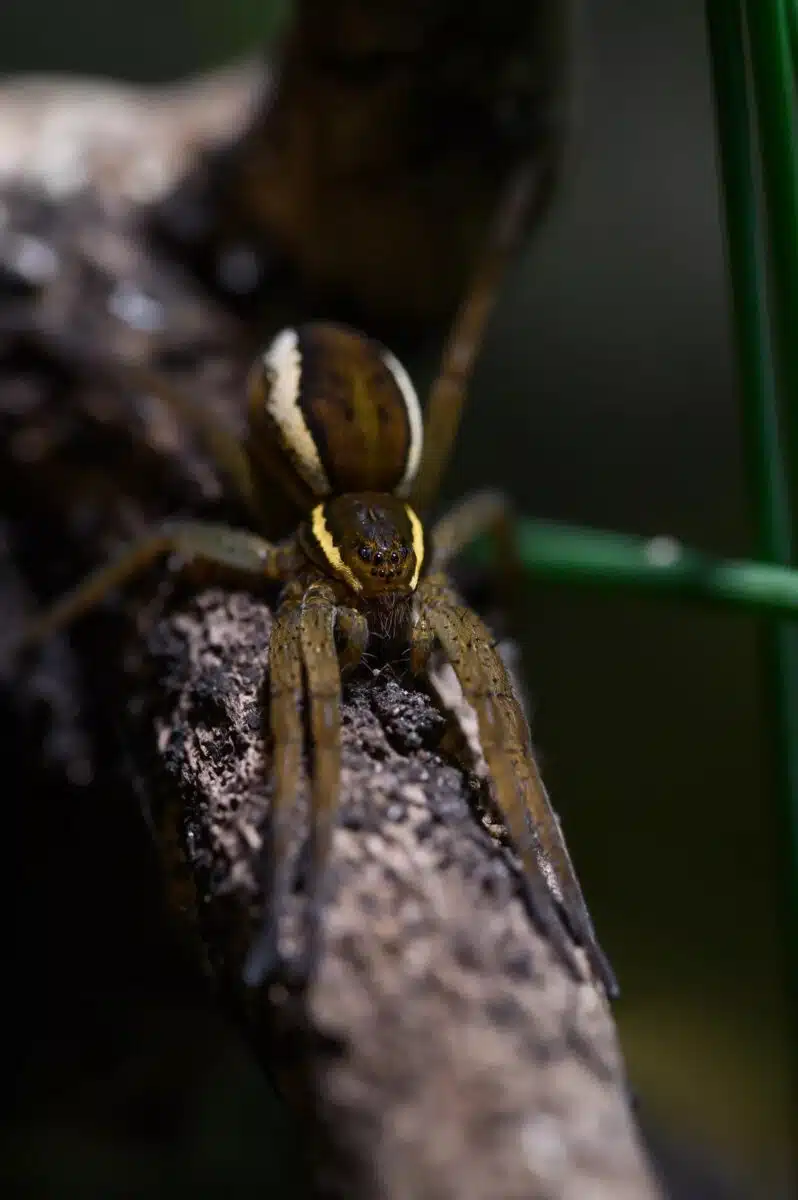 A fen raft spider in its natural habitat. Credit: London Zoo
A Careful and Unusual Breeding Program
To stop the decline, conservationists set up a careful breeding program. Hundreds of baby spiders were raised in secure facilities, each kept in its own test tube to stop them from eating each other. They were even fed by hand with tweezers until they were big enough to be released.
“Our team delicately hand fed tiny flies to each of the hundreds of spiderlings using tweezers, day in, day out, for weeks on end in our bio-secure breeding facility,” the conservation organization explained. “Eventually, the young spiders grew strong enough to be returned to their natural habitat, which our partners worked to restore, and we released them in their hundreds!”
This process took place between 2011 and 2013 and involved collaboration with London Zoo and members of BIAZA. Thousands of spiders were eventually released into restored habitats, marking a key step in rebuilding the population.
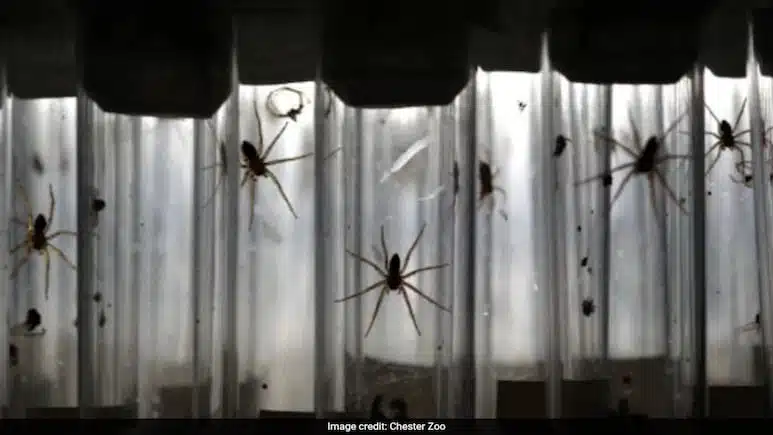 Dozens of young fen raft spiders kept in separate tubes. Credit: Chester Zoo
A Record-Breaking Return for One of the UK’s Largest Spiders
The recovery is now clearly visible in the numbers. As said in the same source, there are around 10,000 breeding females in the UK, marking the highest population level ever recorded for the species and a sharp turnaround from its near disappearance just a few years ago.
“The Fen Raft Spiders were bred right here at the zoo, and we’re super happy to report there are now more than 10,000 breeding females and they’ve just had the biggest mating season on record!” Chester Zoo said.
This year’s mating season has been described as the most successful on record. The spiders, which can reach a leg span of 65 to 70 mm, are among the largest in the country and are capable of moving across water.
As explained by the London Zoo, the species poses no threat to humans and remains confined to wetland habitats, where it contributes to natural ecosystem balance through insect control.Tim Strudwick, site manager at RSPB Mid Yare nature reserves, stated:
“The Fen Raft Spider is one of the UK’s rarest invertebrates and we are proud of the role our reserves and teams have played in its recovery.” He added, “these spiders have an important role in maintaining the rich aquatic diversity found in the grazing ditches on our reserves. The females are impressive in size, but also beautiful – they are truly special to see!”