
The Gateway orbital lunar station was meant to serve as a point of transfer for astronauts headed to the moon as well as a platform for research.
The suspension of the initiative isn’t entirely surprising: some had criticised it as wasteful or a distraction from other lunar ambitions.
Isaacman said Nasa now plans to spend US$20b ($34.3b) over the next seven years to construct the lunar base over dozens of missions, “working together with commercial and international partners towards a deliberate and achievable plan”.
“There will be an evolutionary path to building humanity’s first permanent surface outpost beyond Earth, and we will take the world along with us.”
Artemis 2 on deck
Isaacman, who took the helm of Nasa late last year, abruptly announced less than a month ago that it was reshuffling its Artemis programme that has suffered multiple delays in recent years, as it aims to ensure Americans can return to the moon’s surface by 2028.
That goal remains unchanged, but the US space agency is shifting its flight lineup to include a test mission before an eventual lunar landing to improve launch “muscle memory”, Isaacman said.
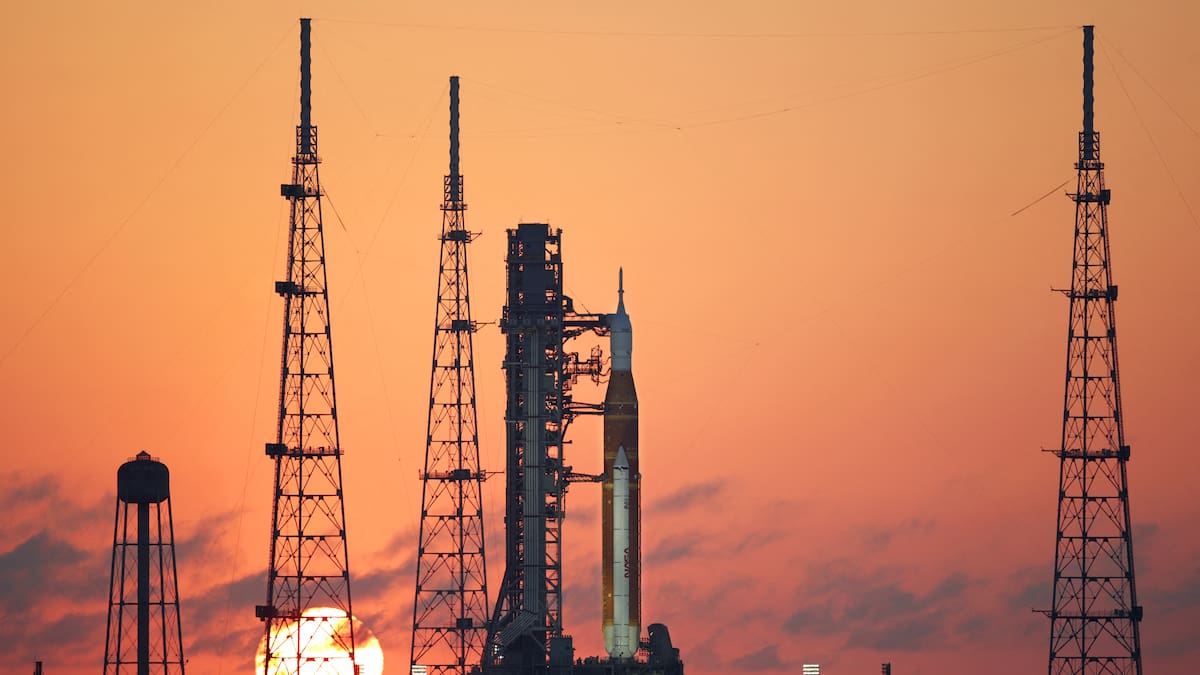
That strategic revision came amid repeated delays to the Artemis 2 mission, which was originally due to take off as early as February, but is now targeting early April. It is meant to be the first flyby of the moon in more than half a century.
During his first term, US President Donald Trump announced he wanted Americans to once again set foot on the lunar surface.
China is forging ahead with plans for its first crewed mission to the Moon by 2030 at the latest.
The US effort depends in part on the progress of Nasa’s private partners.
SpaceX and Blue Origin, the respective space companies of duelling billionaires Elon Musk and Jeff Bezos, are contracted to develop lunar landers used in the Artemis program.
-Agence France-Presse