
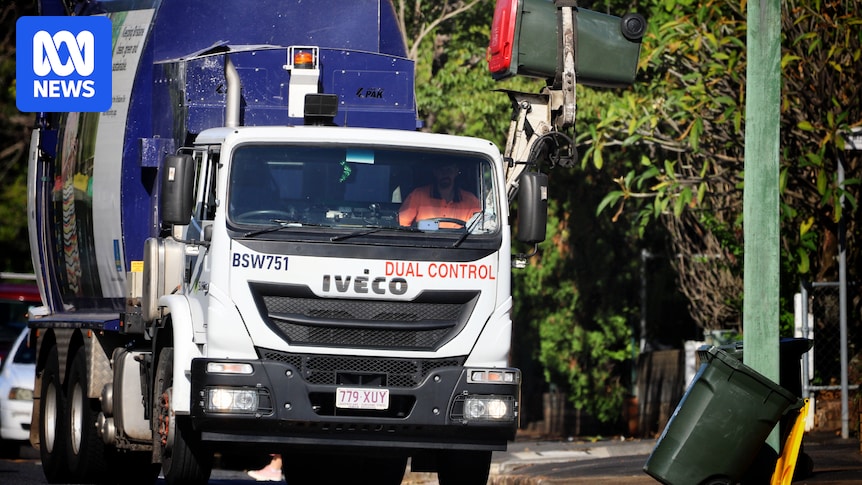
Waste collectors are warning that bin services may be reduced, leading to rubbish pile-ups, as the sector struggles to secure diesel supplies.
The sector also warns rubbish collectors are operating at a loss because of diesel prices, putting some on the brink of collapse unless councils are willing to pass on costs to home owners.
Iran war live updates: For all the latest news on the war in the Middle East, read our blog.
The industry says it is a matter of days or weeks before services are affected, but the sector has been left off the “priority fuel user” list, ensuring essential services have access to diesel.
Waste collector groups have written to Energy Minister Chris Bowen for assistance.
A spokesperson for the minister said the government was engaging with the waste industry, “as we continue to implement measures to ensure Australia’s secure fuel supply gets to where it needs to go”.
In their letter to the minister, the peak associations warned that hospitals, aged care facilities, supermarkets, and others relied on continuous waste removal to maintain safe operations, and that interruptions to services would cause public health problems within 48 hours of ceasing.
“Not being listed is potentially catastrophic to our entire sector, and it’s going to lead to significant health and environmental issues,” Waste Contractors and Recyclers Association of NSW chief Brett Lemin said.
“We are literally the back-end … of pretty much every single industry, every single operation that happens across this country.
“If we cannot fuel trucks and we cannot fuel processing equipment, we cannot collect rubbish, we cannot collect recyclables.”
The groups said they had been left out of fuel supply coordination discussions because they had not been counted as an essential service.
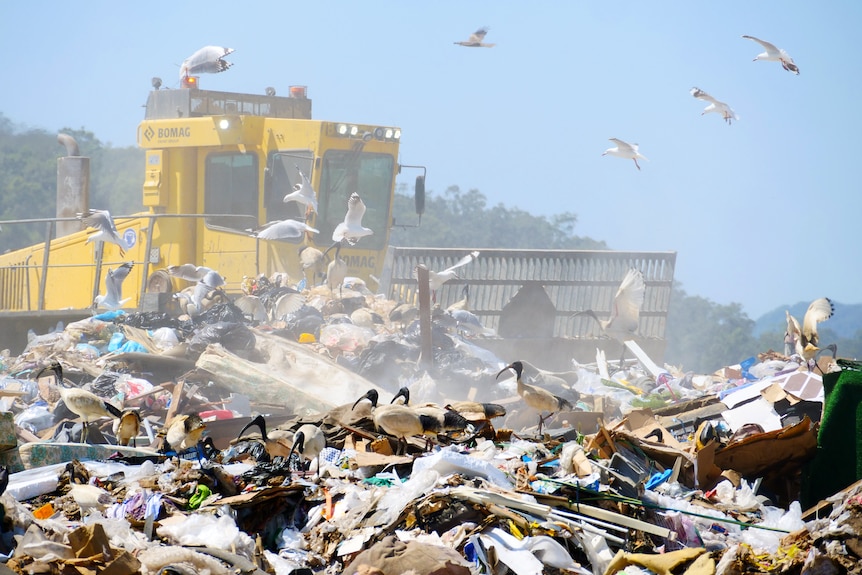
Waste collectors have asked to be considered an essential service. (ABC Gold Coast: Dominic Cansdale)
Waste collectors receiving reduced fuel allocations
Waste industry leaders are travelling to Canberra in the hope of resolving urgent supply and price issues, and expect to meet with Assistant Environment Minister Josh Wilson.
Many waste collectors who maintain their own fuel depots have been told they will receive limited fuel allocations at their next resupply.
Waste Management and Recycling Association WA chief Mike Bobrowicz said some West Australian operators had been told to expect only about half their regular allocation at next refill.
Mr Lemin said one of his members in NSW, who received 50,000 litres a fortnight, was told they would only receive 12,000 litres of their order.
“Straight away that impacts operations,” Mr Lemin said.
Alison Price, chief executive of Waste Recycling Industry Association Queensland, said some of her members had already been given reduced supply.
“In the background, there are already impacts being felt, and I think the general public will start to feel some impacts soon, unfortunately,” Ms Price said.
“I am already aware of multiple members who have not received their full allocations, who have received less than half their allocations.
“I’d just encourage government to think about what might happen if we only collected half the wheelie bins.”
The sector leaders said across the country, services were already being affected in limited ways, such as delays of several hours to residential bin collections.
But they said that would compound rapidly.
“Everything is very much in flux, but we are looking down the railroad track at the possibility of ceasing supply, which is why we are advocating very strongly in Canberra,” Mr Bobrowicz said.
“The commercial bin providers who have got bins out the back of Coles, Woolies, IGA, and every fast food restaurant right around Australia, if [collectors] are not able to get out and service those we’re really starting to get into some serious issues — what happens? We could be really into emergency territory there.”
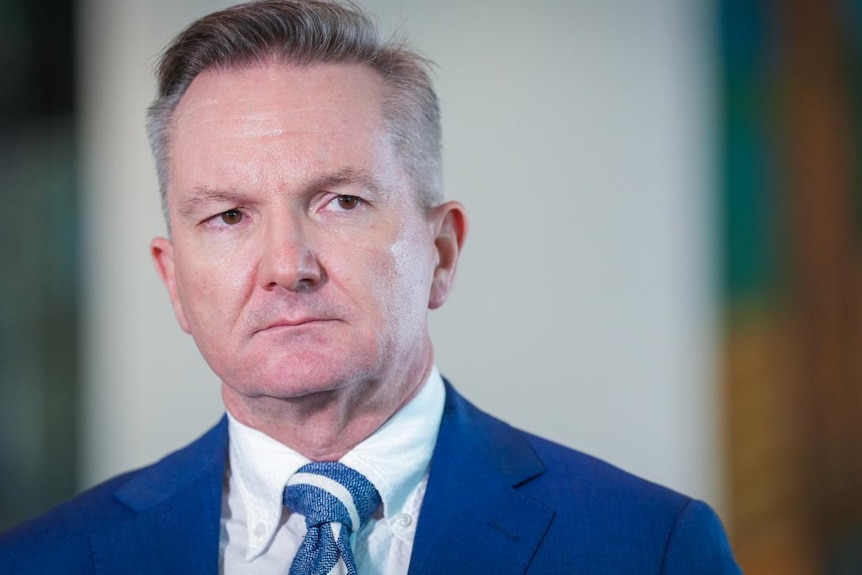
Waste groups have asked Energy Minister Chris Bowen to add them as priority fuel users under the Liquid Fuel Emergency Act. (ABC News: David Sciasci)
Mr Lemin said that if fuel supplies to Australia were affected and the sector was not a listed priority user, there would be “significant” problems within one to two weeks.
Collectors operating at a loss at risk of collapse
Even waste collectors who can secure supplies are counting the days until operating will become unsustainable.
Unlike freight contracts, many waste collection contracts with local councils do not include what is known as a fuel levy or fuel surcharge, which provides cushioning in the event of diesel price shocks.
Mr Lemin said collectors were already operating at a loss, and for small business operators in particular, some would have to trigger “force majeure” clauses to break their contracts if diesel prices reached $4 a litre, as NRMA has forecast.
“That means bins will not be collected. These businesses already operate on a very slim margin, and the increase in fuel prices with no way of recouping that cost means that these operations run at a loss, and these businesses can’t operate at a loss,” Mr Lemin said.
“Trucks will stop. The service will stop.”
Diesel standards relaxed as extent of service station shortages revealed
Mr Lemin said some councils had been understanding and open to renegotiating contracts, but that would also result in rate bills rising.
“The money has got to come from somewhere and, unfortunately, their major source of income is everyday ratepayers, so we are all going to feel the pinch and the squeeze,” Mr Lemin said.
Mr Bobrowicz agreed that at $4 a litre, it would be “go broke time” for small collectors.
“There’s no way around it … there’s no good story there.”
Ms Price said it was “not a pretty imminent problem, it is a problem that is already here”.
“It’s a problem industry has been grappling with for a couple of weeks now.”
Mr Lemin said a temporary cut to the fuel excise would offer relief to waste collectors, councils and ratepayers.
Yesterday, the federal government temporarily lowered diesel standards, allowing diesel with a slightly lower temperature “flashpoint” to be used in Australia — opening up options to source more diesel from the United States, Canada and Europe.
Loading…