
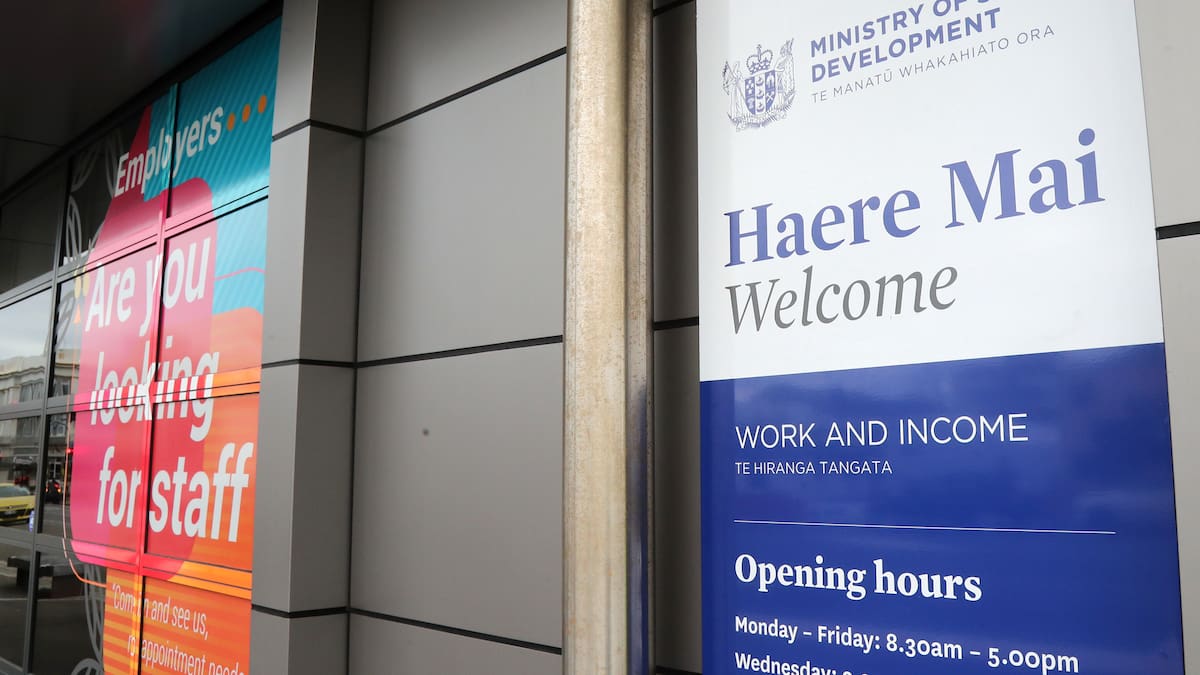
The report acknowledges MSD staff might not always make the right decision, but stressed “the consequences for the person who is declined support are potentially significant, and they will likely have few other options”.
“Some housing advocacy and community organisations who work with people who have been declined emergency housing were concerned that some people are returning to overcrowded homes, couches, night shelters, cars, or the street.”
Advocacy groups and community organisations told the Auditor-General they were concerned the increase in rejected applications was due to these new criteria, leading “many people in need [to] now believe that there is no point in applying and are at risk of becoming or remaining homeless”.
“Some housing advocacy and community organisations that we spoke with were particularly concerned that this specific line of questioning was not being applied fairly or consistently and that it is being used to withhold support.”
MSD could also provide “better guidance” on when to consider whether mental health or dependency issues might be a factor in someone needing housing urgently.
“These are judgments that can have serious consequences.”
MSD agreed with the Auditor-General that it needed to improve its guidance and was “prioritising this as part of its normal service improvement processes”.
Karen Hocking, MSD’s general manager of group enablement, said the agency welcomed the report and “we know there are areas where we can improve”.
“We are pleased to see the Auditor-General has noted there are clear pathways for people to access housing assistance and that agencies are generally collaborating well to address immediate housing need.”
The ministry had recently updated guidance for front-line staff when speaking with clients about emergency housing and was “considering options to further strengthen the oversight of emergency housing declines”.
“We will continue to work with our colleagues at the Ministry of Housing and Urban Development (MHUD) to provide advice to ministers on how best to address the Auditor-General’s recommendations.”
The Auditor-General says MSD could benefit from expanding its current process of reviewing decisions to include a review of a decline while the person is present and before a final decision is communicated.
“This would help provide greater assurance that its staff’s decision-making is consistent and reasonable.”
The agency said it has been focusing on ensuring more consistency in decision-making between regions and sites.
MSD data provided to the Auditor-General showed that of 58 decisions to decline emergency housing over 12 months between 2024 and 2025, five were overturned after being reviewed.
“Reviewing all initial decisions to decline support would also help ensure that all of a person’s options have been exhausted and that people are connected with other services or given helpful advice before they are turned away.”
Julia Gabel is a Wellington-based political reporter. She joined the Herald in 2020 and has most recently focused on data journalism.