
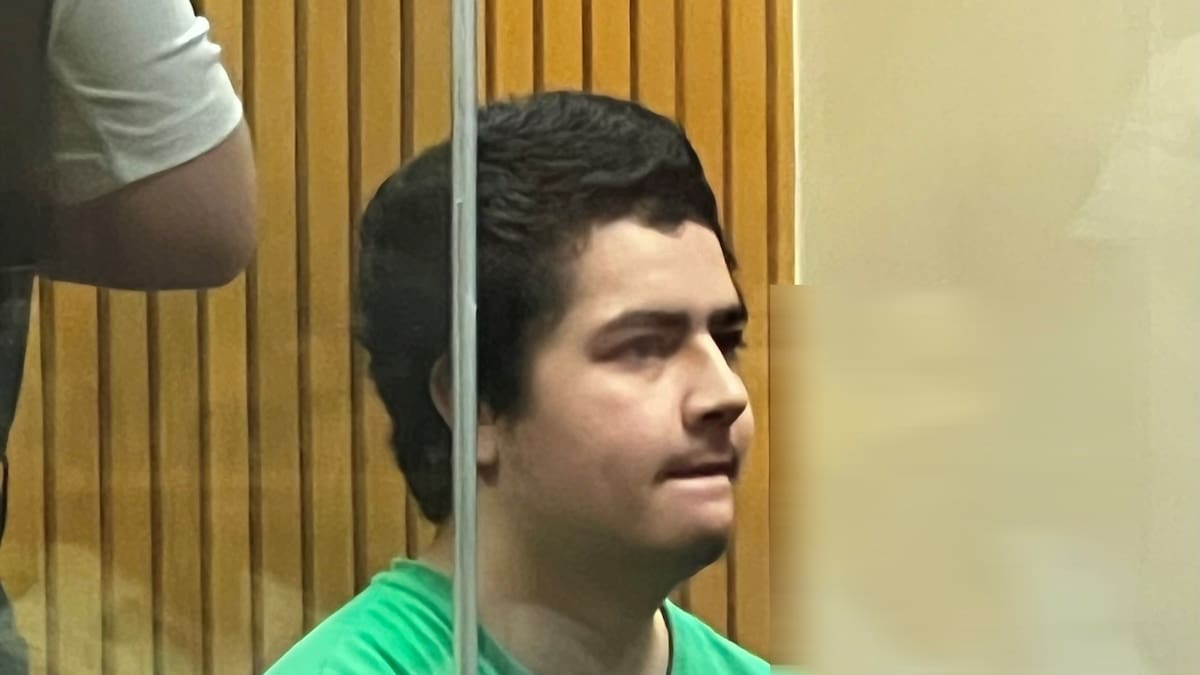
The Department of Corrections said that after an alleged breach of that condition, he was remanded back into custody on March 17.
Judge Louis Bidois jailed Tekuru in January on the charge of unlawfully taking a child with intent to have a sexual connection on March 10 last year.
His months in custody during the court process counted as time served on his sentence, and under New Zealand law, those jailed for two years or less can be automatically released from prison after serving half the term.
It was revealed at his sentencing that Tekuru had a high risk of reoffending and suffered from schizophrenia.
On the day he took the girl, he had been smoking cannabis, was off his medication and claimed to have voices in his head telling him what to do.
The name of the Rotorua daycare she attended has been permanently suppressed to protect her identity.
Tekuru loitered outside the centre’s grounds for more than an hour. He twice scaled a 2m-high fence and entered the grounds undetected, taking the girl the second time.
Tekuru carried her towards his home but let her go when she cried hysterically. She ran back to the centre.
John Tekuru at one of his first court appearances via video link in the Rotorua District Court last year. Photo / Kelly Makiha
He had her in his possession for about three to four minutes.
When police found Tekuru later, he told them he had intended to rape her.
At Tekuru’s sentencing, the little girl’s parents cried and were visibly distraught.
Her mother’s victim impact statement said: “It makes me sick to my stomach that this man had the motive and intentions to sexually harm my 3-year-old daughter.”
Corrections communities, partners and pathways director Lynette Cave said Tekuru was released from prison on March 10 under release conditions at the direction of the court.
“However, following a breach of his conditions, identified by Corrections staff, police were advised, and he was remanded back into custody on March 17, where he remains until his next court appearance.”
He will reappear in court next month.
Cave said she could not disclose where Tekuru was released, but it was not Rotorua.
Tekuru’s release conditions included that he:
be electronically monitored; live at an approved address; not be in contact with children under 16 unless supervised by an “approved informed adult” and authorised in writing; not enter areas where children are likely to be present, including playgrounds and schools, without written approval; not to contact the victim; undergo psychological assessment and treatment; undergo alcohol and drug treatment; not use alcohol or non‑prescribed drugs; and not enter Rotorua without written approval.
Cave said the alleged breach related to Tekuru’s condition not to enter areas where children were likely to be present.
She said offenders such as Tekuru needed to live at addresses deemed suitable following an assessment.
“We look at a range of factors, including the location of victims, other occupants at the property, including any children or people subject to community sentences, location of support services, and the ability to ensure a clear GPS signal at all times if electronic monitoring is a condition of the person’s order.”
She said Corrections manages people on sentences and orders at the direction of the courts and the Parole Board.
“We take our management of offenders in the community extremely seriously, and the safety of communities is paramount in all decisions we make.”
The Rotorua Daily Post asked the Ministry of Education questions about Tekuru’s release, including whether any early childhood centres were warned or notified.
The ministry was also asked if there had been any changes to early childhood education centre requirements, including ensuring that staff actively supervise children at all times.
A spokesperson from the ministry said they had asked their legal team, and it would not comment on the questions.
Last year, early childhood advocate Dr Sarah Alexander criticised the ministry for, in her view, not being transparent enough about how the incident was able to happen – information she believed must be shared to stop it happening again.
The ministry responded that it legally could not reveal some incident details.
The ministry initially told the Rotorua Daily Post last year it had investigated the centre and found no licence breaches.
However, after further questions, the ministry admitted an “oversight” and said the centre was found in breach of regulations.
Kelly Makiha is a senior journalist who has reported for the Rotorua Daily Post for more than 25 years, covering mainly police, court, human interest and social issues.