
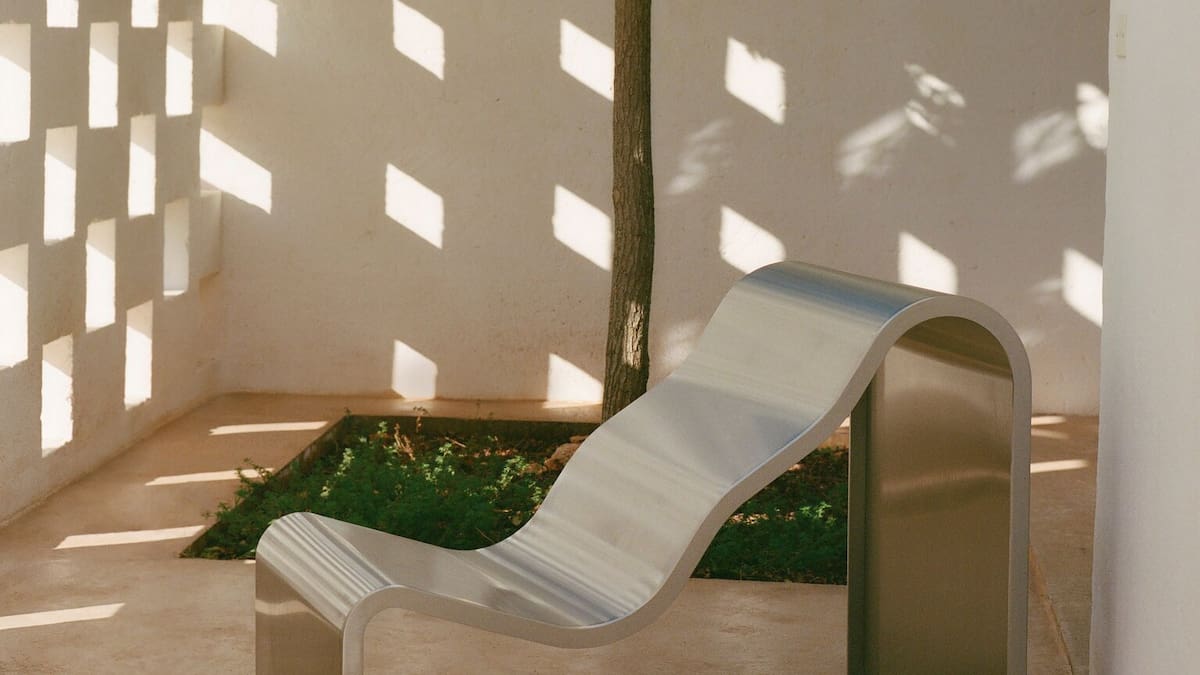
Cocooning is where we’re heading with interiors, writes Leanne Moore after attending NZ Design Week in Auckland this month.
Immersive, intensely personal spaces that are deliberately designed for comfort and ease was a common theme among experts at New Zealand’s annual design conference.
In an increasingly chaotic and
uncertain world, home as a place that provides refuge and rejuvenation is more important than ever. This new immersive home-making movement is about interiors that produce a feeling of being held and protected, a place of safety and belonging.
Here are four key trends to bring to your own home this year.
The Architecture of Feeling: Neuro aesthetics with Muuto
Everyone’s idea of a calming and soothing environment is different. Whether you like your surroundings peppered with bold-coloured art and furniture, or prefer a neutral backdrop of white and cream, the key is creating a built environment that feels good to you.
Tactile fabrics, a pop of yellow and garden views make this space a multi-sensory experience. Photo / Cave Studio
It might take a while to get it right. Harmony in a space is rarely accidental. Immersive interiors are intensely personal and fad-free – not trend-driven cookie-cutter spaces.
Neuroaesthetics, a relatively recent field of scientific research, explores how sensory and emotional responses to space shape both our wellbeing and creativity. Muuto’s David Mansfield presented a design week session at its new store in Auckland on neuroaesthetics. He talked about the way homes designed to feel good activate our senses and calm our stress levels.
Through the lens of Muuto’s human-centred Scandinavian philosophy, Mansfield explained how subtle shifts in colour, light, form and texture transform how we think and feel. As a brand, Muuto intuitively designs pieces that feel as good as they look.
Danish designer Lise Vester in her studio.
Muuto’s new Dream View Bench by Danish designer Lise Vester, pictured at the top of this story, is rooted in healing architecture.
“We spend our days on autopilot – always on, always moving forward. The bench is a deliberate interruption to that rhythm,” says Vester.
Designed to gently tilt your head upwards, it’s perfect for viewing birds in flight, clouds floating by, and the sparkling stars at night. Or simply a space to sit and be still. A seat for contemplation, self-reflection and rejuvenation.
Immersive interiors are unique and fad free – not trend-driven cookie cutter spaces. Photo / Cave Studio
Key design takeaway: It’s important to create a home that looks and feels good because our surroundings impact our wellbeing.
The Long Middle: Designing For Imperfect, Evolving Human Lives
This session by Eva Nash and Kate Rogan, of Rogan Nash Architects, explored design longevity and resilience, addressing how architecture can genuinely support busy, imperfect lives over time. Their talk at design week explored the practical strategies for creating flexible, durable and resourceful environments that absorb the chaos of real life, spaces that can adapt to changing family dynamics.
Eva Nash (left) and Kate Rogan of Rogan Nash Architects. Photo / Jackie Meiring
“We’re looking at that critical shift from designing for single moments or fleeting trends to designing for ‘The Long Middle’ – the decades where homes and spaces truly evolve,” says Nash.
“We are interested in designing spaces that quietly support the physical and emotional wellbeing of their inhabitants; spaces that are not just beautiful, but deeply and resiliently human.
“Homes are places of constant change, layered with routines, memories and evolving relationships. Good architecture supports this complexity, creating spaces that hold both the quiet everyday and the unexpected moments that shape a life.”
A studio in the backyard can double as a pool cabana, workspace, or a teenage retreat. Photo / Cave Studio
When a home is deliberately designed to facilitate reinvention, spaces can easily be transformed for new uses. Flexible space gives a home longevity and adaptability – a pool cabana can double as a workspace, a small studio, or a teenage retreat.
Large open spaces can easily be adapted to different uses, when required. Photo / Cave Studio
Key design takeaway: Flexible spaces allow homes to grow alongside the lives lived within them.
The New Local: Regenerating Craft, Culture, And Commerce
Bec Snelling, head of Snelling Studio, has made a living from imagining the world she wants to live in – then combining craft and creativity to make it a reality. The Auckland-based fine artist and designer produces lighting, furniture and objects with her father, Douglas Snelling. Their pieces are made in collaboration with local craftspeople, using both traditional and contemporary manufacturing techniques.
Bec Snelling and her labrador Connie enjoy a walk among adolescent kauri at Clevedon. Photo / Sara Tautuku Orme
At the design conference, she discussed how combining traditional craft with modern innovation fuels authenticity and elevates our national identity.
“I have seen this most strongly in the Hour Cloak, from The Hour Collection,” says Snelling, referring to the mirror/storage/coat rack crafted from sapele mahogany and chrome, inspired by a traditional Māori cloak or korowai. This multi-purpose piece symbolises homecoming, identity, and ancestry. Its origins can be traced back to her childhood growing up on a farm in Maungaturoto, Kaipara, where she was surrounded by rolling hills and native forest.
Snelling Studio’s Hour Cloak and Hour Rho Wall Light from The Hour Collection.
“The Cloak is a bit like a time capsule of my lived experience,” she says.
“It carries the high notes of the wider landscape and community of Kaipara, the land of the kauri, with its deep history of forestry and colonisation. The medium notes sit in the aesthetic language of the piece itself, the timber, the structure and the way the elements intersect, almost like a woven tapestry.
“The reference to a korowai comes from its presence, its stature, careful craft and layered meaning, and I think Cloak carries something of that same spirit. The final notes are deeply personal: memories of my mother, our family farm, and the feeling of home.”
Rooms filled with art, treasured family heirlooms, and thrift shop finds resonate on a deeply personal level. Photo / Cave Studio
While Snelling’s work draws from her rural past, and her connection to the local kaumātua and iwi, it also has a futuristic feel. Her studio produces carefully considered pieces that can give us an understanding of ourselves in relation to the built world and the objects we surround ourselves with.
Snelling does not produce throwaway pieces. Her designs have a timeless materiality and form, reframing what is familiar to create something new.
Slowly build up a collection of pieces that tell your story. Photo / Cave Studio
Key design takeaway: When there is a story behind an object, it has the power to resonate on a deeply personal level.
Crafting Place: Design Grounded in Culture, Craft and Community
Linehouse designer and co-founder Briar Hickling was a keynote speaker at NZ Design Week.
Award-winning designer Briar Hickling, co-founder of Linehouse and keynote speaker at the design conference, is known for creating deeply personal, evocative interiors.
“I believe in crafting immersive, richly layered homes that nurture a deep sense of belonging through explorations of personal stories, local context and craft, creating meaningful everyday experiences,” says Hickling.
This Linehouse-designed Shanghai restaurant is a sensory experience of form, tactility, light, nature and warmth of tone.
With studios in Auckland, Hong Kong and Shanghai, Linehouse works fluidly across residential and commercial architecture and interior projects in the Asia-Pacific region.
“Materiality and craft sit at the heart of my work, using thoughtful experimentation to transform everyday experiences into warm, tactile and immersive environments,” she adds.
Richly layered homes nurture a deep sense of belonging. Photo / Cave Studio
“It’s not only about crafting a beautiful residence, but also helping clients understand how their spaces can support the way they live now and for the future. We have an important role, not just as designers but as curious researchers.
“For me, it starts with walking the neighbourhood, understanding how people live, their routines and the sentiment of the place, often over shared food and conversation.”
Warm tones and a comfy sofa give this room a cave-like feel, especially when the shutters are closed. Photo / Cave Studio
Key design takeaway: Interiors that create a feeling of comfort and connection are spaces where we can flourish.
More on home design