
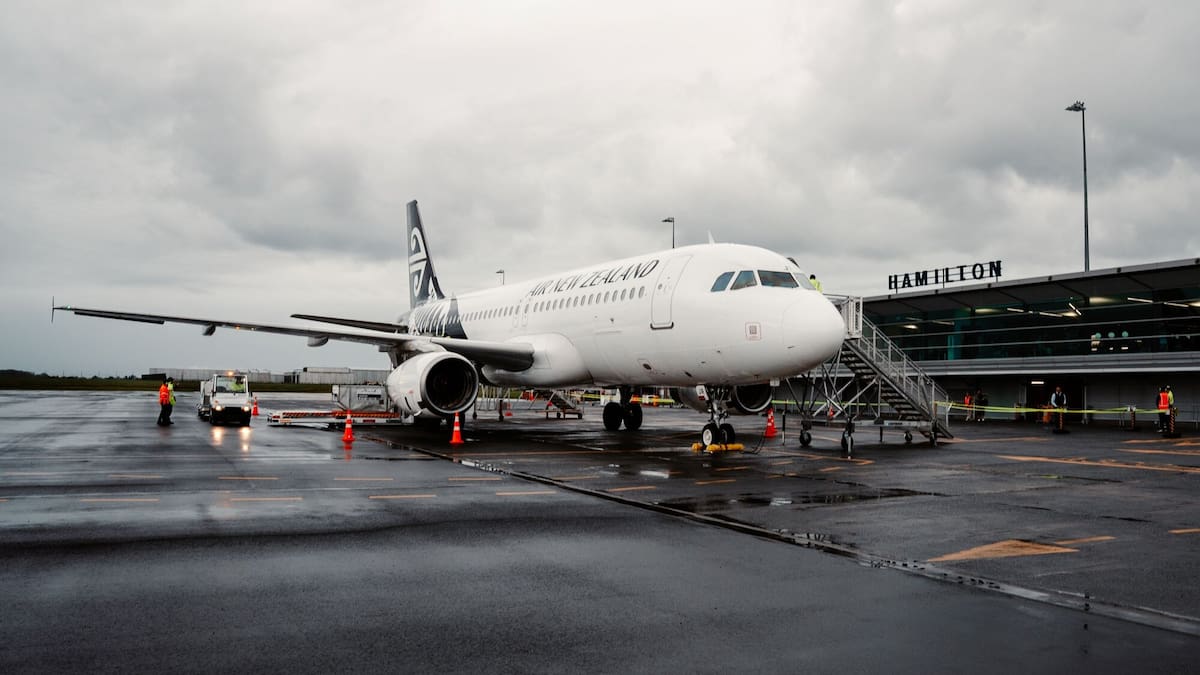
This will also enable any further extension of the runway in the future, should it be needed to offer long-haul flights, the airport said.
Hamilton Airport chief executive Mark Morgan said the extension would increase the airport’s and region’s resilience by allowing wide-body jets to land in Hamilton in exceptional circumstances, like adverse events or emergencies.
It was not to cater for daily services.
Morgan said the airport has been working with Kānoa – the Government’s regional economic development and investment unit – on a formal resilience proposal since July 2024.
“Over the last 18 months, ministers representing the coalition Government have been very receptive to discussions around a more resilient national aviation network, and the role Hamilton could play.
“We think it’s a smart move and a very sensible investment with national benefit.”
Jones said Hamilton’s location and proximity to major highways and link roads made the airport “a key hub” for moving people and freight domestically and internationally.
“In the event of disruptions at other North Island airports, Hamilton Airport is also an option to keep people and goods moving. Such incidents do occur from time to time. Last April, an international flight had to be diverted from Auckland to Hamilton due to bad weather.”
Hamilton’s acting mayor, Geoff Taylor, said the extension was “a significant win” for the city and region.
It reflected the city’s fast‑growing population, strategic location, and reputation.
Hamilton acting mayor Geoff Taylor.
“It positions us to move more people and freight as we grow, accommodate alternative landing needs for larger aircraft, and strengthen Hamilton and the Waikato’s position as a national aviation hub.”
Waipā Mayor Mike Pettit said the upgrade was of “national importance” and would bring local benefits.
“Strengthening Hamilton Airport positions Waipā to attract investment, support high‑value employment and play a meaningful role in New Zealand’s long‑term economic success.”
Hamilton East MP Ryan Hamilton described the loan as a “big boost” for the Waikato.
Waipā Mayor Mike Pettit.
“Another feather in the cap for our airport, connectivity and growth,” he posted on social media.
The runway extension work will be managed by the airport company and tendered via a formal Request for Proposal (RFP) process.
Construction is likely to start towards the end of this year and take 12 months to complete, with no impact on flight operations, the airport said.
Keeping options open
A runway extension has been on the cards since 2011, when Waikato Regional Airport Ltd set aside 16ha, protecting the land from other developments.
This so-called land designation allows for a potential future runway extension up to nearly 3000m.
The large-scale extension, alongside other necessary airside infrastructure, is estimated to cost over $100m and would be part of what’s needed to establish an Auckland-type international service that would see wide-bodied jets coming into Hamilton frequently, a spokesperson for the airport said.
Hamilton Airport chief executive Mark Morgan. Photo / Danielle Zollickhofer
This is separate from the $9.8m project approved this week, which is focused on resilience.
The work undertaken as part of this funded project is not limiting a further extension in the future, the spokesperson said.
Land designations can lapse if developments don’t happen in a designated timeframe, and the land can be used for other developments.
The airport previously looked into a large-scale runway extension in 2022/2023 and found “no compelling argument” in favour, given the cost and following extensive legal, planning and aviation advice.
Hamilton’s runway is already the fourth longest in New Zealand and because Hamilton can already accommodate international flights, including potentially to the South Pacific and Singapore, a business case for a $100m project did not stack up at the time, the spokesperson said.
However, the airport had “always” intended to review this decision in the future, based on market demand, legal and financial considerations and the airport’s strategic direction.
Since 2023, a lot has changed, including Hamilton Airport resuming international flights to Australia.
Largely because of this, and because of the airport’s growth, the airport has already confirmed it will be applying for an extension to the designation lapse in mid-2026 to potentially allow for a large-scale project in the future, the spokesperson said.
In its recent six-month report, Hamilton Airport reported passenger numbers are up 39% compared to the same period in 2024.
More than half a million passengers use the airport annually.