


Photo: 123RF
Warning: This story contains reference to suicide.
Residential eating disorder facility says without funding from Health NZ, only those who can afford the cost can access care.
Two former patients and their families share their eating disorder stories, and how Recovered Living NZ helped them.
Labour calls on government to fund community organisations with proven track record; minister says he expects funding to be directed where it’s needed.
A North Canterbury eating disorder residential facility that’s proved a lifesaver for those admitted there can’t attract government funding, leading to concerns about who can access care.
Recovered Living NZ offers a different experience from the public system, catering for only nine people at a time in residential care that’s far removed from beds on a mental health ward.
Patients live in the facility and can stay for months, but this comes at a cost of about $1050 a night.
The not-for-profit charity has a contract with ACC for sensitive claims patients, but has been passed over for Health NZ funding to open the service to more people.
Family borrows to afford treatment
Gabby Greally’s in no doubt about Recovered Living’s effect on her.
“I think it saved my life and I think that’s the case for a lot of other people I know who went there. They provided treatment that I think the public service is too strained to give me, and that goes for a lot of people.”
Admitted there in July 2024, Gabby was initially reluctant, but she had run out of options in the pubic system, where she’d initially faced a seven-month wait to see a specialist.
Mum Genevieve said a psychologist told them about Recovered Living.
“She became so sick to the point that she had no other option. She had to go to residential care. She was medically unstable.
“That gave us the mandate as parents to say, ‘Either you go or we’ll have to try something more drastic,'” Genevieve said.
Because there’s no funding to go through the public health system, Gabby’s family dug deep to pay for her stay.
“The funding situation is difficult. We didn’t have the money. We had to borrow the money. So many other parents are in that situation. The girls down there, most of them weren’t wealthy.
“People were remortgaging their houses and things like that. It’s pretty unobtainable for most people…
“For Gabby, we’ve got a girl who either would not be here or who would be in and out of the public system for the rest of her life, and instead now we’ve got a girl who’s well and engaged and will contribute so much to New Zealand in the future.”
Gabby said Recovered Living offered more than just eating and weight restoration, focusing too on exercise and reintegrating to everyday life after six months at the facility. There was group and individual work.
Now, the 21-year-old’s studying law and environmental studies at Victoria University in Wellington as well as working in hospitality, progress that seemed unthinkable two years ago.
“The public service is doing a fantastic job considering how strained they are, but I think they need more support through different routes,” she said.
“I think the nature of eating disorders is very complex and the fact we have only one route to go doesn’t reflect their complexity.”
‘You’d do anything to help your child’
Amanda Holland’s daughter Bridie also went to Recovered Living, for five months in 2024, followed by months of part-time programmes after years battling an eating disorder as a teenager.
Bridie was on a waiting list for over a year to see a specialist in the public sector, only for that relationship to eventually fall over when the specialist said they couldn’t help Bridie because she didn’t want to be helped.
Her condition worsened when she moved to Christchurch from Nelson to study at university, and she was hospitalised twice.
Her mum is telling her story with Bridie’s permission.
“Bridie attempted to take her life while she was home with us for holidays and ended up in the ICU at Nelson Hospital,” Amanda said.
“She was very, very unwell in the ICU when they admitted her. They just brought her back…
“She was in ICU overnight while they monitored her.”
Bridie was discharged after less than a day. She and her family had nowhere to turn to for help.
“How do you get help? How do you advocate for them? How do you keep your children safe when they’ve got a mental health conditions that’s destroying them?
“It’s such a lost, helpless feeling watching them unravel and not being able to help.”
Amanda heard about Recovered Living through her sister, but the family had to find the means to pay for what turned out to be $195,000 of care.
“You’d do anything to help your child, anything at all. A thousand bucks a day, that’s just money isn’t it when it gets to that?
“The cost was what it was. We were fortunate that we had some retirement funds that we were able to liquidate to pay for her care,” Amanda said.
“She was able to get to a point where we could talk about food and eating plans with her.
“Everything’s very closed off and secretive with an eating disorder. It’s just so isolating for the person that’s struggling with it and they cut everybody, including us, as their parents, out of their world.
“They just shut down from everyone, so to get to a point where Bridie learned how to talk about her feelings and let people back into her world again was just incredible.”
Bridie’s back at university now and doing well, but Amanda worries for others unable to access the help they need if they can’t afford it.
Concerns about equity of care
Recovered Living chair Gerard DeCourcy said there was a cost to provide care, but because of its small scale, the home-style facility, which opened almost three years ago, didn’t fit the public-funding model .
“The issue for Health NZ is we’re quite small, with nine beds, and the public money is spent to reach greater numbers.
“The trade-off, however, is that the contract involves quite small amounts of money, relatively, but it still makes a huge difference to the lives of the clients who come to Recovered Living.”
DeCourcy said due to the cost there was an issue with equity of access.
“A Health NZ contract would enable this recovery-based therapy to be accessible,” he said.
“We operate in a small country. There are a number of very worthwhile charities all chasing private support.
“It is difficult for a charity like Recovered Living to build up enough working capital to give it financial security, so we need a reliable pipeline of clients who come to access our service to ensure that we remain financially viable.”
He would like to see a greater partnership between Health NZ and community providers.
Health NZ didn’t say why it doesn’t fund Recovered Living, but it confirmed a senior official met with the organisation late last year.
“Health New Zealand aims to provide a range of accessible, high-quality services for those with eating disorders, from early intervention through to specialist care, prioritising patients with the greatest clinical risk,” said Phil Grady, Health NZ’s national director for mental health and addiction.
“Wait times vary for different services across the country, but help is always available for those in urgent need.”
He said there was a standard application process for contestable funding.
There were 23 inpatient beds nationwide.
It’s estimated about 100,000 New Zealanders have an eating disorder.
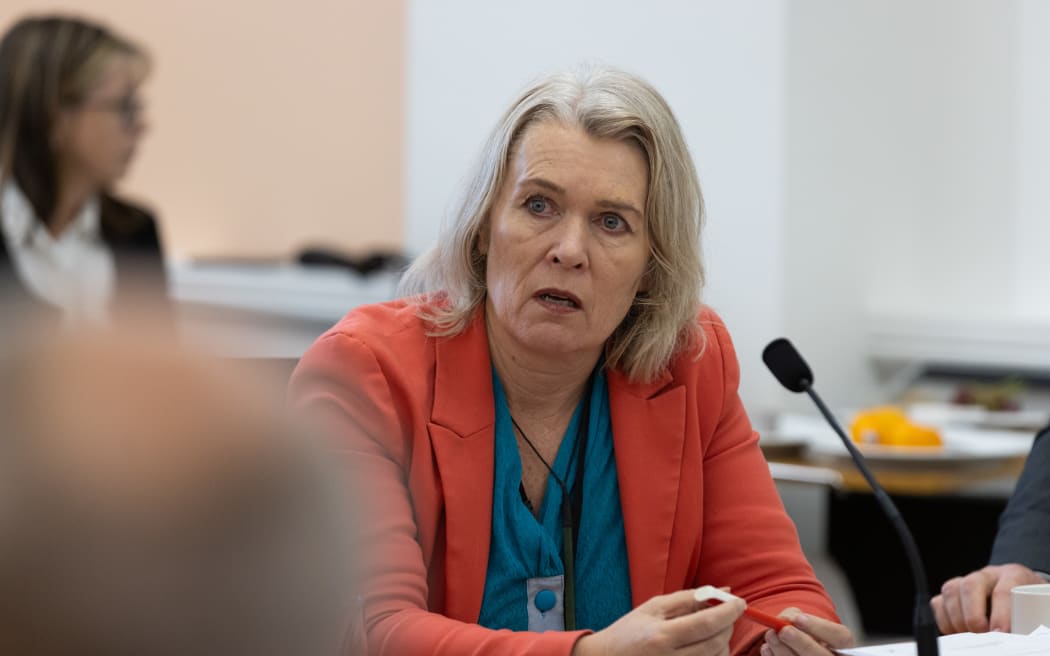
Labour mental health spokesperson Ingrid Leary.
Photo: VNP / Phil Smith
Labour mental health spokesperson Ingrid Leary said she’d like to see the government fund organisations with proven track records, rather than just measuring numbers of patients.
She said that’s what Labour would do if it were in power, and she compared the cost of a facility such as Recovered Living with the $1600 it would cost to keep someone in hospital each night.
“Clearly, this is an organisation that has good results and good evidence. Why isn’t it being funded?”
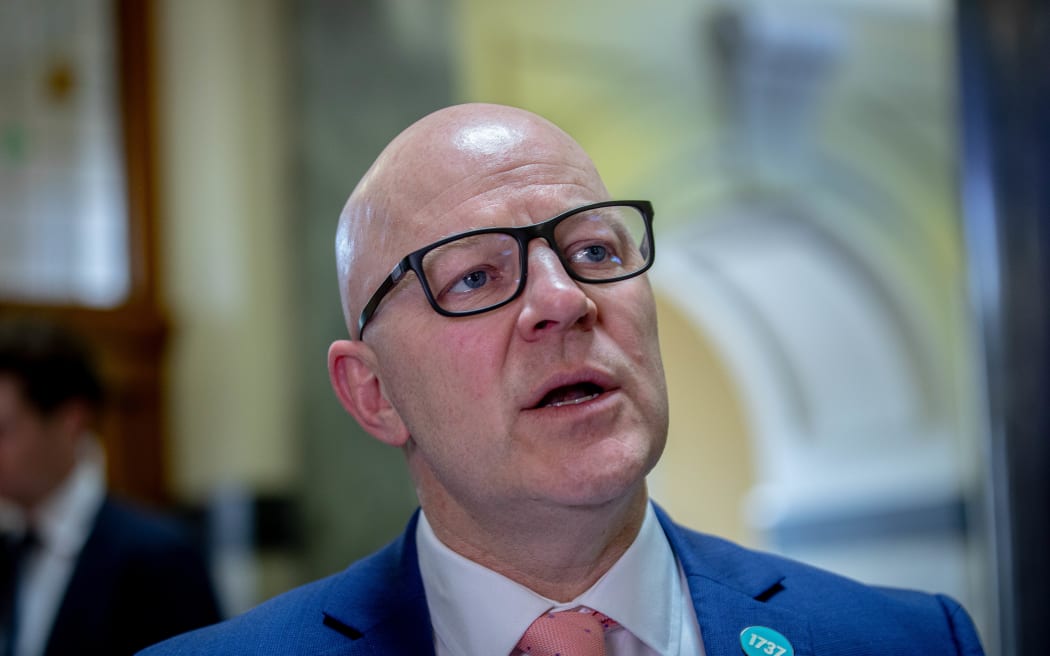
Minister for mental health Matt Doocey.
Photo: RNZ / Mark Papalii
Minister for mental health Matt Doocey said he met with Recovered Living late last year and then contacted Health NZ’s director of mental health to arrange a meeting “to address the funding issue raised”.
“It is important to note that funding decisions are made independently by Health New Zealand.”
Doocey said last year he announced the first, refreshed eating disorders strategy in 16 years, which was supported by a $4 million a year funding boost.
“This represents a 20 percent increase and brings total annual investment in eating disorders services to more than $23m.
“I expect Health NZ to ensure that this funding is directed to where it is most needed, so that people experiencing eating disorders can access the support they need.”
Where to get help:
If it is an emergency and you feel like you or someone else is at risk, call 111.
Sign up for Ngā Pitopito Kōrero, a daily newsletter curated by our editors and delivered straight to your inbox every weekday.