
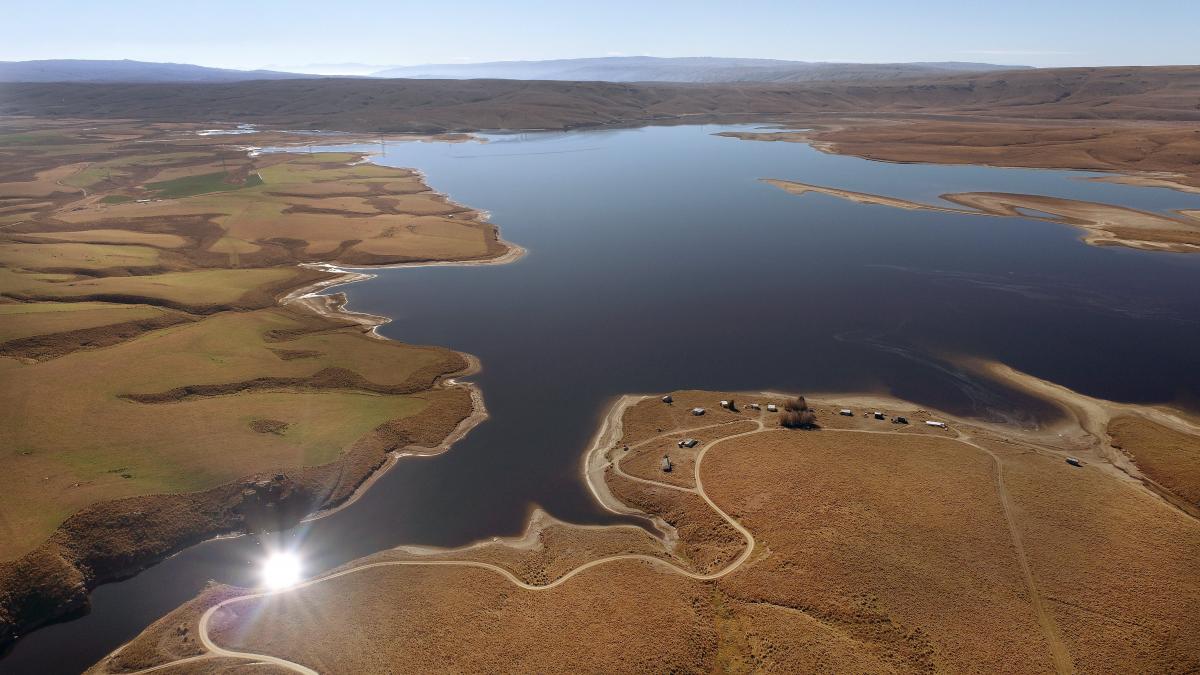
Government ministers appear to have done a rapid U-turn over support for the Lake Onslow power project.
The project was referred to the fast-track consent process this week and a substantial application will now have to be filed.
Before being referred, the application had to be assessed whether it met the requirement of the Fast-track Bill, which was set up to make it easier to get nationally and regionally significant projects across the line.
This involved getting comments from Crown ministers on the application.
The Clutha Pumped Hydro Consortium wants to construct and operate a large-scale pumped hydro energy scheme. It would involve pumping water from the Clutha River via a tunnel to an enlarged Lake Onslow. The water would then be released down the tunnel to generate electricity when required.
The project would have a power station capable of generating up to 1000MW.
It has been on the books for more than 20 years and a $30 million study was carried out when the Labour-led government was in power from 2017 to 2023. But the National-led government canned the project in December 2023.
Then-energy minister Simeon Brown, when announcing the cancellation, said “this hugely wasteful project was pouring money down the drain at a time when we need to be reining in spending and focusing on rebuilding the economy and improving the lives of New Zealanders”.
National MP and energy spokesman Stuart Smith said in March 2023 the Lake Onslow proposal was “a gigantic, hugely expensive white elephant boondoggle that Labour should consign to the dustbin of history”.
Boondoggle means an unnecessary, wasteful or fraudulent project.
Members of the National-led government now appear to be not as critical of the project when asked to comment on it.
Energy Minister Simon Watts said large-scale water storage and generation would support security of the energy supply and help create downward pressure on wholesale electricity prices. A pumped hydro scheme also could help utilise cheap generation from other sources to refill the lake at suitable times.
He considered the proposal would deliver nationally significant infrastructure.
As the climate change minister, Mr Watts said it was likely the project would have significant national benefits in terms of climate mitigation.
The application was unlikely to have significant national or regional benefits in terms of climate adaptation.
Regional Development Minister Shane Jones said the reservoir would have the equivalent storage capacity of a $2trillion lithium-ion battery. He said the applicant stated the storage capacity was equivalent to the worst energy shortfall experienced in the New Zealand hydro system over the past 89 years.
“The scale of the Clutha pumped hydro scheme’s construction would bring significant benefit to the region and potentially offer national significance due to the need for broad skills and resource.
“Indicatively, the Clutha Pumped Hydro Scheme is expected to be a nationally significant asset.”
The high cost of energy was a leading cause of deindustrialisation in the regions.
“Large-scale water storage and generation would support energy security of supply and create downward pressure on wholesale electricity prices.”
Minister for the Environment Penny Simmonds said the project earmarked land that was part of the sensitive indigenous biodiversity and freshwater systems of the Onslow Basin, and the outstanding natural landscapes and landscape management areas of the East Otago uplands. She said the adverse impacts of the project would have to be addressed and consideration given to how they would be mitigated.
Minister for the South Island James Meager said the consortium stated the project was expected to provide very significant national and regional benefits.