
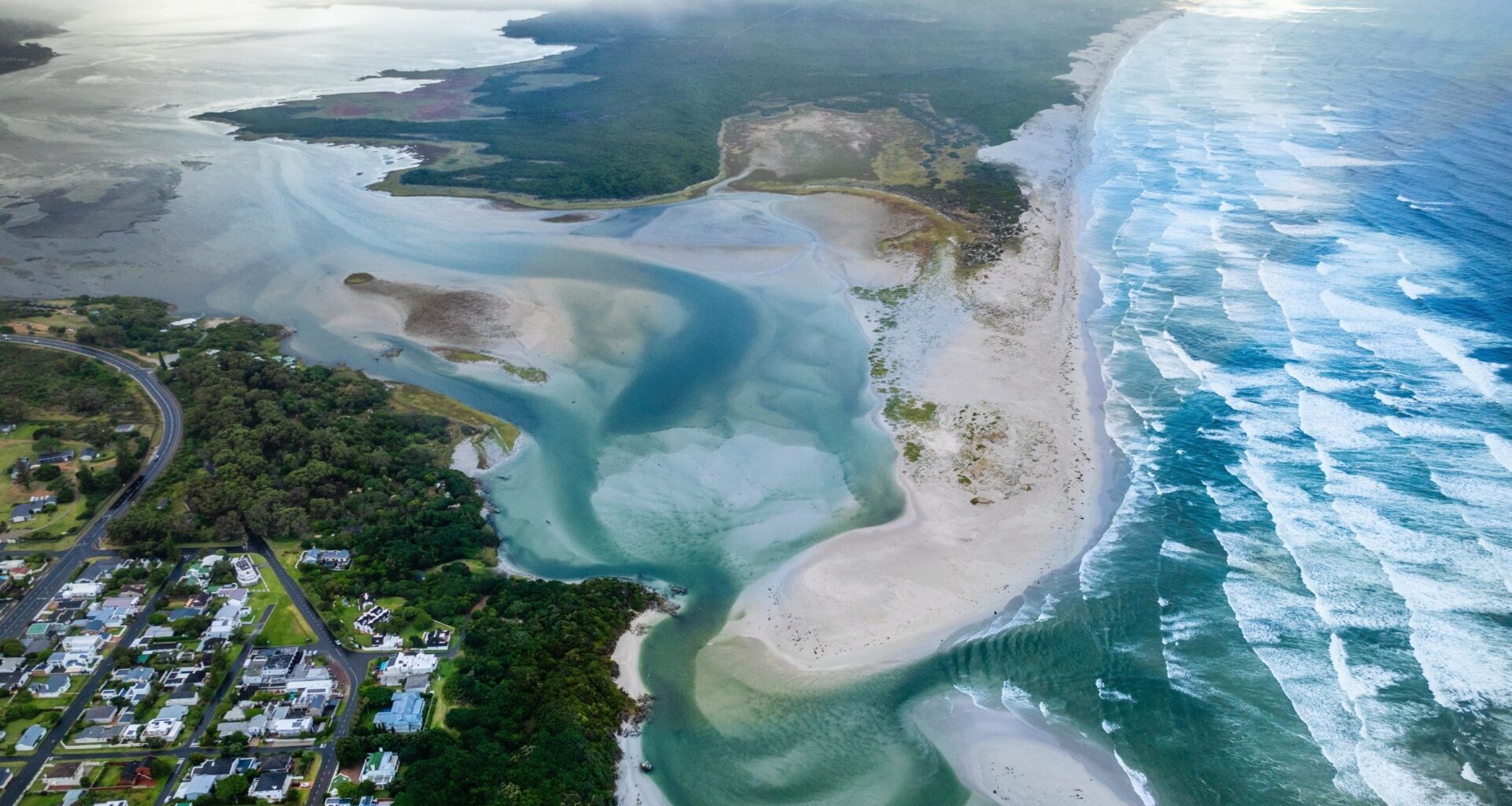
The ocean along Africa’s coast is changing. What once felt far away is now part of daily life, as rising water and stronger climate patterns become harder to ignore.
Scientists are no longer talking about slow change. The pace has picked up, and the risks are growing faster than expected.
Africa’s sea levels are rising faster

Using 30 years of satellite data, researchers from the University of Cape Town tracked ocean changes across Africa’s surrounding waters.
The findings point to a clear shift. Sea levels have risen by more than 11 centimeters (about 4.3 inches) since 1993, and the increase is happening faster than the global average.
The data comes from a wide region, including the Atlantic Ocean, Indian Ocean, Mediterranean Sea, and Red Sea. Instead of a steady climb, the rise now looks uneven and sharper in recent years.
That change matters. When the ocean rises faster, cities and coastal areas lose time to prepare, and even small delays can turn into serious damage during floods.
A climate event made it worse
Then came the 2023 to 2024 El Niño, and everything intensified. El Niño usually warms ocean waters, but this time the effect felt stronger than expected.
Sea levels increased by about 27 millimeters (about 1.06 inches) during this event, which is higher than what scientists saw during the powerful 1997 to 1998 El Niño.
That comparison alone says a lot. Events that once set records are now being pushed aside by newer ones.
At the same time, 2024 recorded some of the highest sea levels in the region. The ocean is no longer starting from the same level as before. It begins higher, so each new climate event adds pressure on top of an already rising base.
Multiple forces worked together
This was not just about El Niño acting alone. Several climate patterns lined up at the same time, and that combination made the impact stronger.
The Indian Ocean Dipole, Atlantic Niño, and Tropical North Atlantic patterns were already strong before El Niño began. The ocean was already warm, and El Niño added even more heat to it.
“We are witnessing a fundamental shift in how the ocean responds to climate variability,” said Dr. Franck Ghomsi, the study’s lead author.
“The 2023-2024 event interacted with an ocean already preconditioned by multiple climate forces and excessive heat, creating a compound effect that pushed sea levels to heights we have never seen in the satellite record.”
Heat is driving the rise
At the center of this change sits a simple idea. Warm water takes up more space than cold water. As the ocean heats up, it expands, and sea levels rise.
More than 70 percent of the increase during this event came from this expansion alone. Ocean temperatures reached record highs, with some regions warming by one to two degrees Celsius above normal levels.
At the same time, usual wind patterns weakened. These winds normally pull cooler water up from deeper layers, which helps balance the temperature. Without that cooling, warm water stayed near the surface and kept building.
Heat gets trapped near the surface
The ocean did not just warm. It started behaving differently. Layers formed, with warm water sitting on top and cooler water staying below. This layering, called stratification, acted like a barrier.
Heat could not move downward easily, so it stayed near the surface and continued to build. More heat led to stronger layering, and stronger layering trapped even more heat. This cycle kept feeding itself.
Scientists also noticed that the ocean stored far more heat than during earlier events. That extra heat added pressure and pushed sea levels even higher than expected.
A major shift after 2009
Looking back at the data, one year stands out. Around 2009, the trend changed.
Before that, sea levels were rising more slowly. After 2009, the rate increased sharply. The rise moved from about 2.72 millimeters (0.11 inches) per year to about 4.70 millimeters (0.19 inches) per year.
This is not a small jump. It shows a clear acceleration. Most of the increase has happened in recent years, which means the impact is unfolding now rather than building slowly over decades.
Some regions face higher risks
Even though the ocean is rising everywhere, the impact is not evenly spread. Some regions feel the effects more strongly.
Along the Indian Ocean near East Africa and Madagascar, the rise is happening especially fast. The Gulf of Guinea and parts of West Africa are also seeing strong changes due to shifting currents and warming water.
Cities like Lagos, Accra, and Douala now face growing risks of flooding and erosion. For island nations such as Seychelles and Comoros, the challenge runs deeper. Rising water directly threatens land and homes.
People and livelihoods are affected
More than 15 million people live along Africa’s coastlines, and the effects are already visible. Flooding damages homes and infrastructure, while saltwater entering freshwater sources creates serious problems for drinking water.
Fishing communities face another layer of difficulty. Warm surface water blocks the movement of nutrient-rich water from deeper parts of the ocean. This reduces fish populations and affects both food supply and income.
In regions that already face economic challenges, adapting to these changes becomes even harder.
A clear warning for the future
This research shows that sea level rise is no longer a slow and predictable process. It now includes sudden increases linked to strong climate events, and these events are becoming more powerful.
Even smaller climate shifts can now lead to large impacts because the ocean is already warmer than before. This creates a situation where the system reacts more strongly than it used to.
“This research closes a critical knowledge gap regarding African sea levels,” said Dr. Ghomsi. “We must use this information to drive policy, build resilient infrastructure and protect the vulnerable communities that define our continent’s coastline.”
The rising ocean is sending a clear message. Action taken today will shape how well coastal communities handle the changes ahead.
The study is published in the journal Communications Earth & Environment.
—–
Like what you read? Subscribe to our newsletter for engaging articles, exclusive content, and the latest updates.
Check us out on EarthSnap, a free app brought to you by Eric Ralls and Earth.com.
—–