
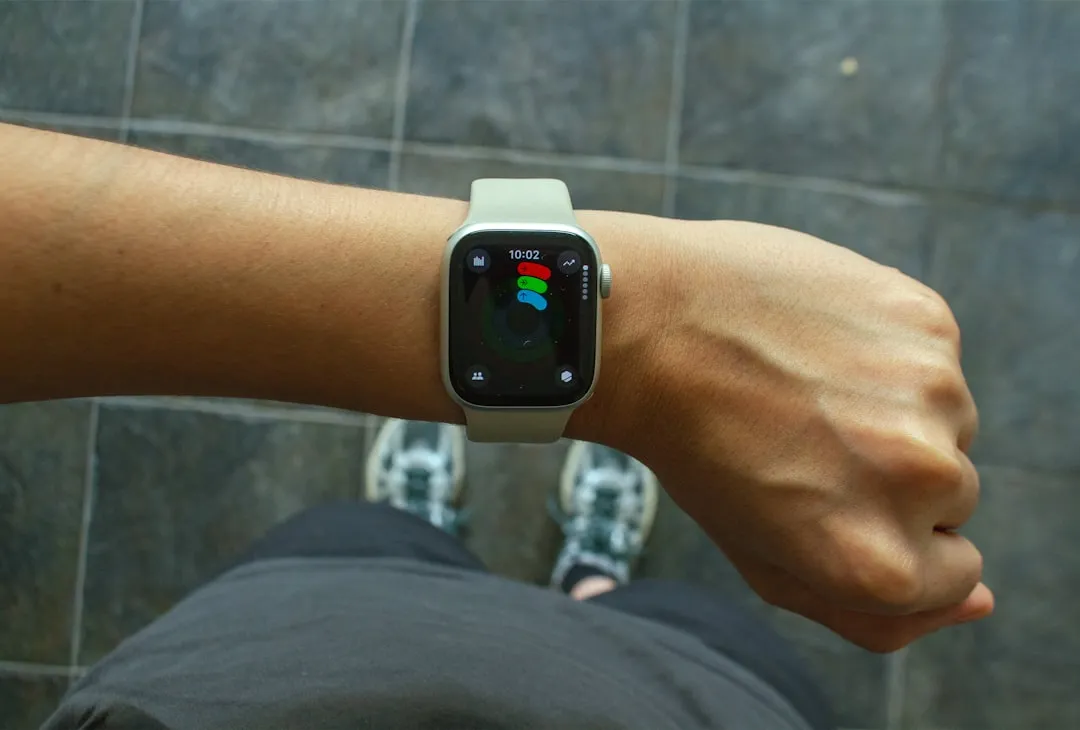
Premium Apple Watch buyers are upgrading for blood pressure monitoring and satellite connectivity, not a new look. That shift, confirmed by Counterpoint Research data from last month, explains why the absence of a major Apple Watch redesign in 2026 is less notable than it first appears. The more interesting question is whether the capability additions arriving this fall will be as compelling as the ones that drove Apple’s first shipment growth since 2022.
The chassis Apple introduced with Series 10 in September 2024 was a genuine reset: Apple’s thinnest watch ever, roughly 10% slimmer than the three preceding generations, with enlarged 42mm and 46mm cases, a wide-angle OLED display up to 40% brighter when viewed at an angle, new titanium and Jet Black aluminum finishes, and a charging system capable of hitting 80% in about 30 minutes, per Apple’s Series 10 announcement. Apple also confirmed that previous 41mm and 45mm bands would fit the new case sizes, a signal that this form factor was designed to persist across generations, not refreshed again a year later.
The 2025 lineup kept that shell and filled it with health and connectivity upgrades. Counterpoint Research found that buyers who had been holding off specifically cited 5G RedCap, hypertension notification, and satellite connectivity as what finally moved them to upgrade, not a new exterior, MacObserver citing Counterpoint reported in late February. Apple recorded its first year-over-year shipment growth since 2022 as a result.
Apple Watch design changes 2026: more sensors, same case
Despite circulating speculation about a significant redesign, Apple is not expected to change the circular sensor array on the watch’s underside for 2026, even as the sensor count may double, 9to5Mac reported last August. More sensors, same housing. That’s the core of the no-redesign story, and it’s worth being clear about what that term actually means.
A redesign, in Apple Watch terms, means changes to the external casing: dimensions, materials, form factor, visible physical layout. New chips, updated health sensors, display refinements, and connectivity additions that work within the existing frame don’t qualify. Series 11 added an updated chip and new health sensors without touching the case; reporting suggests 2026 follows the same pattern.
Apple’s band compatibility commitment reinforces that read. By guaranteeing older 41mm and 45mm bands would fit the new 42mm and 46mm cases, Apple signaled that the form factor was built to last across multiple generations. An exterior change in 2026 would cut against that commitment directly.
Evidence on the mainstream Series and SE for 2026 remains thin. Both followed the internal-refresh pattern in 2025, and nothing in current reporting points to an exterior overhaul for either. The no-redesign expectation is strongest, and best supported by available sources, for the high-end model.
The data that explains why features beat design
Average smartwatch selling prices rose 5% in 2025, while devices priced under $200 fell 9% in shipment volume, MacObserver citing Counterpoint reported in late February. Buyers spending serious money on a smartwatch are increasingly paying for what it monitors, not what it looks like.
The 2025 results showed that directly. Counterpoint specifically named 5G RedCap, hypertension notification, and satellite Emergency SOS as the features that unlocked pent-up demand among buyers who had been waiting for a substantially improved smartwatch and found it in the Ultra 3’s capabilities rather than its appearance, MacObserver citing Counterpoint reported. Cellular smartwatch shipments rose 6% year over year in the same period.
Worth pinning down what that data actually shows, though. Those upgrade drivers, 5G RedCap, hypertension notification, satellite connectivity, are tied specifically to the Ultra 3 and the premium segment. They don’t prove design stopped mattering across the entire Apple Watch buyer base. What they show is that for premium buyers and long-delayed upgraders, health and connectivity additions were compelling enough to drive purchases without any change to the exterior. That’s a narrower claim, but it’s the one the evidence supports.
Gurman’s broader critique of Apple’s current product cadence is fair, but it lands differently on Apple Watch. Many Apple products unveiled this month received faster chips and little else, with Apple “treating a maintenance update as if it were a new generation,” per MacRumors this week. A chip upgrade alone in a pair of headphones is one thing. A chip upgrade paired with a sensor that monitors blood pressure trends and flags potential hypertension is a different proposition. The branding critique stands; the underlying argument about product stagnation gets harder to sustain when the capability additions carry clinical weight.
There’s also a practical logic to longer design cycles that’s worth naming. A new chassis requires new tooling, supply chain changes, and a revised band ecosystem. New health sensors require regulatory clearance and software work, but leave the physical product intact. At 23% global smartwatch share, a one-point gain in 2025, according to the same Counterpoint data, Apple has limited reason to absorb that cost and disruption when sensing and connectivity are clearly moving units. That said, this is inference from the available data, not a stated Apple position.
Who should pay attention to the 2026 Apple Watch update
Series 10 and Series 11 owners can largely tune this cycle out. The form factor is the same one they’re already wearing, and if hypertension monitoring and satellite connectivity don’t address a specific need, the 2026 update isn’t for them.
Series 8 or older owners are in a genuinely different position. The gap between a pre-Series 10 watch and a 2026 model spans the entire Series 10 physical redesign plus two generations of health and connectivity additions. That’s a substantial cumulative change even without new exterior hardware this year.
A simple framework helps evaluate any Apple Watch launch going forward. Look for changes across three categories:
Casing and form factor: the redesign layer
Sensing hardware: health capability additions
Connectivity: cellular, satellite, emergency features
When only the first category is absent, a meaningful upgrade may still exist. Apple Watch has now demonstrated two consecutive years where the second and third categories delivered real value without the first, and that pattern is likely to hold until a new sensor or display technology forces a rethink of the housing itself.
The triggers that would genuinely require a new exterior remain future scenarios: blood glucose monitoring (long rumored, not cleared for any device), a shift to Micro LED display technology, or a competitor shipping a form factor that gains meaningful market traction. None appear imminent. When one arrives, the physical change will be hard to miss. Until then, the feature list is where the Apple Watch story actually lives.
What the no-redesign cycle means for Apple Watch in 2026
The 2025 data is concrete: first shipment growth since 2022, 23% global share, and pent-up demand unlocked by health sensing and satellite connectivity from a lineup that was, by nearly every account, an internal refresh, MacObserver citing Counterpoint reported in late February. Reporting suggests 2026 is expected to extend that pattern, with the Series 10 form factor entering its third generation.
That’s not stagnation. It’s the predictable result of a chassis reset that worked, followed by a market that proved it cares more about what a watch measures than what it looks like.
The design conversation will reopen when sensing hardware or display technology demands it. For now, the right question for any Apple Watch buyer isn’t whether the case changed. It’s whether what the watch can do changed in a way that matters to them.