
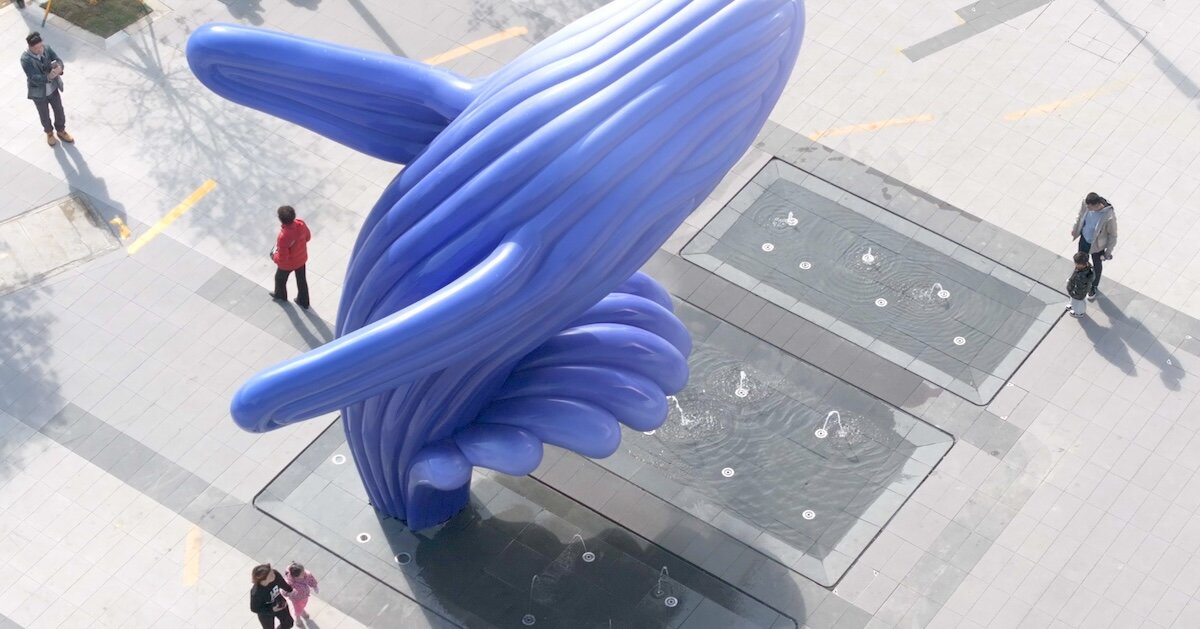
ferdi b dick expands large-scale sculpture series across china
South African sculptor Ferdi B Dick has installed a nine-metre-tall, mirror-polished whale sculpture along the waterfront of Zhanjiang International Riverside, a newly developed coastal CBD in southern China. The public artwork forms part of the district’s broader urban expansion, acting as a visual anchor within the evolving skyline.
Positioned within the rapidly developing district, the sculpture contributes to placemaking efforts in the area. Its scale and clarity establish it as a landmark, offering both residents and visitors a recognizable point of reference along the waterfront. The whale is deliberately stylised into a simplified, balloon-like form, offering a clear gesture that resonates across distance while engaging viewers up close.
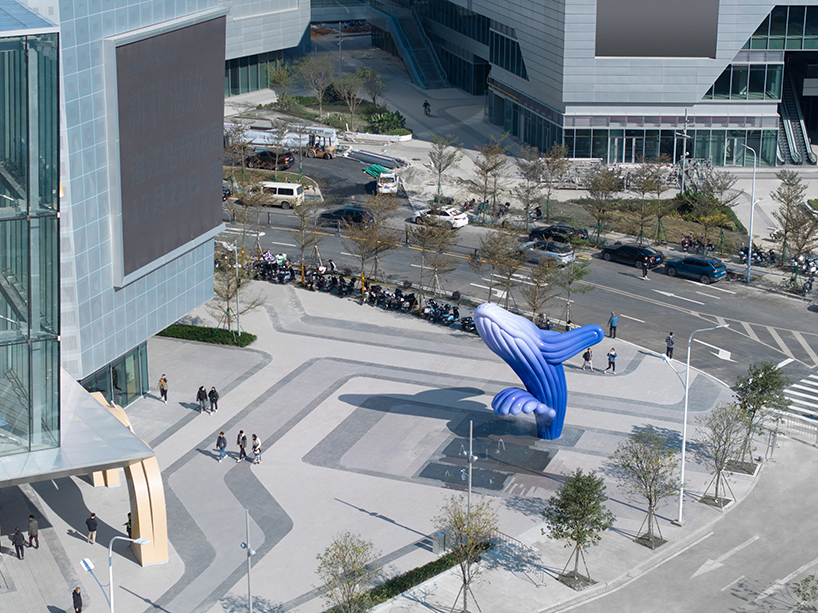
the sculpture in relationship to the surrounding pedestrian square | all images courtesy of Ferdi B Dick
Embrace the amazing whale anchors zhanjiang development
The sculpture’s reflective stainless steel surface actively draws its surroundings into the work. Sky, water, and cityscape continuously shift across the mirrored form, turning the whale into a dynamic interface between object and environment. This material choice by the artist reinforces its coastal context while amplifying its visual impact.
The whale is part of an ongoing series of monumental public works the artist has completed in China since 2021. These include a five-metre Ox in Taiyuan, three large Tiger Astronaut sculptures, and a seven-metre inflatable Hehe Rabbit, all exploring inflated forms and high-finish surfaces at urban scale.
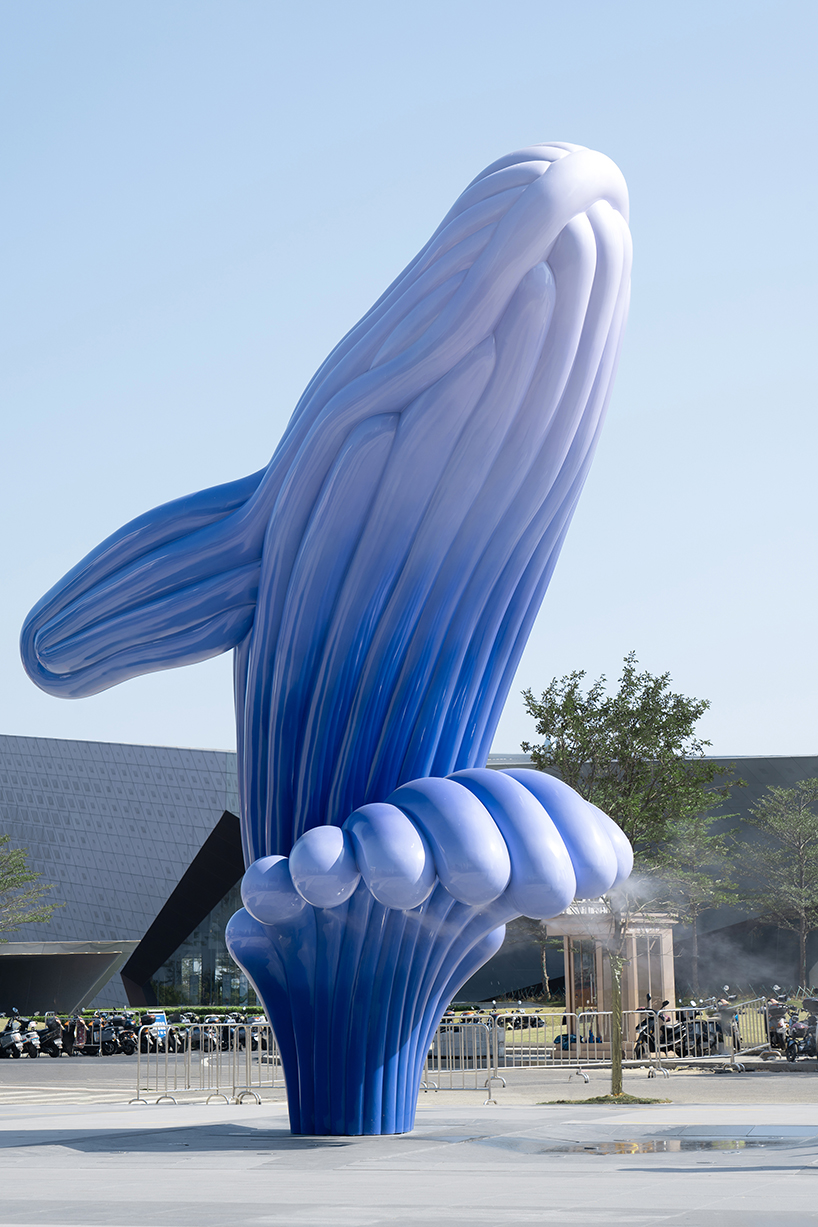
the sculpture’s sweeping body and clustered base read like a stylized surge of motion
computational design meets traditional casting for public art
Based in Kuala Lumpur, Ferdi B Dick began his career as a 3D animator in Cape Town before transitioning into sculpture. His process merges digital and physical techniques: forms are developed using software such as Houdini and ZBrush before being fabricated through methods including lost-wax casting. Materials across his works range from stainless steel to crystal and marble. Final works are realized through a combination of classical lost-wax casting techniques and contemporary materials, including stainless steel, crystal, and marble.
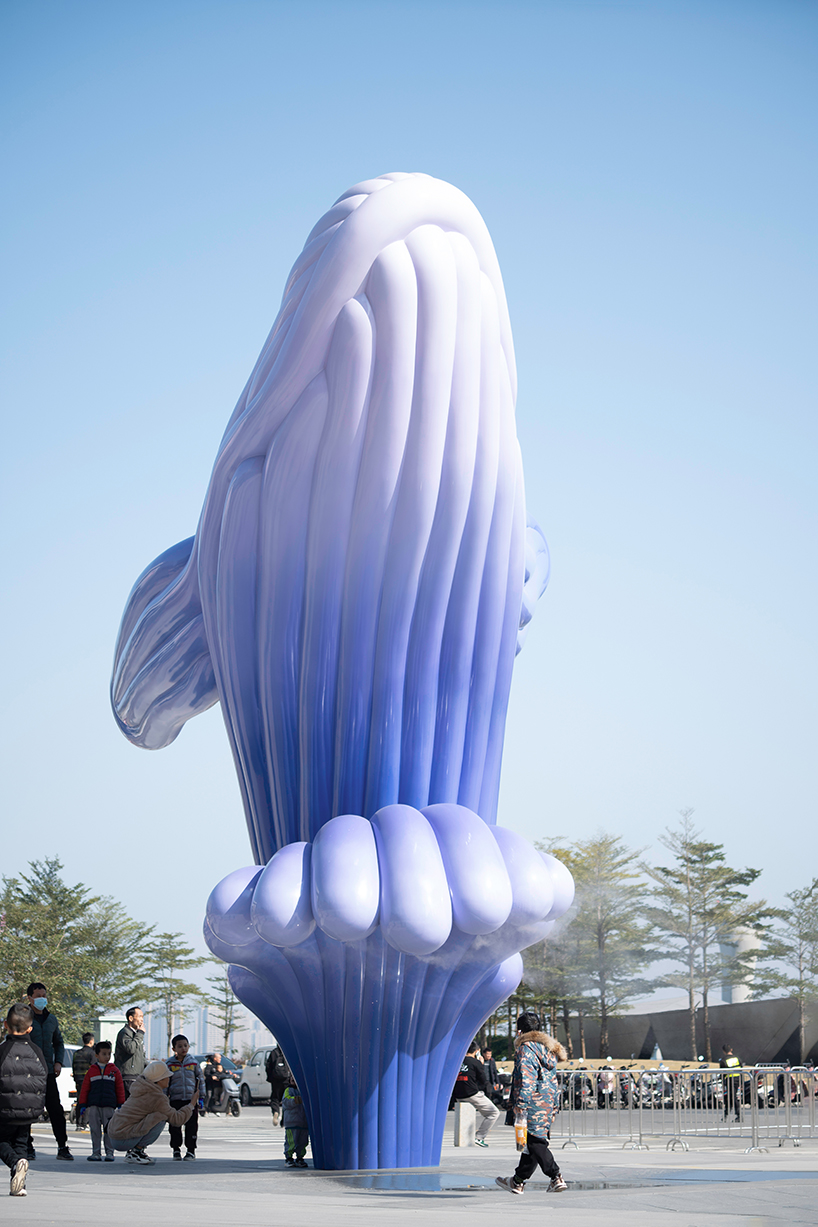
a frontal view emphasizes the whale’s streamlined head and flowing vertical lines
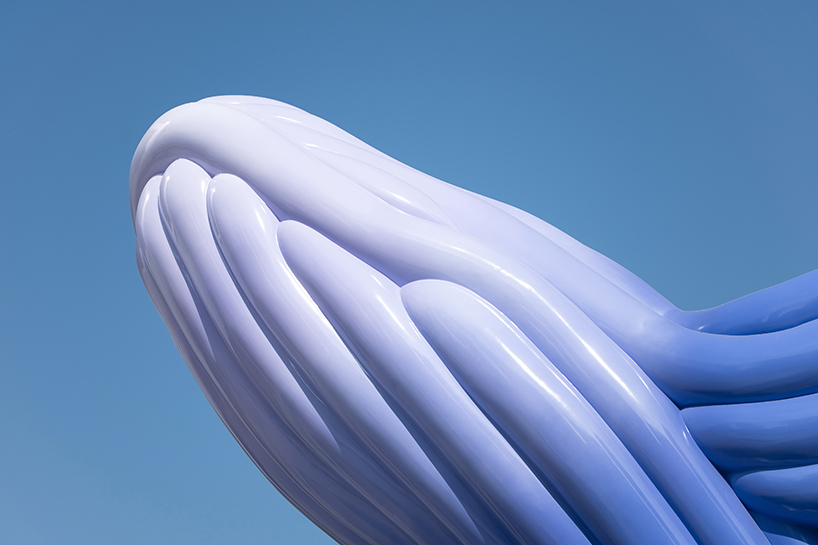
detail view of the whale’s nose and flowing ridges