
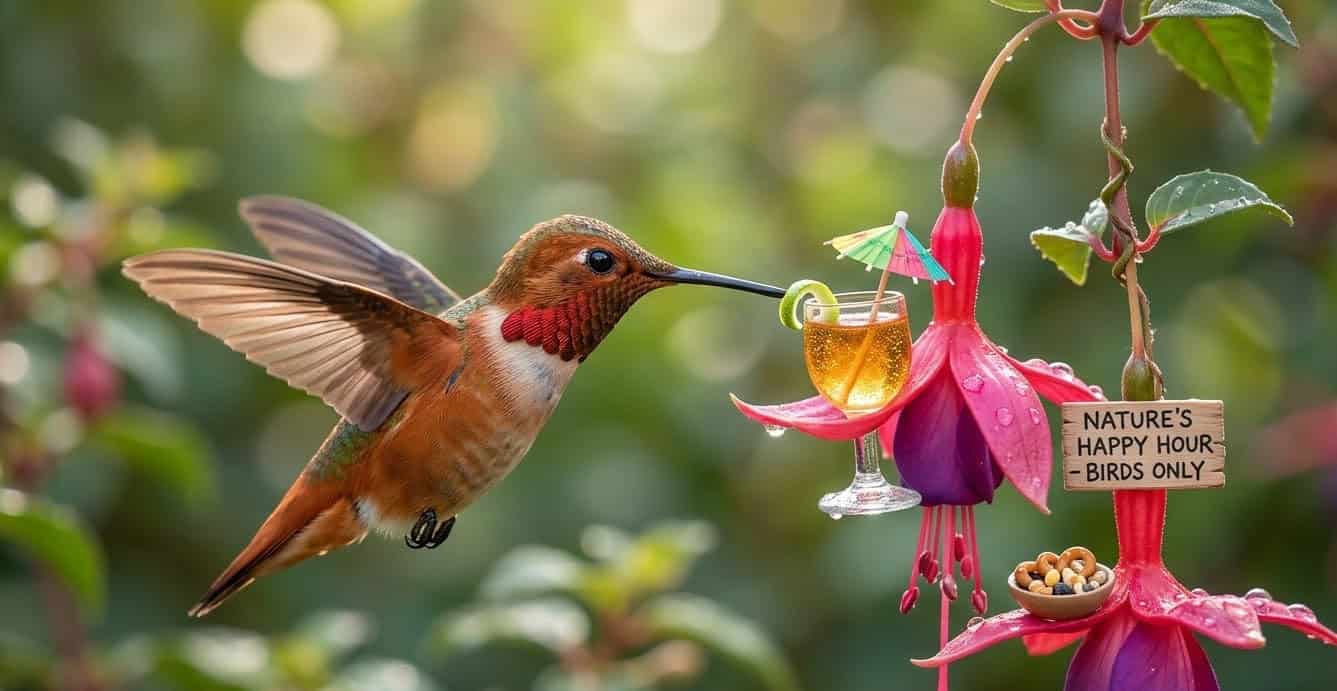

Hummingbirds are the high-performance athletes of the avian world. With heart rates topping 1,200 beats per minute, they are biological machines that require constant fueling. But according to a new study, that fuel comes with a surprising kick.
As it turns out, these tiny birds (along with bees and other pollinators) are essentially drinking alcohol every day.
Researchers have discovered that low-level ethanol is widespread in the nectar of a vast array of flowering plants. Yet despite the constant intake, these pollinators don’t seem to be flying under the influence.
A Daily Buzz
We used to think of floral nectar as a sterile, boring sugar-water reward. Nature is rarely that simple. Because nectar is packed with sugar and frequently exposed to the elements, it’s a perfect breeding ground for microbes. When yeast hitches a ride on a pollinator and lands in a flower, it triggers fermentation.
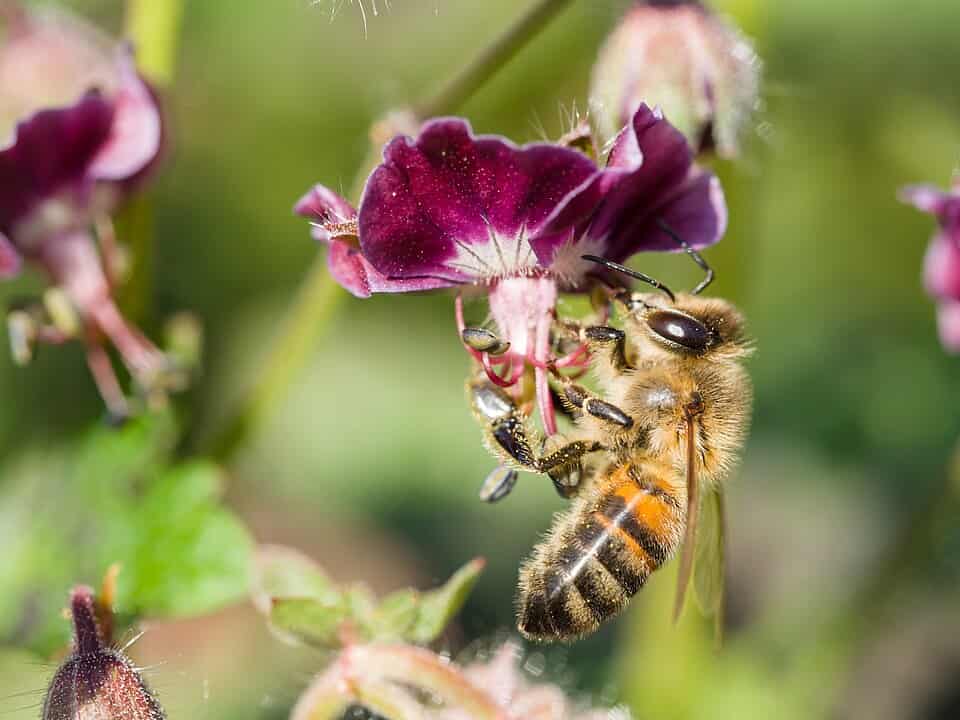 Pollinators love nectar. They might love getting a buzz as well, researchers conclude. Image credits: Wiki Commons.
Lead author Aleksey Maro and his colleagues surveyed 29 species of flowering plants and found that nearly half of all nectar samples contained detectable amounts of alcohol. Concentrations are low, averaging around 0.016% for ethanol-positive samples. But some pollinators consume massive amounts of nectar.
Take the hummingbird. These birds often consume their entire body weight in nectar every single day. Proportionally, that’s the equivalent of a 70 kg (≈154 lbs) human knocking back a glass of wine over an afternoon.
“Hummingbirds are like little furnaces. They burn through everything really quick, so you don’t expect anything to accumulate in their bloodstream,” said doctoral student Aleksey Maro, who collected and analyzed the nectar with postdoctoral fellow Ammon Corl.
Are Plants Sneaky Manipulators?
The presence of alcohol might not be an accident. While yeasts do the heavy lifting of fermentation, researchers suspect this boozy nectar might be a feature of the plant-pollinator relationship rather than a bug.
 Rufous hummingbird. Image via Wiki Commons.
This raises a fascinating question: are pollinators choosing these flowers because of the alcohol? We already know that some flowers sneakily use neuroactive nectar to manipulate their visitors. Many plants put caffeine or nicotine in their nectar, which turns pollinators into loyal customers. Nicotine, in the right amounts, can also be attractive.
×
Thank you! One more thing…
Please check your inbox and confirm your subscription.
Ethanol seems to fit right into this approach. In fact, some insects, like honeybees, prefer nectar with low levels of ethanol to plain sugar water. If this is the case, it would mean that plants may manipulate pollinators with alcohol
However, a separate experiment showed that if there’s too much ethanol in the nectar, birds will avoid it.
“The laboratory experiment was showing that yes, they will drink ethanol in their nectar, though they have some aversion to it if it gets too high,” Corl said. “The feathers are saying that, yes, they will metabolize it. And then this study is saying that ethanol is actually pretty widespread in the nectar they consume.”
Do Hummingbirds Get Drunk?
This all begs a question: are pollinators drunk all the time? The likely answer is ‘no’, or at least not in the way you’re imagining it.
If a human had a blood-alcohol level of 0.1%, they’d be stumbling. Yet, hummingbirds and bees can tolerate ethanol concentrations up to 5% without showing any signs of inebriation.
The likely scenario is that these pollinators possess physiological mechanisms that allow them to process these low, persistent amounts of alcohol as a normal part of their metabolic cycle
“But we don’t know what kind of signaling or appetitive properties the alcohol has. There are other things that the ethanol could be doing aside from creating a buzz, like with humans,” Corl says
“There may be other kinds of effects specific to the foraging biology of the species in question that could be beneficial,” added Robert Dudley, UC Berkeley professor of integrative biology. “They’re burning it so fast, I’m guessing that they probably aren’t suffering inebriating effects. But it may also have other consequences for their behavior,” the researcher concludes.
Journal Reference: Aleksey Maro, Ammon Corl, Rauri C. K. Bowie, Jimmy A. McGuire, Robert Dudley. Low-level ethanol is widespread within floral nectar. Royal Society Open Science, 2026; 13 (3) DOI: 10.1098/rsos.250847
.