
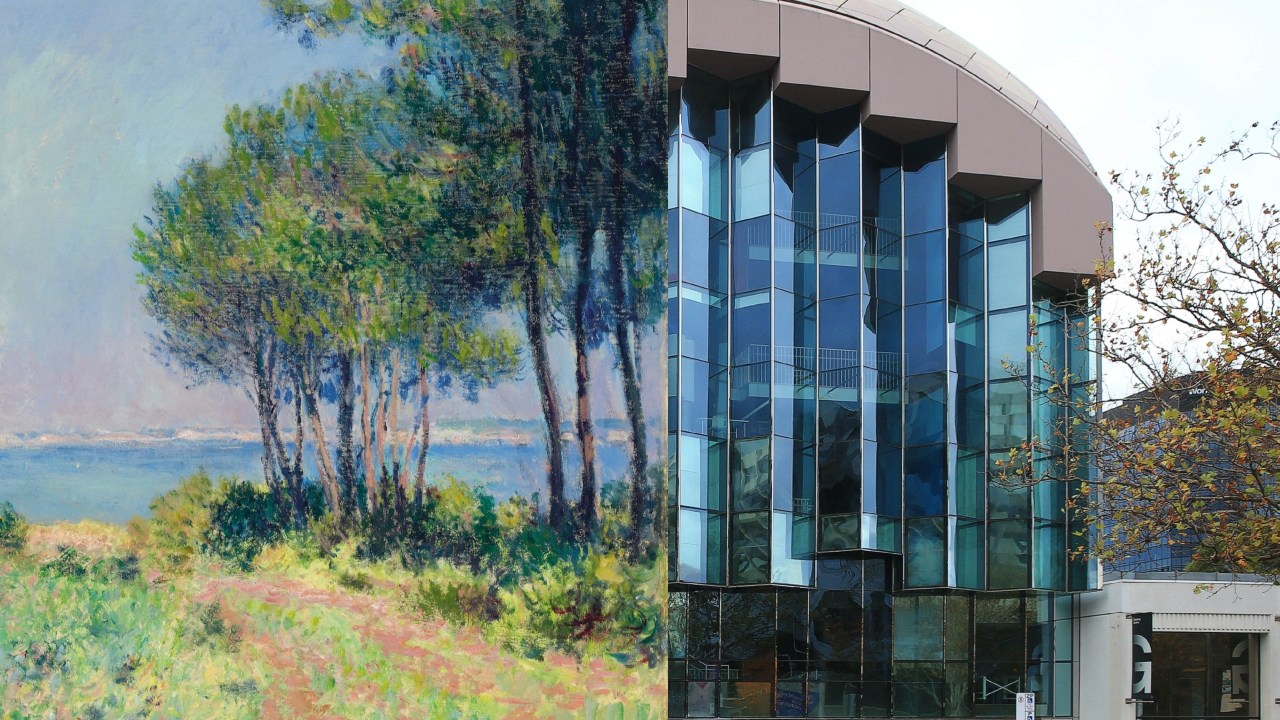
Impressionist paintings by Renoir, Pissarro and Monet will feature in a landmark exhibition at the Geelong art gallery to mark its 130th year.
The exhibition highlights the strength of regional galleries across Australia with major exhibitions now underway of coming soon to the Newcastle Art Gallery and the Tweed Regional Gallery and Margaret Olley Art Centre at Murwillumbah.
And there is weirdly wonderful contemporary Chinese art on its way for a major exhibition at HOTA, Home of the Arts at Surfers Paradise.
In Geelong, 70 French art treasures will be displayed in an exhibition with the lengthy title, Discovering the Impressionists: Paul Durand-Ruel, art dealer among the artists. It opens on June 20.
The show will be curated by renowned French art historians Marianne Mathieu with the assistance of Claire Durand-Ruel, the great-granddaughter of Paul Durand-Ruel.
The exhibition is a coup for Geelong and probably the most important show ever held outside an Australian capital city.
“Throughout the Gallery, works by Monet, Renoir, Berthe Morisot, and Camille Pissarro hang in direct dialogue with a second generation of painters long overshadowed by their illustrious predecessors: Albert André, Georges d’Espagnat, Gustave Loiseau, Maxime Maufra and Henry Moret,” said Geelong Gallery Director Humphrey Clegg.
“Championed by Durand-Ruel in Impressionism’s twilight years, these artists are now being rediscovered,” he said.
“Geelong Gallery is thrilled to offer audiences a rare encounter with their work. Never before toured outside Europe and the United Kingdom.”
Mr Clegg said the showing would include rare decorative panels by André and d’Espagnat that were painted on the doors of Durand-Ruel’s private Paris apartment.
Mr Clegg said the Geelong Gallery was built on Impressionism.
“Our very first acquisition, Frederick McCubbin’s A Bush Burial (1900) was an Australian Impressionist work, and the movement has shaped our Collection ever since,’’ he said.
He said Mr Durand-Ruel, who died in 1922, was influential in shaping modern art.
During his lifetime, he is estimated to have collected more than 12,000 paintings, including 1,000 Monets, 1,500 Renoirs, and 800 Pissarros and showed them in London, New York and European capitals.
Meanwhile, the Newcastle arts scene is also booming following an impressive $48 million renovation that has more than doubled the gallery’s exhibition space.
Artworks previously in storage are now on permanent display.
The Newcastle Art Gallery has more than 7,000 artworks, making it one of the most significant collections outside capital city galleries and museums.
Newcastle’s original brutalist building was officially opened by Queen Elizabeth II in 1977 and the recent expansion by architects Clare Design, Smith and Tzannes Architects and Arup Engineers, has been built in a similar style.
They included a cafe and gallery shop.
John Olsen’s 1964 painting, ‘The sea sun of 5 bells’, inspired by the Kenneth Slesson poem Five Bells, has also been returned to the gallery.
The renowned artist was born a few streets away from the gallery in 1928.
Further north the Tweed Regional Gallery and Margaret Olley Art Centre is showing a set of paintings on loan from the National Gallery of Australia’s collection.
Art is thriving in the Tweed.
The gallery contributed nearly $20 million to the Tweed economy last year, the Tweed Regional Gallery Foundation reported.
Perhaps the most interesting of all will be at HOTA with a major exhibition of intriguing Chinese art gleaned from the White Rabbit Collection in Sydney.
The works will include video, photography, painting and light-based installations and a “monumental sculpture” said to “capture the energetic spirit of 21st-century China.” The exhibition runs from April 18 to October 11.
The collection documents the country’s social, political, and cultural transformation of China in the post-Mao era.
The White Rabbit works were assembled by wealthy philanthropist Judith Neilson who began collecting in 2009.
She champions experimental and often challenging artistic voices reflecting life in a rapidly changing society.
“It is always incredibly gratifying to see White Rabbit Collection appreciated and celebrated by new audiences,” Ms Neilson said.
“The Collection has come together by working with artists whose work I personally find exciting and intriguing.
“For more than twenty-five years I have been travelling to China where I believe the most interesting art in the world is produced.
“The amazing country is so vast, diverse and so hugely populated it inspires so many artists and fuels competition.”
She said this led to “the best and worst and everything in between”.
The Chinese artists were responding to questions of identity, censorship, memory and tradition, she said.
Featured artists include Geng Xue, Guo Jian, LuYang, Peng Hung-Chih, Xu Zhen, Zhang Dali and Zhang Peili.