
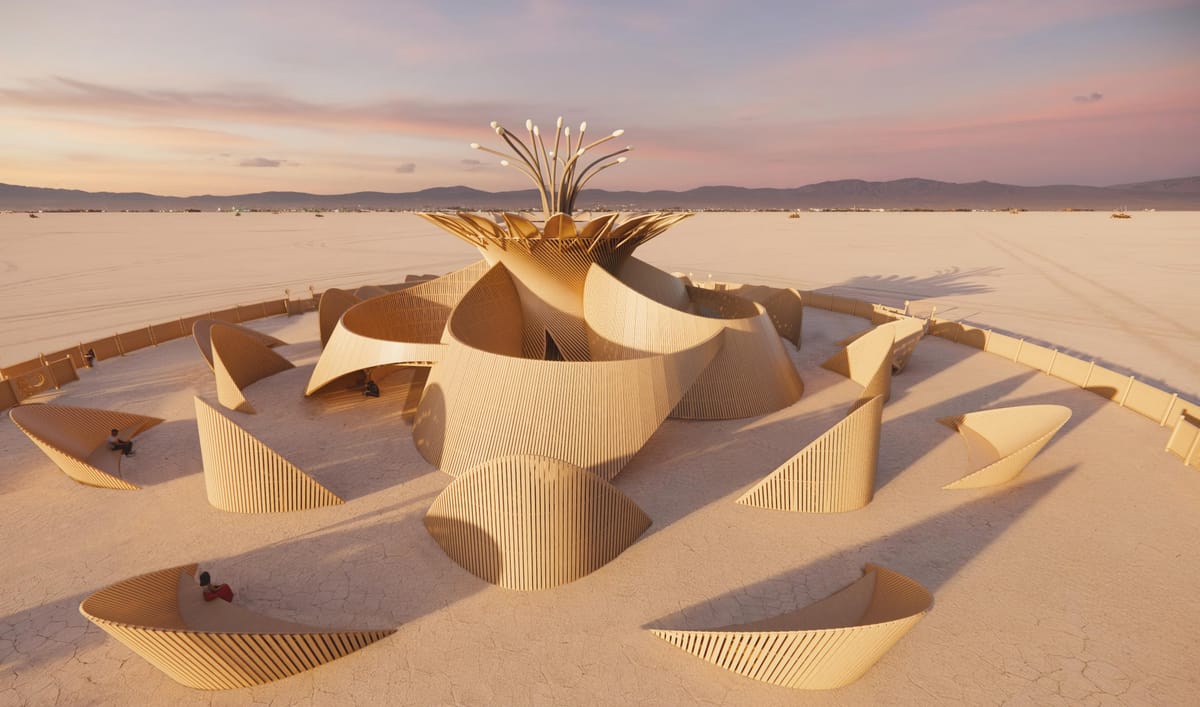
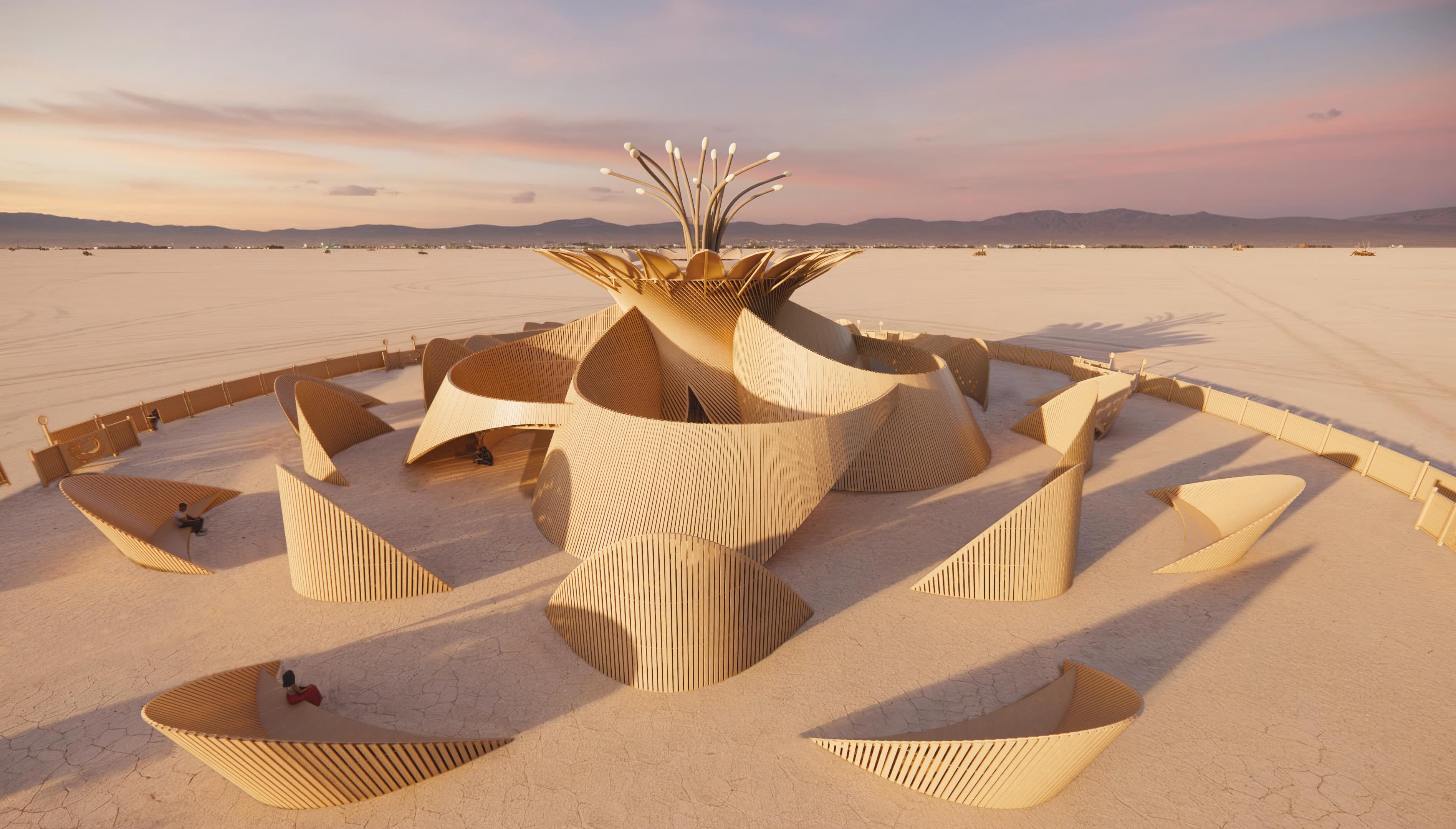
Temple of the Moon by James Gwertzman. Image credit: Annie Locke Scherer
Plans for Burning Man 2026 are underway in advance of its August opening. Tens of thousands of participants are expected to descend on Nevada’s Black Rock Desert for a week of art, community, and ritual.
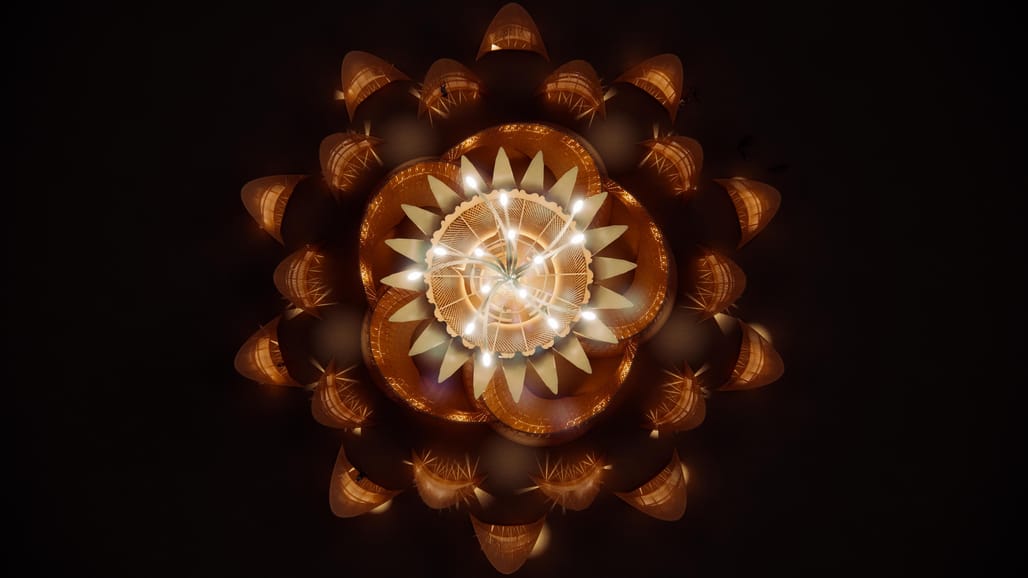
Temple of the Moon by James Gwertzman. Image credit: Annie Locke Scherer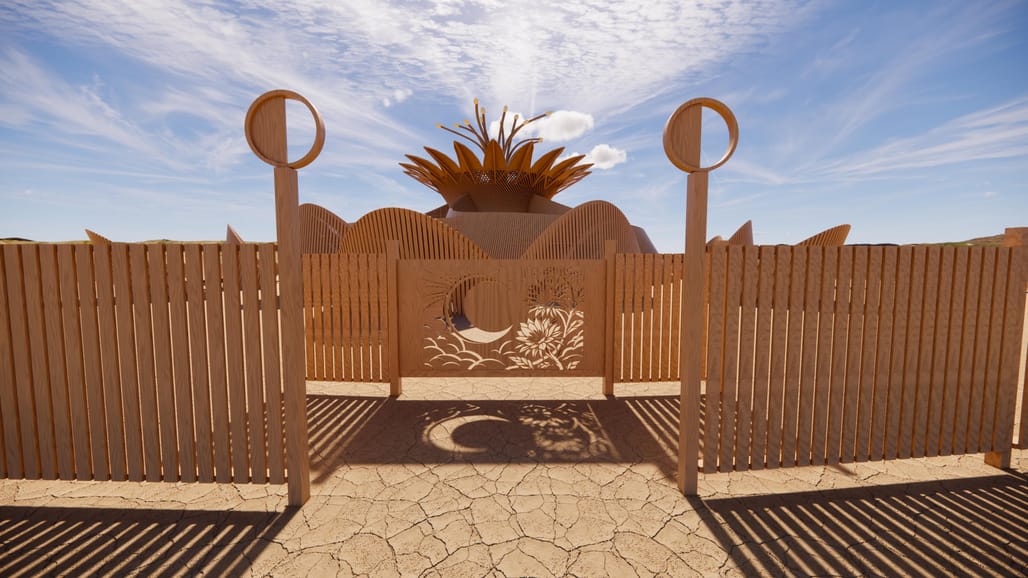 Temple of the Moon by James Gwertzman. Image credit: Annie Locke Scherer
As part of the preparations, organizers have unveiled details of two major temples to be constructed. The Temple of the Moon has been designed by James Gwertzman with the support of the Moonlight Collective and the Temple Build Crew, while Cryptomeria has been designed by Alexander (Zander) Rose.
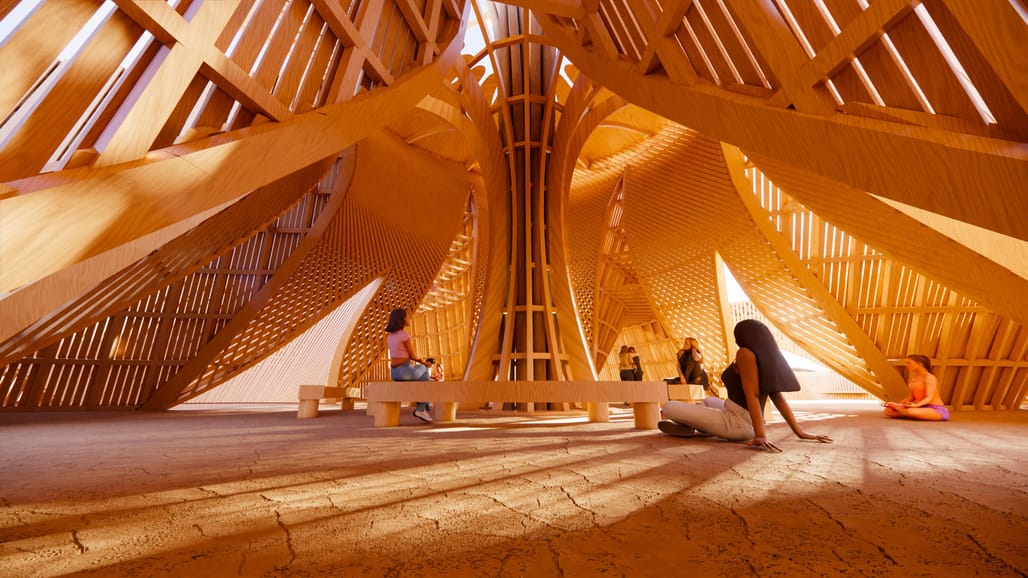
Temple of the Moon by James Gwertzman. Image credit: Annie Locke Scherer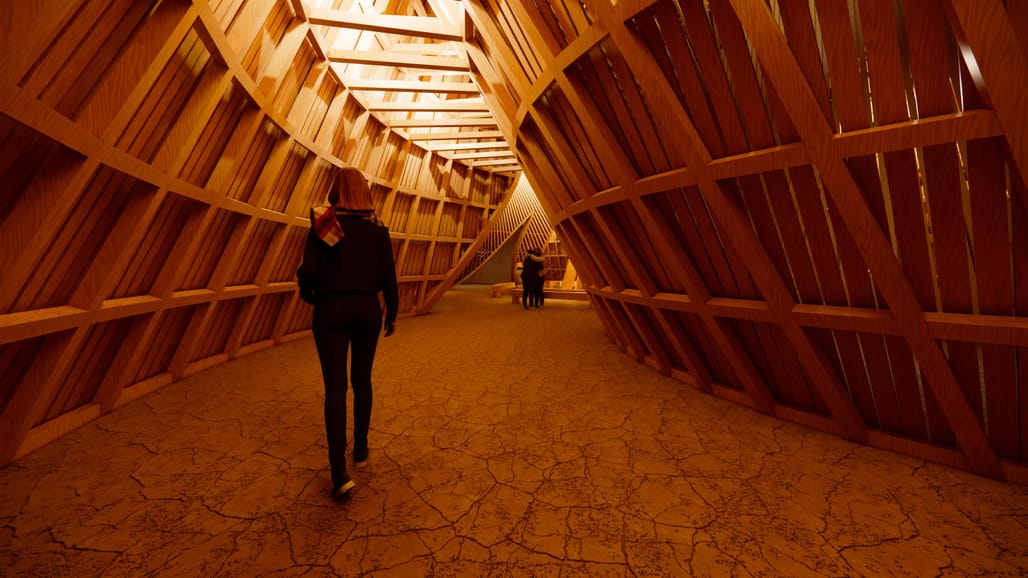 Temple of the Moon by James Gwertzman. Image credit: Annie Locke Scherer
The Temple of the Moon is inspired by the Queen of the Night cactus, a plant that blooms briefly at night before fading. The design concept draws parallels between this short-lived cycle and the lunar phases. The construction process is timed to align with the moon’s cycle, beginning under a new moon and progressing toward completion during a full moon.
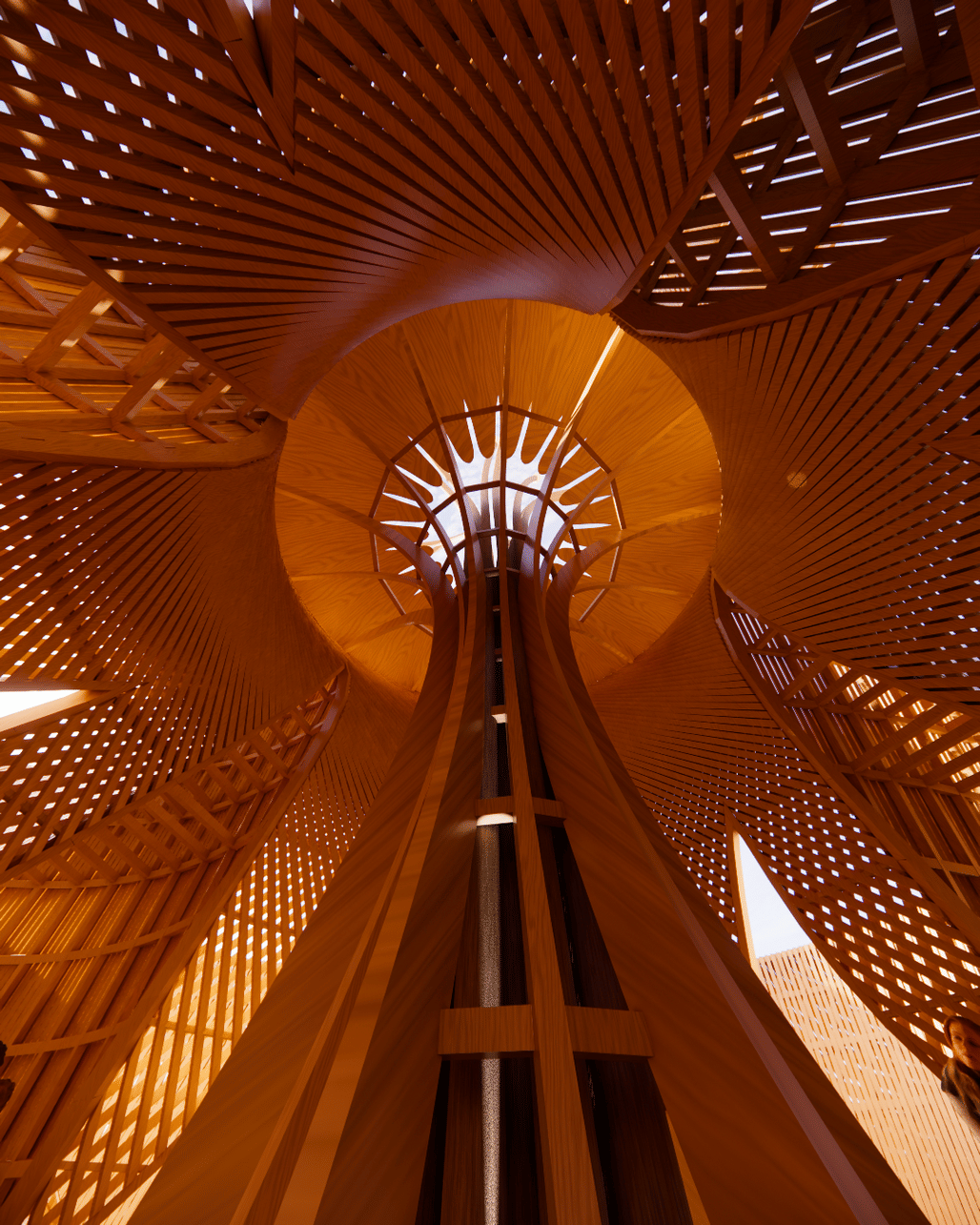 Temple of the Moon by James Gwertzman. Image credit: Annie Locke Scherer
Throughout the Burning Man event, the moon wanes as the structure remains in use. The pavilion will ultimately be destroyed by fire shortly after the return to a new moon, completing a full lunar-aligned lifecycle.
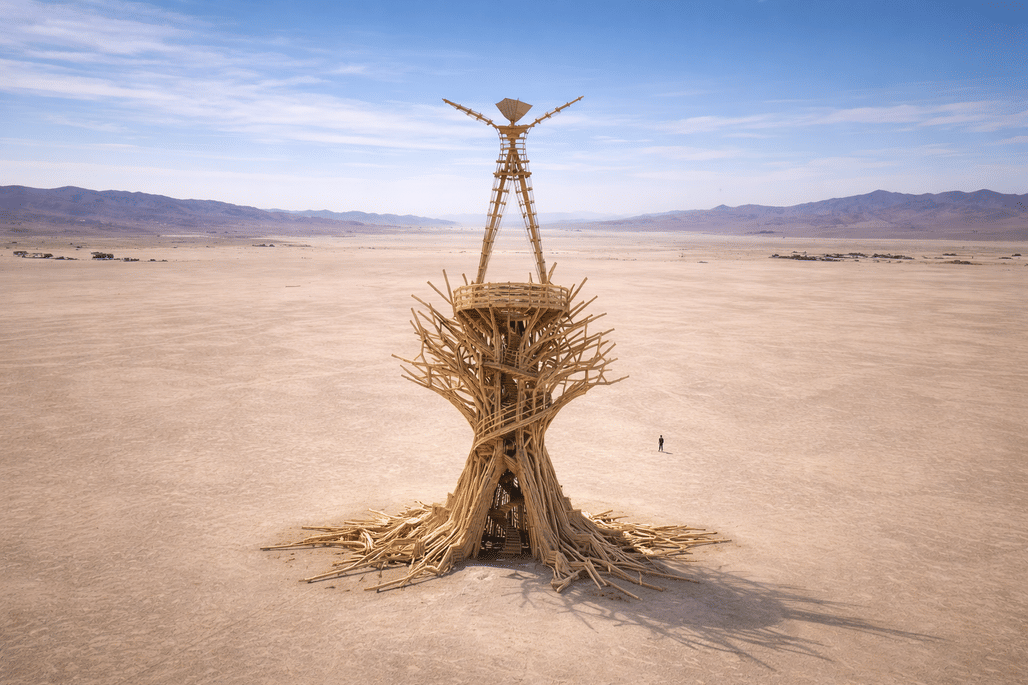
Cryptomeria by Alexander (Zander) Rose. Image courtesy of Burning Man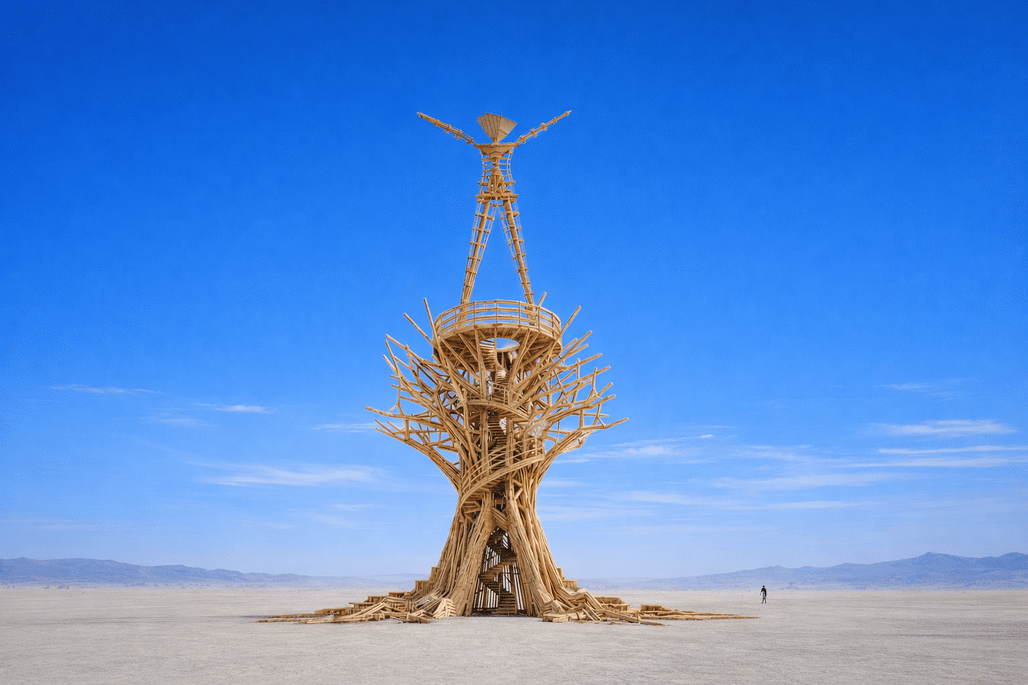 Cryptomeria by Alexander (Zander) Rose. Image courtesy of Burning Man
Meanwhile, the design of Cryptomeria is inspired by the Cryptomeria japonica tree, specifically the ancient Jōmon Sugi specimen in Japan. The design references the idea of an axis mundi, representing a connection between earth and sky.
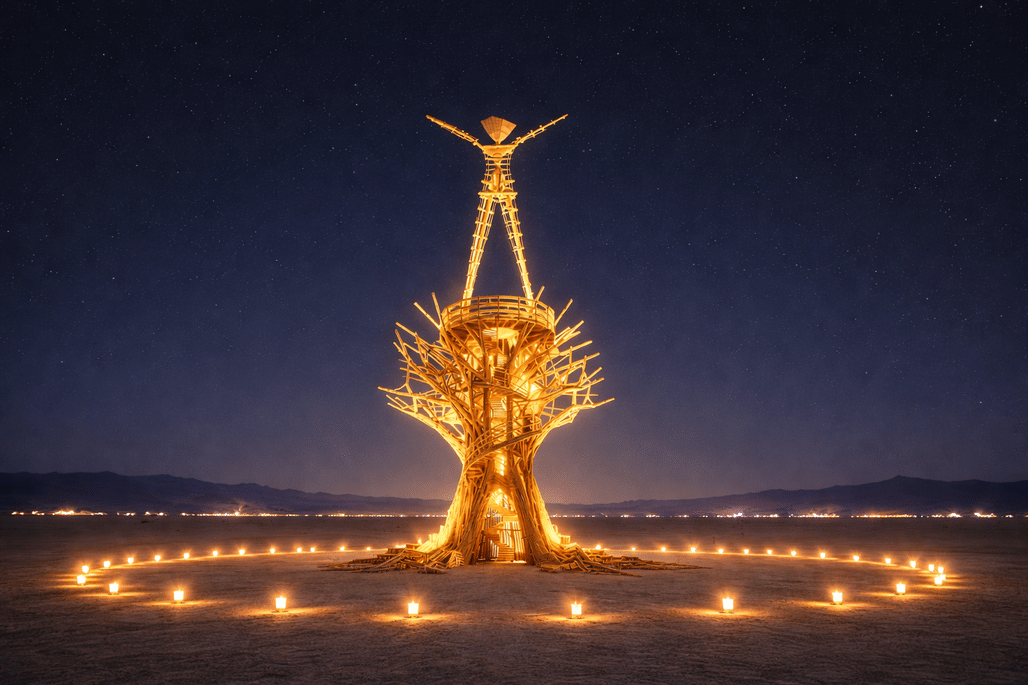
Cryptomeria by Alexander (Zander) Rose. Image courtesy of Burning Man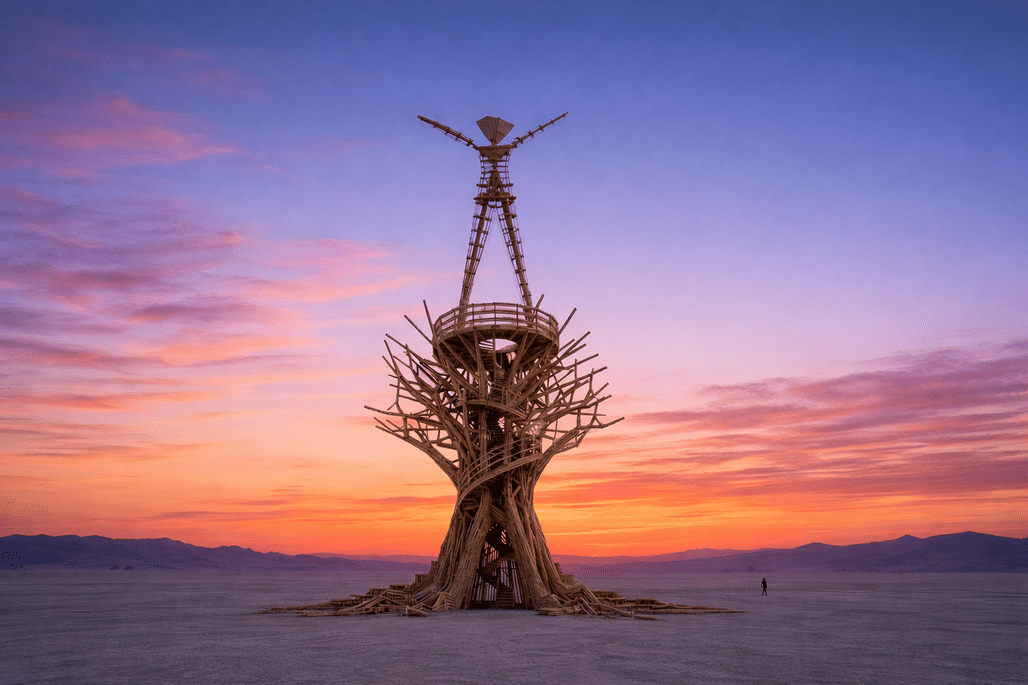 Cryptomeria by Alexander (Zander) Rose. Image courtesy of Burning Man
The structure features a central base with branching, root-like pathways that guide visitor movement. A spiral staircase ascends approximately sixty feet to an elevated platform, while a second spiral provides a descending route. Together, the circulation paths form a double-helix configuration, enabling continuous movement and establishing a central vertical axis within the surrounding environment.
Similar articles on Archinect that may interest you…