
PUBLISHED : 27 Mar 2026 at 06:08
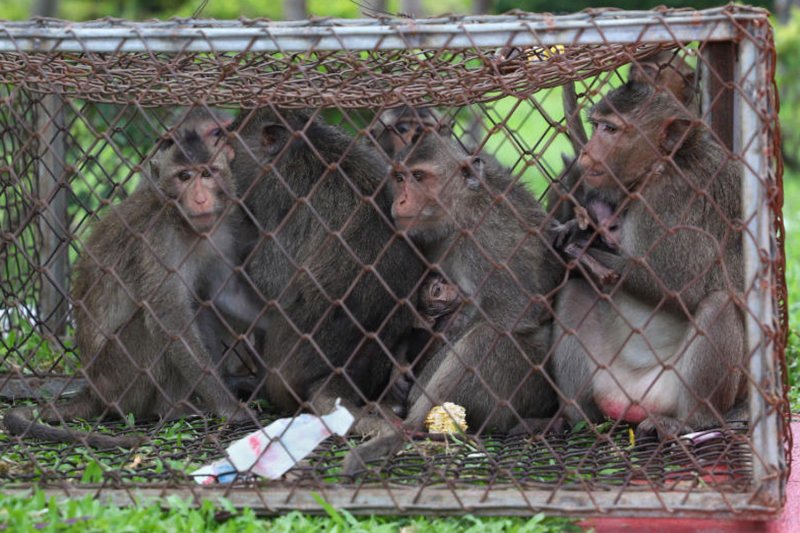
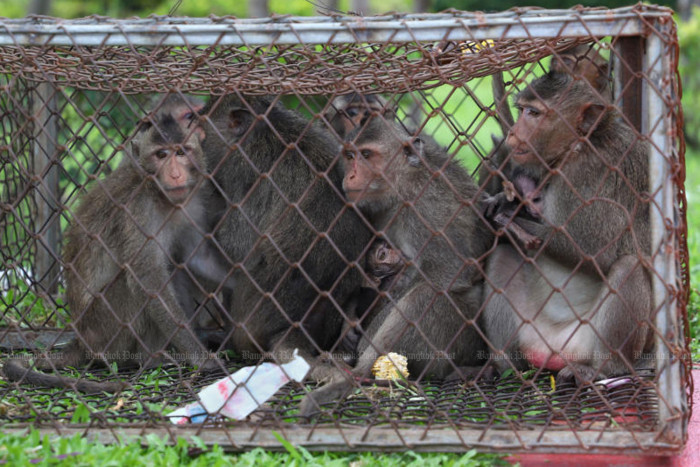
Officials place the macaques under observation after administering anaesthesia in preparation for sterilisation. The animals were trapped in the Soi Thian Thale 22 community, and transported to the Khun Kala Monument in Bang Khunthian district, Bangkok in August 2022. (Bangkok Post file photo)
The Bangkok Metropolitan Administration (BMA) has joined forces with the Prime Minister’s Office and the Department of National Parks, Wildlife and Plant Conservation (DNP) to discuss ways to handle the encounters between crab-eating macaques in Bang Khunthian district and local residents.
BMA deputy permanent secretary Aranya Pornchaiya recently joined a meeting about the issue, presided over by Pikanet Tapuang, chief inspector-general of the Prime Minister’s Office.
The meeting was attended by Bang Khunthian district chief Phattharakorn Sinsuk and officials from the DNP, the BMA and relevant ministries and organisations. Following the discussion, officials conducted a site visit at the Khun Kala Monument.
Macaques are protected under the Wild Animal Conservation and Protection Act BE 2562. There are currently about 350 crab-eating macaques across three locations in Bang Khunthian, including 94 at the monument, 120 in the Soi Thian Thale 22 community, and 136 at the Baan Ua-Athorn Bang Khun Thian (Samae Dam) housing project.
These macaques have intruded into homes and posed concerns over illegal wildlife trafficking.
To address these issues, authorities have introduced zoning measures and reduced the number of feeding areas from three to just one to encourage these primates to remain in one location. This approach aims to reduce road accidents involving macaques and prevent them from entering residential areas.
Officials reported substantial progress, with over 80% of the macaques already vaccinated and sterilised. In addition, a temporary shelter covering about 400 square metres has been established near the Khun Kala Monument.