

Listen to this article
Estimated 4 minutes
The audio version of this article is generated by AI-based technology. Mispronunciations can occur. We are working with our partners to continually review and improve the results.
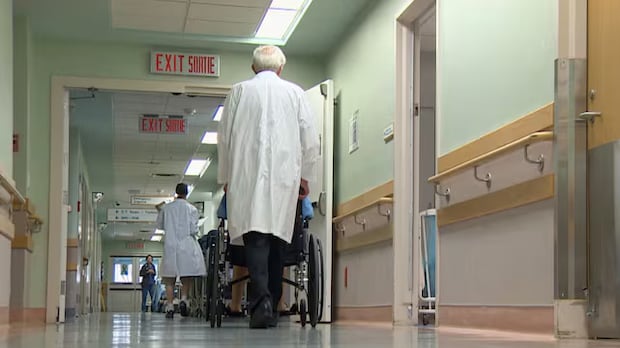
As elderly patients waiting for nursing home beds to open up continues to plague New Brunswick hospitals, Horizon Health Network is rolling out a new approach to the problem.
Hospitals will now start to find new spaces to create nursing home beds within them.
“We know that space for care is not where it needs to be today,” said David Arbeau, the network’s clinical executive director overseeing patient flow, at a Horizon board meeting on Thursday.
Horizon officials said over a third of beds across the health network were taken up by what it called alternative level of care, or ALC, patients as of last month. Because beds are taken, that increases the amount of boarded patients, those who have been admitted but are without an inpatient bed.
“What it will do, in turn, is free up medical beds where we can move these boarded patients and hallway patients to,” Arbeau said.
“So it really isn’t having additional patients in the facility. It’s opening up additional proper care environments for patients who are nursing home-level care.”
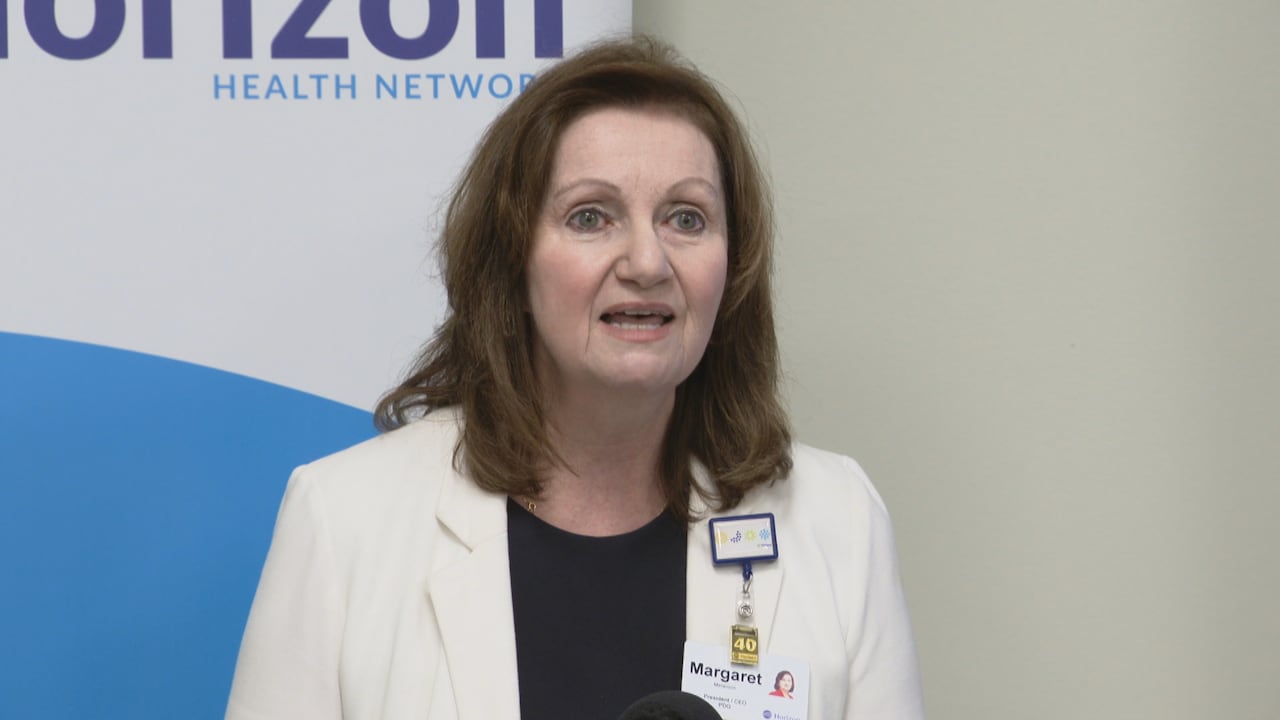 Horizon Health CEO Margaret Melanson said the bed shortage is creating ripple effects across the whole health network. (Chad Ingraham/CBC)
He said there would be approximately 180 of these new beds “identified” in the coming year across the network, a number based on the number of boarded patients Horizon has.
As for a breakdown between hospitals, Arbeau said Horizon estimates it will allocate 60 beds to Fredericton, 60 in Saint John, 40 in Moncton and 20 in Miramichi.
Arbeau said work has already begun to identify hospital spaces “that other services may be able to move out of in order for us to connect the dots.”
During the board meeting, Horizon officials said the issue reached its peak in July 2025, when 40 per cent of beds were taken up by ALC patients. As of February, it was 37 per cent.
“When more than one third of inpatient beds are occupied by patients who are awaiting more appropriate placements, it creates ripple effects that slow access and place strain on our entire system,” said Horizon CEO Margaret Melanson in her opening remarks to the board.
“Caring for older adults requires specialized skills, deep clinical knowledge and compassion,” she said.
Melanson said that creating sustainable solutions “will require co-ordinated efforts across the broader health-care system continuum.”
Health authority officials did not address how these beds will be staffed during Thursday’s meeting.
When asked during a question session for reporters, Melanson said the provincial government was on board with the plan. CBC News asked a spokesperson for the Department of Health to confirm this, but did not receive an immediate answer.
The province has known that nursing home bed shortages would get bad since at least the early 1990s.
As today’s government tries to catch up, they announced a plan to add 624 new nursing home beds by 2030, a plan that advocates say is a start but is not good enough.
Asked if that announcement would change Horizon’s plans for internal nursing home beds, Elizabeth McCaw, the physician program lead with Horizon, said no.
Only a part of those 624 new nursing home beds promised would be available for patients in hospitals, as much of that number would be for seniors waiting in their homes, she said.
“We absolutely do need to continue on with the plan for the internal nursing home beds because our numbers exceed that,” McCaw said.