
Giant caldera eruptions release huge amounts of magma in a short time, creating large crater-like landscapes. These eruptions are very different from smaller, frequent volcanic eruptions because they involve unique processes of magma generation, storage, and release.
To gain a deeper, more complete understanding of how volcanism works, scientists study the volumes of past eruptions and use sophisticated seismic imaging methods, such as tomography, to peer into volcanoes. These advanced methods go a long way toward revealing the complex size and detailed geometry of hidden magma reservoirs, while advancing our understanding of the processes controlling such large-scale caldera eruptions over time.
About 7,300 years ago, Japan’s Kikai Caldera Volcano unleashed the largest Holocene eruption, the Kikai-Akahoya eruption. Now, scientists at Kobe University have discovered that its magma reservoir is refilling, meaning this ancient volcano is slowly recharging.
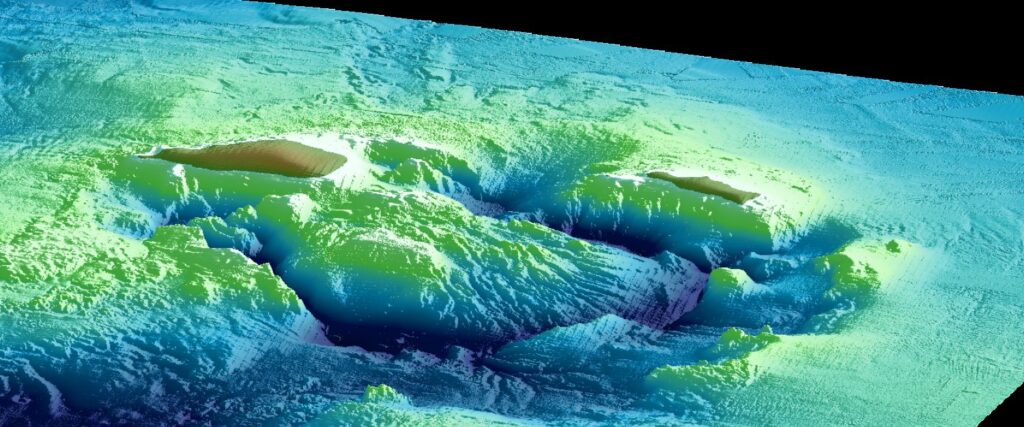
Using seismic surveys, scientists detected a low-velocity anomaly beneath the caldera, a clear sign of molten rock. This reservoir sits surprisingly close to the surface, at depths of 2.5–6 km.
Giant lava dome confirmed in Japan’s Kikai Caldera
Studying Kikai offers insights into other giant caldera volcanoes, such as Yellowstone in the U.S. or Toba in Indonesia. These are among the most powerful volcanoes on Earth, and understanding how their magma systems replenish brings us closer to predicting their future behavior.
Kobe University geophysicist SEAMA Nobukazu said, “We must understand how such large quantities of magma can accumulate to understand how giant caldera eruptions occur.”
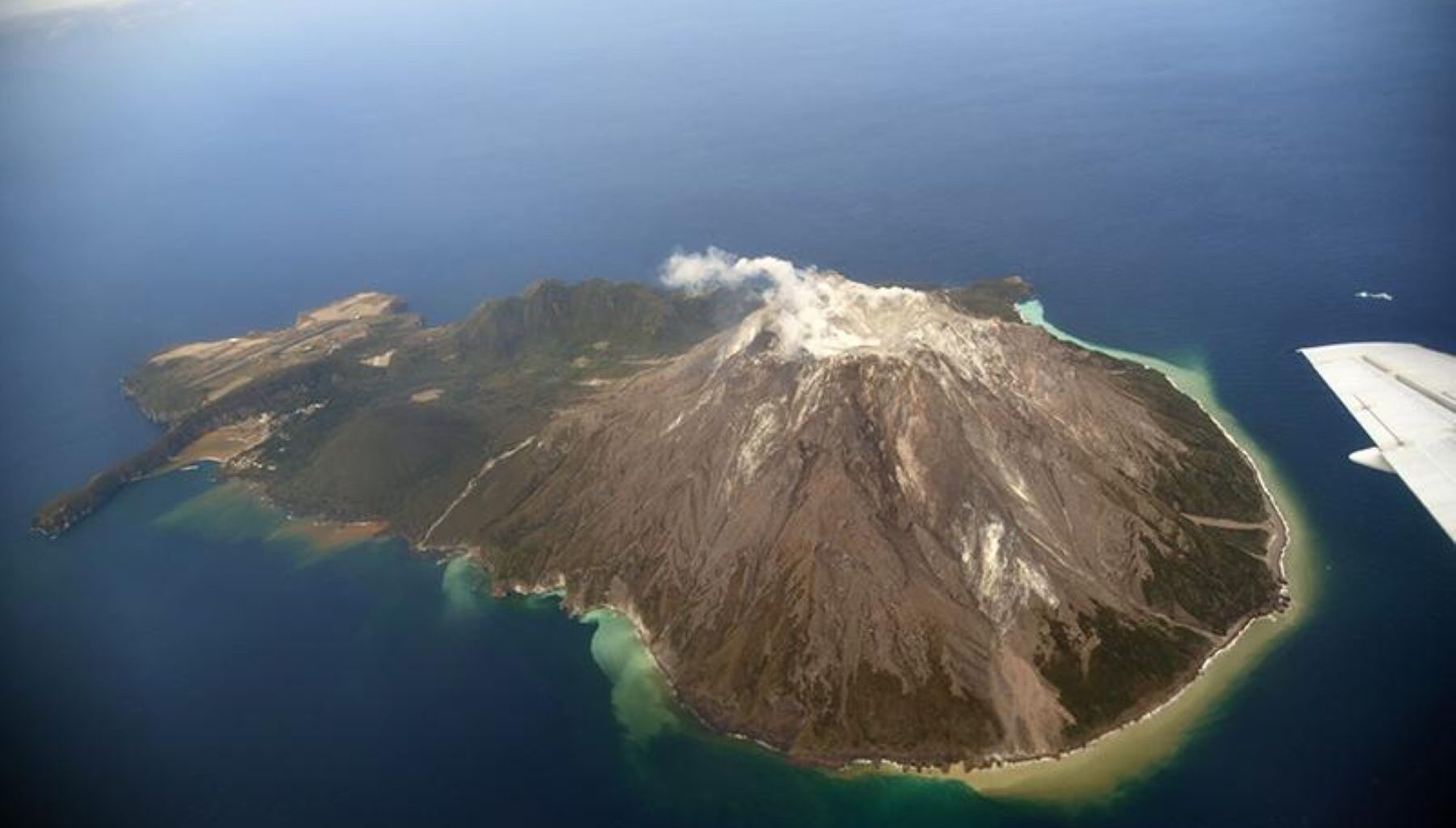
 We know very little about the processes that lead to a reeruption of supervolcanoes such as the mostly underwater Kikai caldera in Japan (pictured) and are therefore ill-equipped to make predictions. © SEAMA Nobukazu
To study what lies beneath the Kikai Caldera Volcano, scientists teamed up with the Japan Agency for Marine-Earth Science and Technology (JAMSTEC). They used airgun arrays to create artificial seismic pulses and placed ocean-bottom seismometers to “listen” to how those waves traveled through the Earth’s crust.
The results were striking: scientists confirmed the presence of a massive magma-rich region directly under the volcano that erupted 7,300 years ago. They were even able to map the reservoir’s size and shape, giving us a clearer picture of how this giant caldera is recharging today.
Kobe University geophysicist SEAMA Nobukazu said, “Due to its extent and location, it is clear that this is in fact the same magma reservoir as in the previous eruption.”
However, this magma isn’t a remnant of its massive eruption 7,300 years ago. Instead, it’s newly injected magma. Evidence comes from the fact that a new lava dome has been forming in the caldera’s center for the past 3,900 years, and chemical tests show the recent lava is different from the material of the ancient eruption.
“This means that the magma that is now present in the magma reservoir under the lava dome is likely newly injected magma,” summarizes Seama. This allows the scientists to propose a general model for how magma reservoirs under caldera volcanoes refill.
“This magma re-injection model is consistent with the existence of large shallow magma reservoirs beneath other giant calderas like Yellowstone and Toba,” says Seama, hoping that his team’s findings may contribute to understanding the magma supply cycles following giant eruptions.
He concludes, saying: “We want to refine the methods that have proved to be so useful in this study to understand the re-injection processes more deeply. Our ultimate goal is to become better able to monitor the crucial indicators of future giant eruptions.”
Journal Reference:
Melt re-injection into large magma reservoir after giant caldera eruption at Kikai Caldera Volcano, Communications Earth & Environment (2026). DOI: 10.1038/s43247-026-03347-9