

Autodesk took advantage of the week to outline a new wave of updates affecting Maya, 3ds Max, Flow Studio and Arnold. The announcement fits into a now well-established trend: the gradual integration of artificial intelligence into existing content creation tools. The company is clearly positioning these developments as productivity drivers aimed at reducing setup time. The real impact on already structured production pipelines, however, remains to be assessed.
AI positioned as an assistant, not a disruption
Autodesk is taking a cautious approach. Artificial intelligence is presented as an assistive layer rather than an autonomous creative engine. The messaging emphasizes controllable, editable, and reproducible systems key requirements in production environments. This approach addresses a persistent industry concern, the difficulty of integrating generative tools into workflows that demand reliability. Autodesk aims to reassure by keeping the artist at the center of the process.
Two features illustrate this direction. In Maya, Motion Maker introduces a new quadruped archetype tailored for horses. AI generates base motion, particularly for complex transitions. The benefits are clearly focused on the preparation phase. However, Autodesk emphasizes editability, reinforcing the idea of AI as an assistant rather than a fully automated solution. Meanwhile, Wonder in Flow Studio, previously covered on 3DVF, enables the generation of 3D objects or characters from text or images. An appealing promise on paper, but one that remains dependent on output quality, integration into existing pipelines, as well as ongoing ethical and legal considerations issues we discussed in our March 13, 2026 article.
Modernizing legacy tools
Beyond AI, Autodesk continues to pursue a strategy of incremental modernization. Smart Bevel, now available in Maya and 3ds Max, targets post-boolean workflows. The goal is to bypass topological constraints while remaining non-destructive. A welcome update, even if beveling itself is nothing new. The real question is how much added value it brings compared to already established practices.
A similar approach applies to Maya’s new sequencer, which introduces a redesigned interface and more robust time management. Autodesk highlights enhanced non-destructive editing capabilities, without fundamentally changing existing workflows.
Also worth noting is the integration of Skin Tools (formerly ngSkinTools), bringing a layered, non-destructive skinning system, along with improved smoothing and mirroring. Here again, the focus is on strengthening established workflows rather than transforming them.
Procedural workflows and scaling: promises to be confirmed
On the procedural side, Bifrost evolves with a new rigid body dynamics system. The ambition is clear, enable fully procedural destruction setups, with real-time adjustments of physical parameters without rebuilding the scene. This is complemented by flow wedging, which generates variations in parallel in the cloud. Autodesk is clearly pushing a scaling and large-scale iteration approach here. A relevant proposition for certain use cases, but one that requires appropriate infrastructure and careful management of added complexity.
USD : progress, but persistent complexity
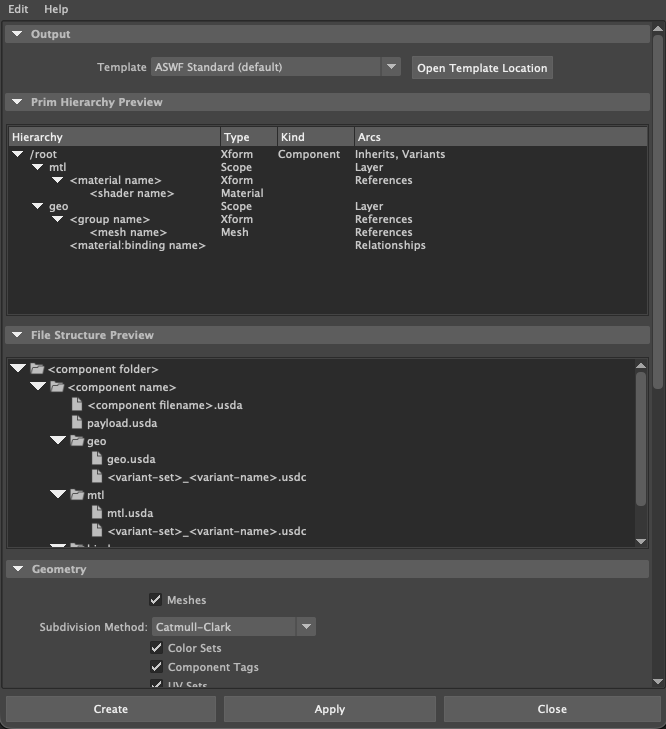
Support for OpenUSD continues to expand with the addition of Component Creator and Variant Manager in Maya. The goal is to simplify asset structuring and variant management. In principle, these tools help drive adoption. In practice, however, the complexity of the USD standard remains a barrier. The abstractions provided do not necessarily cover all production scenarios, and full integration is still an ongoing challenge for many studios.
Arnold : targeted performance gains
Arnold benefits from optimizations in GPU rendering. These improvements address concrete challenges when handling heavy scenes. However, no specific figures have been provided regarding these performance gains, making it difficult to assess their real impact in production.

New shading tools have also been introduced, including stylized line effects and point-based shaders. Interesting additions, but ones that expand creative possibilities rather than fundamentally changing usage.
An AI assistant still in experimental stages
Autodesk is also introducing an Assistant in preview. The tool allows users to query documentation in natural language directly within DCC applications. The value proposition is clear in terms of support and learning. However, its effectiveness will heavily depend on the quality of the responses. At this stage, the tool remains experimental and will need to prove its reliability in real-world use.
An evolution strategy, not a disruption
Ultimately, these announcements do not represent a major breakthrough. Autodesk is following a strategy of continuous evolution: improving existing tools, gradually integrating AI, and reducing friction. The objective is consistent, accelerate iteration, enable scaling, and optimize production. But the core remains unchanged. Workflows are not being fundamentally redefined.
For studios, the challenge will be pragmatic, measuring the actual production gains. And above all, ensuring that these new technological layers do not introduce additional complexity into already strained pipelines.