
Inside the Miraculous Return of Neurosis
By
·
March 27, 2026
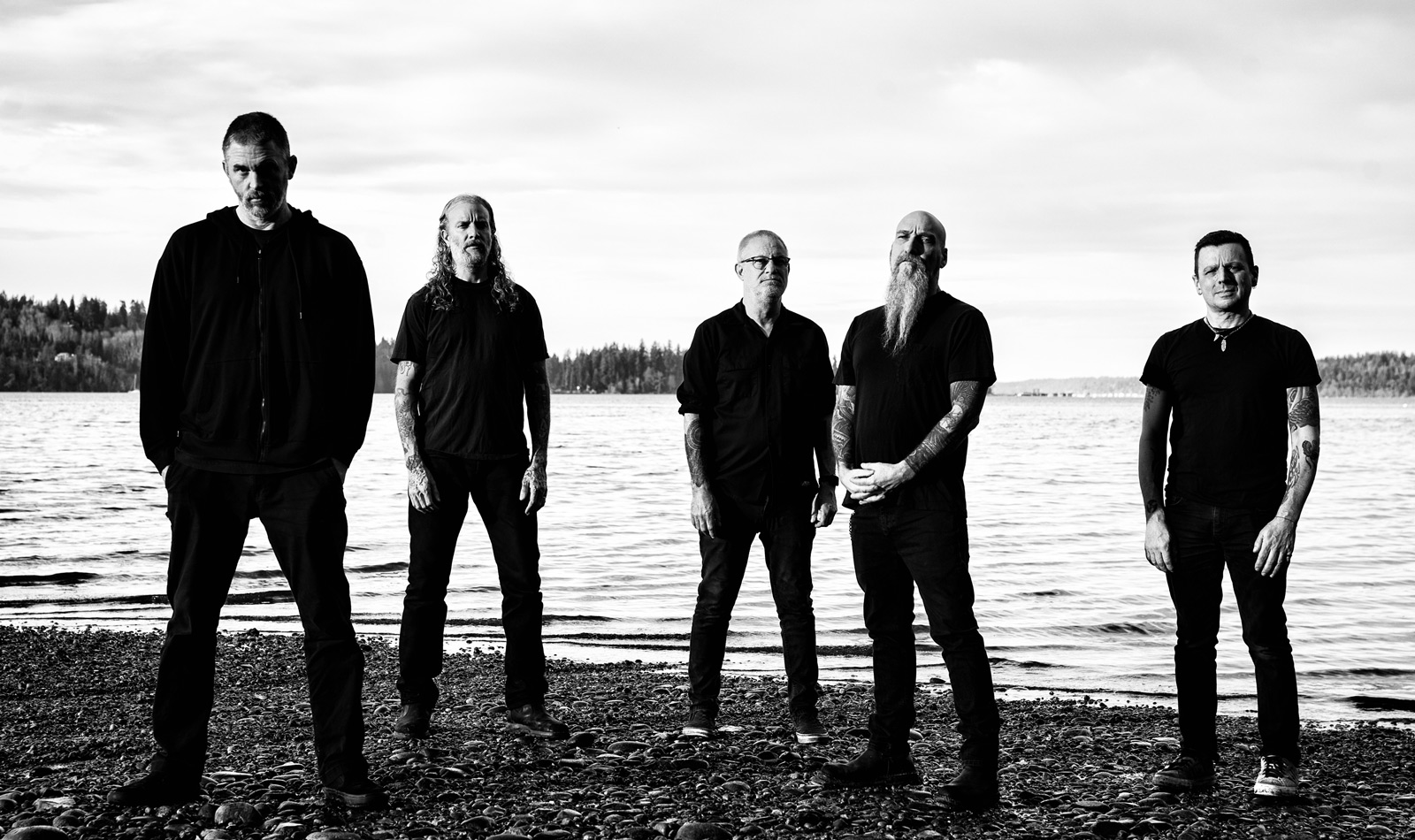
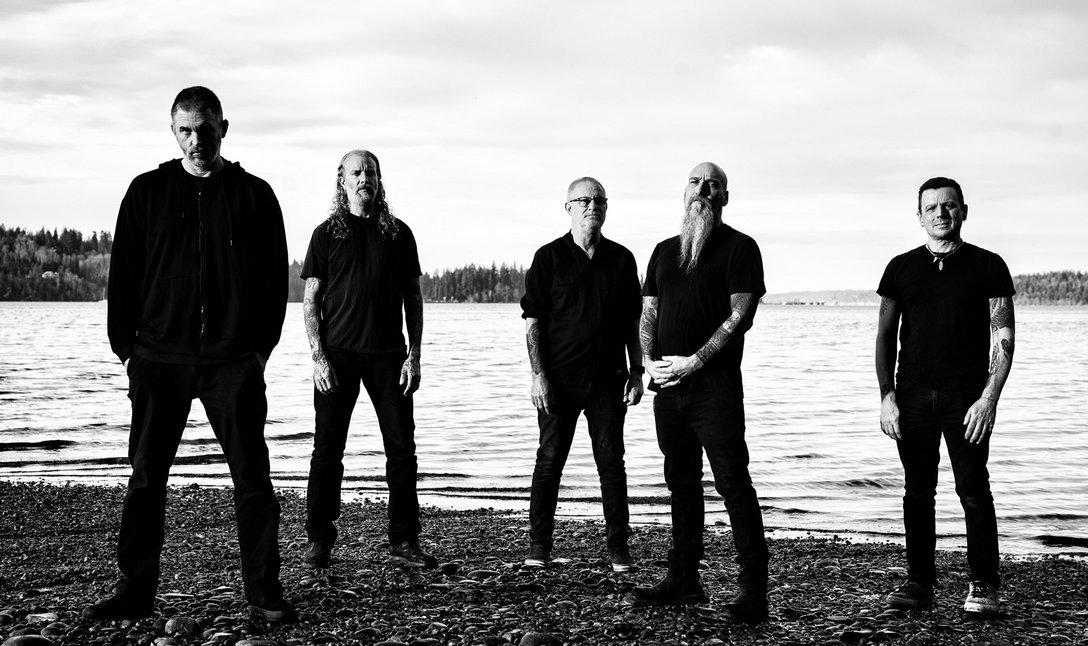
“As cool as it is to get this record out, it’s going to be a little sad not to have this secret anymore,” SUMAC and Old Man Gloom guitarist/vocalist Aaron Turner says of the new Neurosis album. In a move that took fans by complete surprise, the legendary Bay Area psych metal band covertly released An Undying Love for a Burning World last Friday.
Why is Turner talking about the new Neurosis album? Because he’s the band’s newest member.
Wait, what?
It went down like this: Back in 2019, Neurosis guitarist/vocalist Steve Von Till, drummer Jason Roeder, bassist Dave Edwardson, and keyboardist Noah Landis quietly parted ways with guitarist/vocalist Scott Kelly, who co-founded the band in 1985. In 2022, on a social media post, Kelly admitted to verbally and physically abusing his family for years and announced his retirement from music, effectively canceling himself. The entire scenario was a devastating blow to Neurosis and a huge shock to underground music fans everywhere.
In losing a key member and a significant part of the band’s musical and public identity, Neurosis found themselves at a crossroads. “We had to put our life’s work on ice,” Von Till says. “With great uncertainty about what any sort of future might be, we took a step back to try to gain a new perspective. I took a lot of acceptance and probably had some beneficial aspects of ego death. When you spend your entire adult life in a musical project which is more than a musical project—it’s your way of staying sane in a world of insanity, it’s your way of processing emotions that have no language, that you have no other way to express but through this unique voice you’ve found with other human beings—it requires a lot of soul searching.”
As time passed, uncertainty gave way to clarity and a renewed sense of purpose. Neurosis enlisted their longtime friend Aaron Turner and began work on An Undying Love for a Burning World. The result is easily one of the most powerful and provocative albums Neurosis has ever created. Thematically, it’s talking about what Neurosis has always been talking about: Humanity’s disconnect from nature and from itself. Only now, the stakes are higher than ever.
“The world that we have all collectively grown up in has been troubled in many ways over the decades that we’ve been on this earth,” Turner says. “However, I would think that most people could agree that this is the most turbulent time any of us can recall in our lifetimes. And I think that this music, as Steve said earlier, serves as an outlet in a way that there is no other outlet. Neurosis was that for me when I first heard it, and it’s serving that purpose for me now, when there is a lot of anguish and grief to process, but there’s also joy and wonder, and all of it is being poured into what we’re doing.”
Below, we spoke with Von Till and Turner about what will surely be one of the heavy music world’s most important albums for years to come.
How did you know that Aaron was the man for the job?
Steve Von Till: We were thinking about how we could reinvent ourselves with the same energy that we reinvented ourselves with when I first joined, when we went from The Word as Law [1990] to Souls at Zero [1992]. But we’re no longer young men. What kind of puzzles could we put in front of us to create that level of reinvention when time doesn’t move the same way it used to? It came down to finding the right energy. Honestly, the only hesitation about Aaron at first was that it seemed so obvious. And we weren’t convinced that he wasn’t too busy with his own work to just want to drop everything and join our dysfunctional old man band.
Aaron, were you surprised to get the call?
Aaron Turner: It’s not like Steve and I had never spoken, and he all of a sudden asked me to join. Our paths became interwoven a long time ago. Numerous projects of mine released stuff on [Neurosis’s label] Neurot. I did some artwork for Neurosis. Neurosis took my old band [ISIS] on tour. I don’t know if Steve remembers this, but in the early 2000s, he proposed that I come up to the Bay Area and do some stuff with him and one of the guys from Enablers. This is a relationship of community where everybody is doing stuff with each other constantly, and there are always ideas flowing back and forth. In that way, it wasn’t surprising to me. I’d had an open dialogue with Steve for many years. At the same time, it was definitely a what-the-fuck moment for me because this is a band that I had been deeply influenced by in many ways, both musically and ideologically.
Steve, were you guys explicit about wanting a contributing member, not just someone to perform vocal and guitar parts written by the rest of you?
Von Till: Yeah. We’ve always been a collective, and we need the energy. As much as people may think they understand what happens behind the scenes in certain bands, Neurosis has always been collaborative. This album being a reinvention, we didn’t want the same old shit. We wanted somebody to come up with new ideas and a fresh approach—to make not only the old stuff their own, but to bring new stuff. All “Neur-Isis” jokes aside, it’s really been what Aaron has done with SUMAC, the really unhinged sonic dynamics and mastery of raw emotion, and his unique approach to guitar, that we felt was really going to click with our energy.
Aaron, you demoed the song “First Red Rays,” at your house with Jason. Was that your first big contribution to the album, and what was it like writing material for Neurosis?
Turner: That was the second one. The first one was “In the Waiting Hours”—I came up with the foundation for that one as well. But the writing process for Neurosis is interesting, and this has been part of the learning process for me. As Jason puts it, people bring ideas in, and then they get chewed up by the Neurosis meat grinder. All these ideas that become songs stem from one person’s part or maybe a loose arrangement, but it doesn’t become the final song until everybody has injected something of themselves into it.
The opening track, “We Are Torn Wide Open,” is just voices, but it gave me chills. Was it written specifically as an opening statement, and how did it come to life?
Von Till: I sat down in my home studio to do it with the idea that it would at least be an intro to a song. I heard it in a way that made me feel like I was conjuring Throbbing Gristle and Crass and all these other things from our sonic past, but it had nothing to do with any of that. It’s a declaration of intent or a statement of purpose. It’s not poetic; it’s not metaphor. It really is just saying it as it is, and it felt right as the intro to the album.
Turner: To me, Neurosis has always had this dual nature of being otherworldly and deeply humanistic, and I feel like this intro shows in the most naked way possible the humanistic aspect of Neurosis. Steve delivers the message very explicitly, and this is in line with what has been expressed by the band since its beginning: The lone human voice as the gateway to the experience that the record becomes is an invitation to whoever is going to take it in, not just to listen to it, but to feel it and to hopefully resonate with it on a personal level.
The entire album is so powerful and evocative. I imagine that’s partly because it’s the first Neurosis album in 10 years, partly because of this huge change the band has experienced, and partly because of the fresh energy and perspective that Aaron brings. But what else do you think it is?
Turner: This might be funny coming from me, because I’m the young guy in the band, but I’m also a middle-aged man. And for me, there’s an urgency that comes with age now. You think about the vibrancy of youth and the energy you have then; you’re just always raring to go. But for me now, mortality is coming much more sharply into focus. I feel like I don’t know how many years I have left or we have left. Who knows what’s happening with the world at large? I feel like I have to put in everything I can at this particular moment and really seize it because who knows how many moments are left to us?
Von Till: I agree. We’ve had a pent-up decade of not being able to release music. I mean, I’ve had beautiful and satisfying musical releases personally, some of which have been the most inspiring moments I’ve experienced in my life. But there’s this part of me that’s been there since I was a kid, looking for the heaviest fucking music I could ever find that needs to have it flow through me. So, I feel like it’s an emotional release for those unnamed feelings, those unnamed emotions, this physical release of intense energies. If I don’t get the opportunity to do that, it almost feels like an illness. It really is like cutting open the wound and sucking the poison out.