
The stats are compelling.
While global trade grew by 4.6% in 2025, the WTO projects a sharp slowdown in 2026 because of the situation in the Middle East.
This threatens to slow growth to 1.9% or even 1.4% in 2026, depending on the length of the conflict and severity of energy price shocks.
Blockages in the Strait of Hormuz have already caused oil and natural gas price shocks and significant disruptions to shipping.
A top WTO official has also warned that disruption in the Gulf has threatened global fertiliser supplies, potentially impacting global food security.
The energy supply shock is now threatening to tank economies in Asia and Europe especially – and here too if fuel supplies falter – forcing some Governments to use export controls and subsidies to cushion the impact.
Yaounde is the WTO’s first ministerial event since United States President Donald Trump returned to the White House last year, unleashing a barrage of attacks on multilateralism, savaging friends and foes alike with punishing tariffs, and latterly creating global mayhem through unleashing “Operation Epic Fury”.
The 166-member WTO, which struggles to conclude agreements as they must be approved by consensus, is facing a crunch moment on reforming its ways and practices.
But already, ministers have walked into a conference where the reform agenda has been telescoped by US trade representative Jamieson Greer.
The American said in a video statement that the status quo had become “economically unworkable and politically unacceptable”.
He proclaimed a “new order” would involve agreements between smaller groups of countries, rather than “wasting years and even decades to agree on a lowest-common-denominator”.
Greer’s position is entirely rational.
An accompanying statement from his office said the US believes the WTO is unable to address certain systemic problems such as large and persistent trade imbalances, structural excess capacity and production, economic security, and supply chain resilience.
The US projects that important work will happen elsewhere, which could include exploring a pathway to incorporate plurilaterals into the WTO architecture rather than deals which require full agreement from all 166 members.
WTO Director-General Ngozi Okonjo-Iweala has conceded that the world order and multilateral system we used to know have irrevocably changed.
“We will not get it back … We must look to the future,” she said.
Some 72% of global trade still takes place under WTO rules, but Okonjo-Iweala concedes the world trading system faces significant uncertainty because of the Middle East conflict and the impact of US tariffs.
John Denton, the secretary-general of the Paris-based International Chamber of Commerce, is on the money.
“From a business perspective, we believe this could yet become the worst industrial crisis in living memory … the test of the system is not rhetorical. It is practical. Can it respond at the speed and scale of the disruption facing the real economy?”
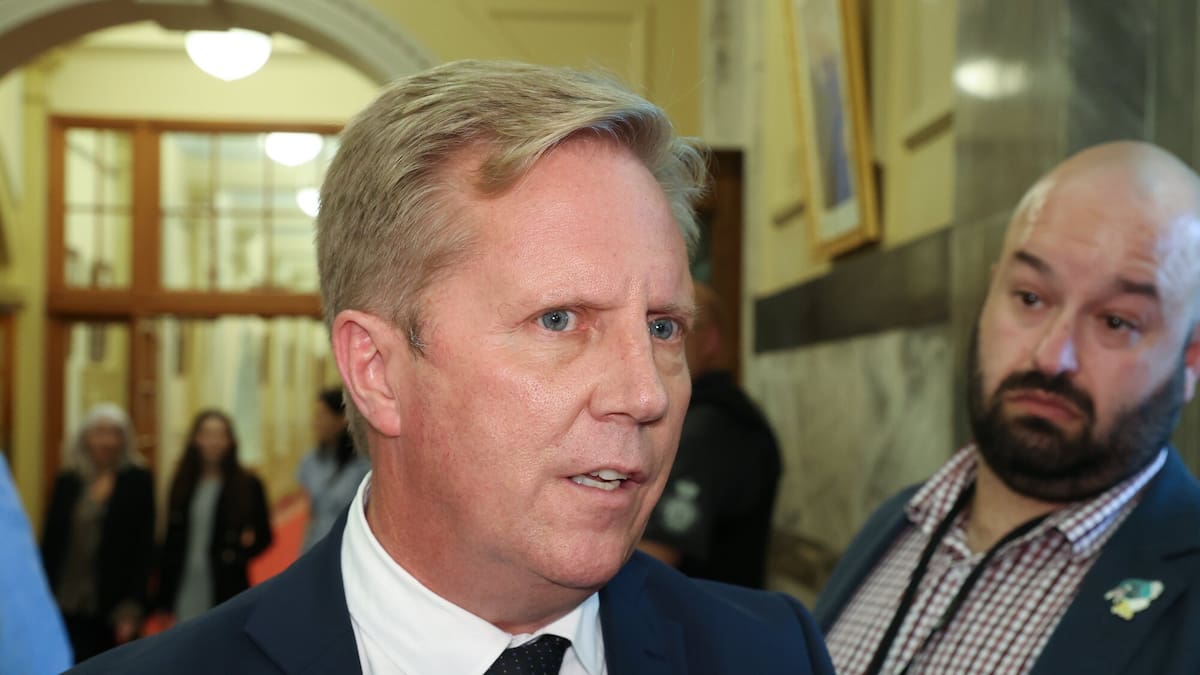
NZ Trade Minister Todd McClay is in Cameroon as one of three WTO vice-chairs. He’s brought with him his Labour counterpart, Damien O’Connor.
“As a small, export-driven economy, New Zealand depends on predictable and rules-based global trade. The WTO is an important part of this system,” McClay says.
“Faced with growing global economic and geopolitical disruption, rising protectionism, and concerns about global supply chain resilience, there’s recognition among WTO members of the need for a modern, effective organisation that’s geared to support trade in today’s world.”
This is the 14th Ministerial Conference or MC14. I went to several ministerial conferences earlier on when hopes were high for a global trade organisation, which was itself minted in 1995.
But the WTO’s 1999 conference – dubbed the “Battle of Seattle” saw massive demonstrations. Nearly 50,000 protesters – unions, environmentalists, and activists – shut down the city, successfully disrupting the meetings and forcing the WTO into a historic, chaotic failure.
Talks again collapsed at the Cancun ministerial in 2003. Lee Kyung Hae, a South Korean farmer, scaled a fence and stabbed himself to death with a penknife while wearing a sign that read “WTO kills farmers”.
As the Guardian’s Larry Elliott pointed out then: the language of globalisation is all about democracy, free trade and sharing the benefits of technological advance.
“The reality is about rule by elites, mercantilism and selfishness.”
At the Hong Kong ministerial in 2005, there were thousands of protesters, most from South Korea, violent clashes and 910 arrests. But a 2013 deadline was set for eliminating agricultural export subsidies (this went into effect in 2015 for developed countries); important to New Zealand’s prospects as a food-exporting nation.
But progress has been glacial.
I haven’t been back to a ministerial since.
Will Trump change his America First stance?
I don’t think that is going to happen.
But a move to incorporate plurilateral agreements makes sense – it is just recognising what has become the new status quo.
Catch up on the debates that dominated the week by signing up to our Opinion newsletter – a weekly round-up of our best commentary.