
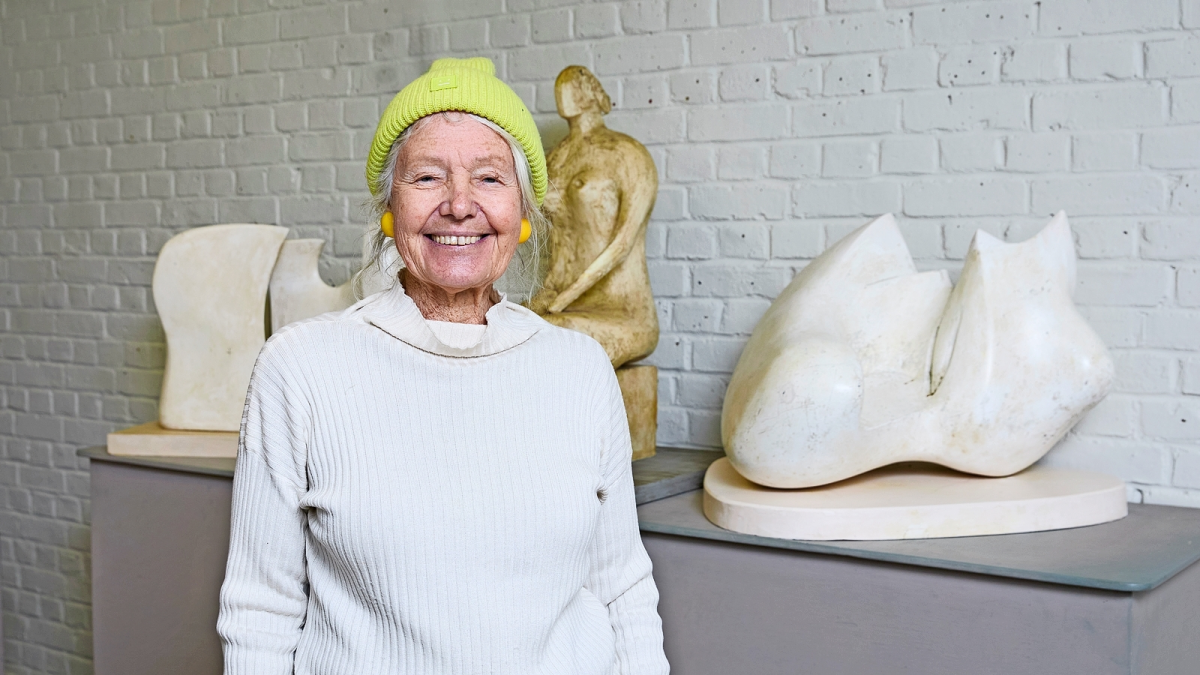
When I meet Mary Moore in the porch of Hoglands, her parents’ house at Perry Green in Hertfordshire, she is raging against the light. Nothing could be worse for seeing sculpture than fog. I try to make the case that seeing the sculptures of her father, Henry Moore, wrapped in mist is, in its own way, striking. She’s having none of it.
If a thick mist could be lifted with sheer force of personality, Mary would be the woman to do it. Whenever you read about Henry Moore, the greatest British sculptor of the 20th century, you hear about his energy, his striking combination of focus and restlessness, of always wanting to be up and at it, out in all weathers, drawing, carving, etching, creating. Never enough time for all he wanted to achieve in a day or a lifetime.
A morning with Mary, a few weeks away from her 80th birthday, gives you a sense of the Moore lifeforce. I’m the one running to keep up as she strides across the grounds, heedless of mud, giving me a first-class sculpture lecture and a running commentary on why this sculpture is in completely the wrong place and those bushes have utterly ruined the sightline. She is tremendous (a very Mary word) company and certainly puts you on your mettle.
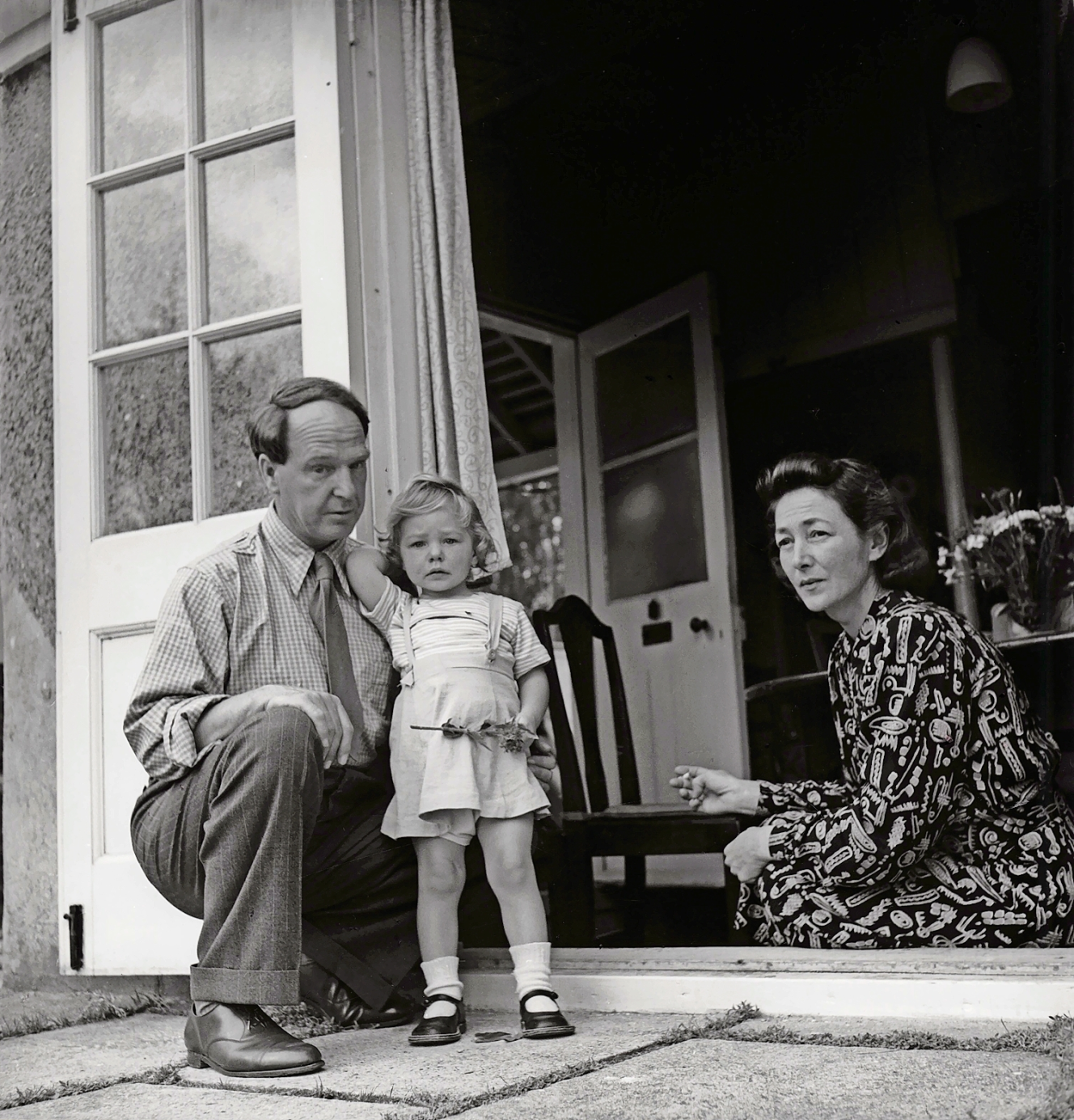 Mary Moore with her parents, Henry and Irina, in 1948National Portrait Gallery London
To the public the Henry Moore Studios & Gardens is the perfect place for an art day out (I came here for my hen do.) For Mary it’s her childhood home. Ensconced with her on mustard-coloured sofas in the Hoglands sitting room for a rare interview, I ask if it’s strange to be back. I half expect the ghosts of Henry and his wife, Irina, to appear out of the mist and come striding through the sun-doors. “It isn’t,” she says. “No. It feels like home. This is why I go around and open windows and curtains and treat it as though it’s ours.” In defiance of curatorial precautions, she has indeed just raised all the blinds. Mary now divides her time between London and the West Country, but still takes a keen interest in the goings-on at Perry Green.
Between us is a coffee table of curiosities: a nautilus shell, an ostrich egg, a piece of malachite, a butterfly encased in Perspex, stones, pebbles, urchins, cowries, a bone. There’s a narwhal tusk in a corner and a stalking stone lynx by the doors to the garden.
“If any visitor came, be they people from museums or even a student on a bicycle from Cambridge — I think Antony Gormley did that — and knocked on the door, my father would have them in. He was a very good teacher. He was able to use the forms in this room to teach people how to look, because actually a lot of people don’t know how to look at sculpture or objects. They know how to look at a painting or a flat screen, but they don’t know how to look at three-dimensional things.”
It is 40 years since Henry Moore’s death in 1986 at the age of 88. Next month, Henry Moore: Monumental Nature will open at Kew Gardens in southwest London. It will be the largest outdoor exhibition of Moore’s work to date with 30 sculptures in the gardens and 90 works on display in the Shirley Sherwood Gallery of Botanical Art. At Perry Green, the Henry Moore Studio & Gardens will re-open for the spring and summer season on April 1 with an addition to its family of barns and studios and an exhibition of Moore’s “shelter drawings” made in the tunnels of the London Underground during the Blitz.
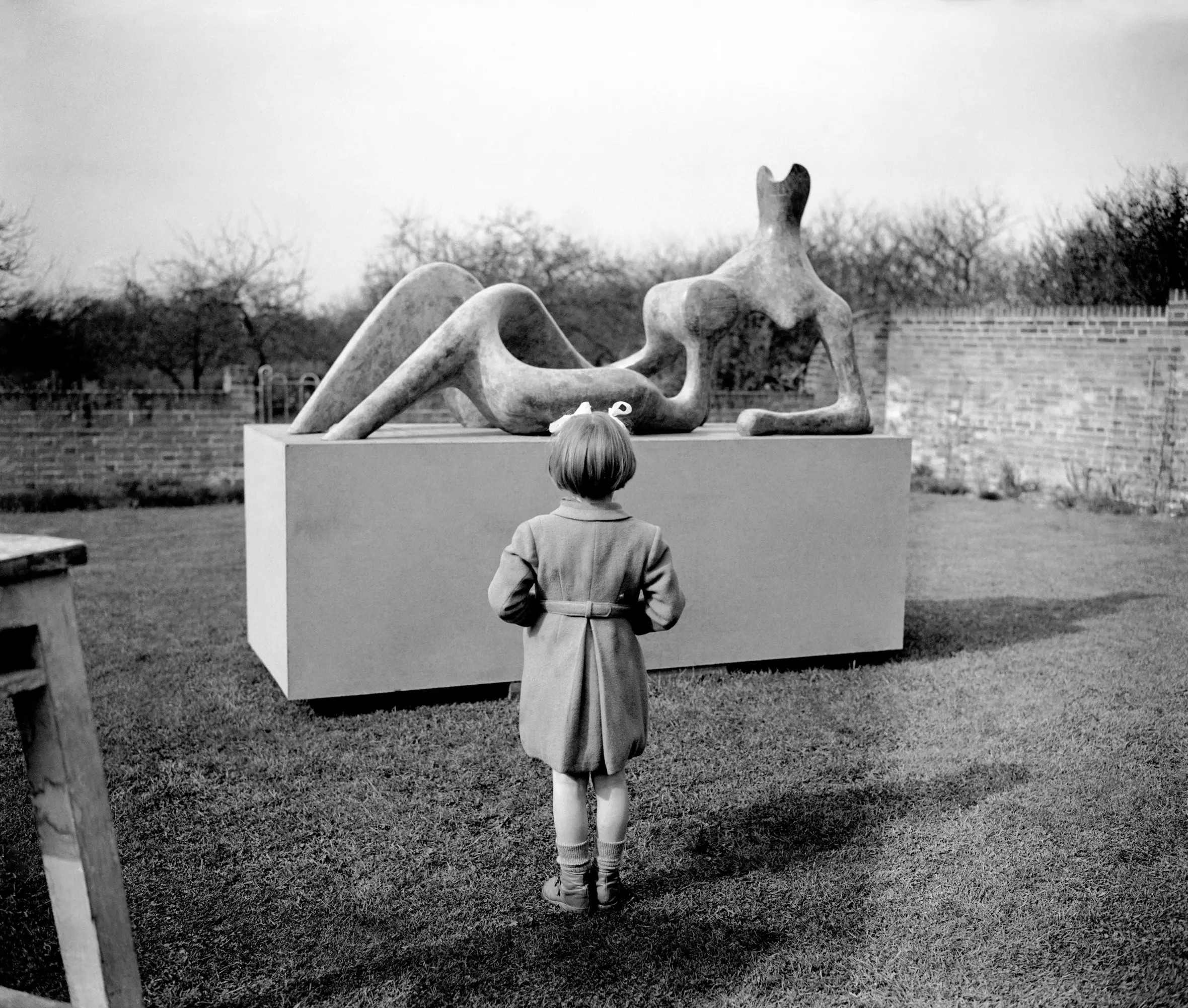 Mary looking at the Reclining Figure at Perry Gardens in 1951Alamy
Before meeting Mary, I am taken down to the Sheep Field Barn, an old farm building, newly reimagined as an education and exhibition space by the architecture studio DSDHA. Godfrey Worsdale, the director of the Henry Moore Foundation, tells me — a little sheepishly — that if the foundation has had a failing it is that it hasn’t done justice to Moore’s great belief in artistic education. Banish all sheepishness. Two superb new art rooms look out onto the Sheep Field and Moore’s Large Reclining Figure (1984). Schools will visit during the week and at weekends there will be drop-in workshops for families. The exhibition spaces will be a refuge on wet days.
Henry and Irina could hardly have come from more different worlds. Henry was born in 1898 in the small industrial town of Castleford in West Yorkshire. His father was a miner and Henry was the seventh of eight children. He enlisted in 1917, was gassed at Cambrai and was invalided back to England. After the war, he enrolled at Leeds School of Art.
“My mother,” Mary says, “had an extraordinary life. It was an ungoverned and extreme life.” Born Irina Radetsky in Kyiv in March 1907 to wealthy parents, she spent her early childhood in Moscow and St Petersburg. In the 1917 Russian revolution, her father disappeared, almost certainly killed. Her mother left Irina with her grandmother in Crimea. When the grandmother died of cancer, Irina, aged 11, suffered terrible deprivation and hunger.
Irina’s mother, beautiful and flighty, reappeared in 1919 in the company of a British officer and took her daughter, who was pitifully thin, to Paris. At the age of 15, Irina was deposited with the officer’s parents in a pleasant Georgian house in Buckinghamshire from where, in due course, she would commute to the Royal College of Art. Henry was the sculpture tutor. Mary says they didn’t meet so much as “collide”.
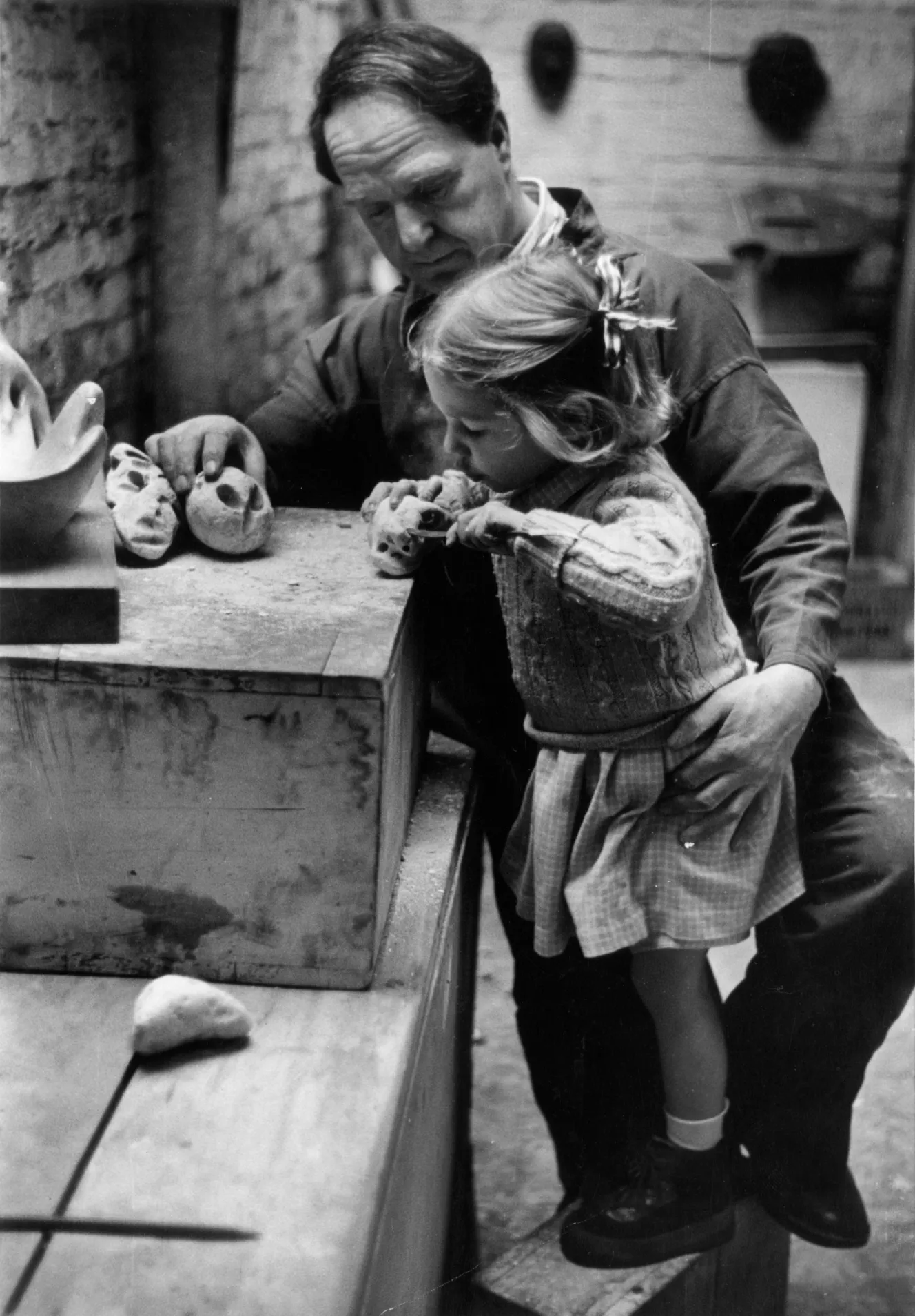 Mary at five years old with her father, Henry, in the early FiftiesThe Henry Moore Foundation Archive
Mary was born in March 1946 after Irina had several miscarriages. She was a longed-for only child. “I was brought up with a tremendous amount of adult company and very high-end adult thought, adult conversation, adult things around me. I was just expected to kind of absorb it and keep up.” She never felt her parents were trying to “impose” on her, only to include her. She had enormous freedom. “I ran wild. I was covering every single acre, not in this garden, but all the way across the fields. I would be wandering the whole ten-mile area.”
As a young child, she would pop into the studios and make things with her father. “I remember the danger all over the place,” she says. “There are files, there are knives, there are saws, there are sharp things, there are bits of wood.” Mary would sit beside her father cutting shapes out of clay and from time to time she would say, “Can you make me a lion?” and he would oblige.
Her mother had a “fantastically good eye” and was “prepared to lift great big bits of stone with him” and act as his model, but didn’t pursue her own career as an artist. Did Irina feel thwarted or secondary? “I’ve met many artists, husbands and wives, and that is a role that they chose to take. They know what they are not.” Irina knew that Henry was the star. “It wasn’t a big deal.” Henry valued her opinion absolutely. “They would sit and tear up drawings together.”
Irina did produce stylish sketches in the manner of the Ballets Russes designer Leon Bakst, some of which she turned into tapestries. She also used to stitch little costumes for Mary’s teddies. Irina was the creator of the gardens and landscape at Hoglands. Visitors can still peer into her cactus houses.
Mary went to the progressive boarding school Cranborne Chase (she says that if a bomb had fallen on Waterloo station as parents were sending their children off “it would have got rid of the whole of the English intelligentsia”), then to Oxford. She married Ray Danowski, an American art dealer, and they had three children. She has lived in South Africa and Zurich. She is writing her memoirs, which, she says, accounts for her “Bird Woman from Mary Poppins” get-up. “I find that it means that you don’t change your clothes.” Mary, I’ve been there.
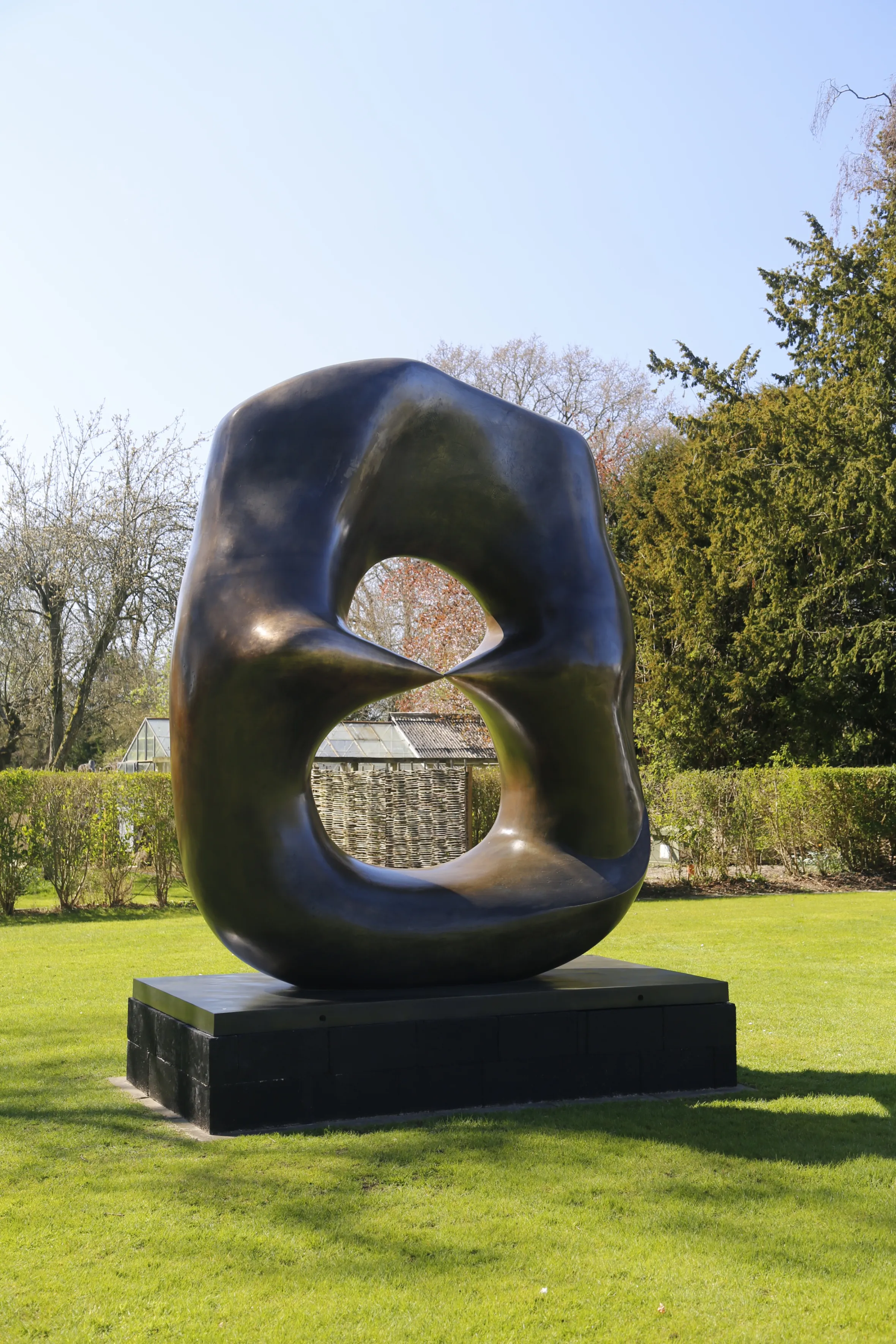 Henry Moore’s Oval with Points, 1968-70 will be on show at the Henry Moore: Monumental Nature exhibition at Kew Gardens Joe Kitchen/The Henry Moore Foundation
There was a period when Mary and the foundation were on bad terms. She took them to court in 1993, objecting to expansion plans and claiming that works by Moore made between the creation of the foundation in 1977 and Moore’s death were part of the family estate and rightfully hers. She lost — and was left responsible for legal fees. She later sold 44 works left to her by her father at Sotheby’s. Relations are now friendly, although Mary can be trenchant when a sculpture hasn’t been presented to its best advantage.
Henry could be “quite judgmental” about people’s likes and dislikes in sculpture and art. “My father had a top ten and he would always ask people who their top ten were and use it to tell their character and their taste. My father was certainly judging himself against Cimabue and Giotto and Masaccio.” Rembrandt was another favourite. “People who had a sense of monumentality and humanity.”
Henry, whom Mary describes as “a kind of human, three-dimensional photocopier”, had a knack for measuring weights and distances by eye and instinct, an invaluable skill in a sculptor who might start with a tiny hand maquette that has to be scaled up to stand 40ft tall in a plaza. “At one of my birthday parties,” Mary remembers, “I could have been five or six or seven, he got the bathroom scales out and he guessed the weight within pounds of every single little girl in a party dress who had come to my party.”
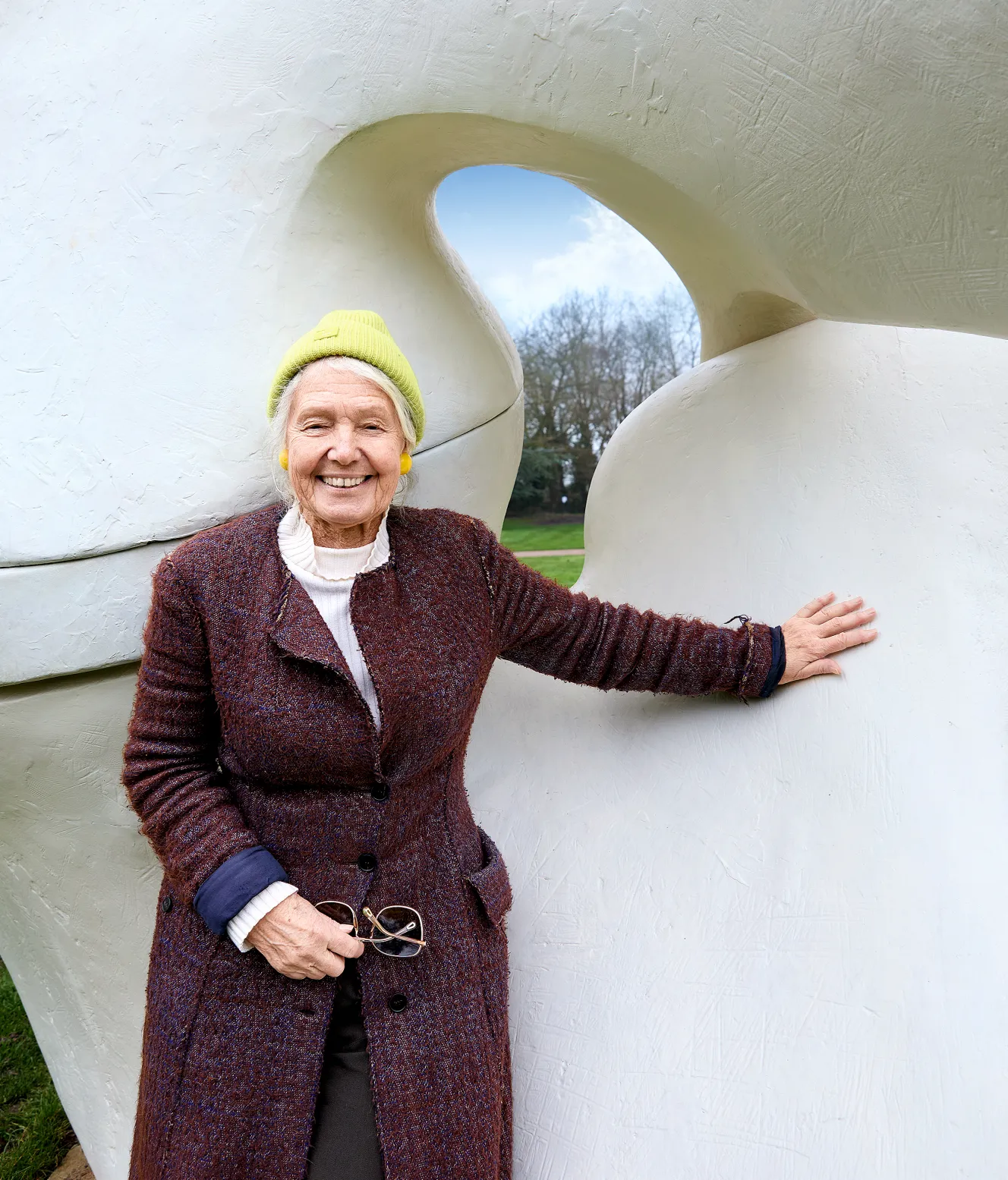 “I’d ask my father ‘Can you make me a lion?’ and he would oblige”Katie Wilson for The Times
To achieve what Moore achieved he had to be “tremendously disciplined and had to have an absolutely organised day”. No downtime? “He hated weekends,” Mary says. “He couldn’t take holidays.” Mary remembers staying with friends in Siena to see the Palio, the great horse race in the piazza. “They were having a long siesta and my father became tremendously agitated because he was unable to control the way he was spending his time.” If they were on the beach at Broadstairs, they were picking up pebbles as inspiration for future reclining figures. If they were in France, they were off to Cap Blanc in the Dordogne to see the prehistoric carvings of animals. Henry would, however, put a line through the diary during Wimbledon, and he and Irina would sit in the little back sitting room at Hoglands with the curtains drawn and watch every match on a “tiny television”.
I bring up something Kenneth Clark said about Moore: that if charged with sending an ambassador of the human race to Mars, Moore would be his first choice. By all accounts he sounds like a nice man? Gormley remembers “a lovely, old-fashioned gentleman”.
Mary nips niceness in the bud. “He wasn’t nice.” What was striking was that “he genuinely liked people. He was genuinely interested in people.” He was always welcoming: students on bicycles, curators, collectors. Although even Henry had his limits. “I do remember on a Sunday, people coming and looking through and we used to have to hide below the level of the window.” But for the most part “he wanted people to understand and get something out of sculpture… to actually get an extra enjoyment out of their life, in looking at sculpture that perhaps hadn’t naturally come to them before”.
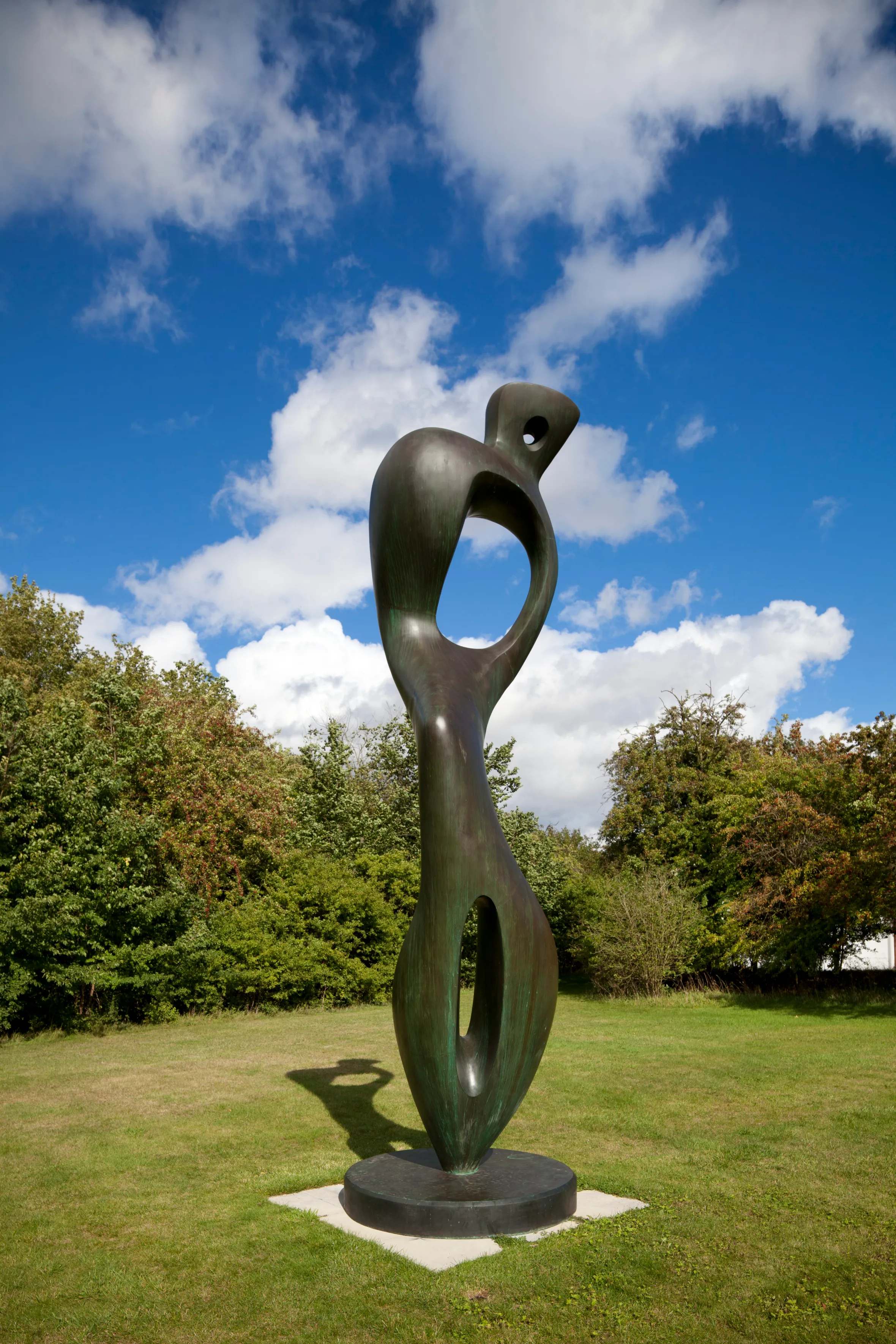 Large Interior Form, 1953-54, will be on show at the Henry Moore: Monumental Nature exhibition at Kew Gardens JONTY WILDE
A few hours after saying goodbye beside the Sheep Field Barn, the grounds still stubbornly fog-bound, a cast of Henry Moore’s King and Queen (1952-3) sells at Christie’s for £26 million, setting a new auction record for the artist. The Christie’s lot essay places Moore’s King and Queen beside the British Museum’s limestone statue of the pharaoh Horemheb and one of his wives. Mary remembers her father making the sculpture at about the time he was reading her stories that all started: “Once upon a time there was a king and queen…” To her, though, the resonance is far more personal than a storybook echo.
She takes me down to a cast of King and Queen in the Hoglands garden. There’s blossom on the water that pools in the plinth. “It’s tremendously moving,” Mary says. “The queen, she’s quite vulnerable, but very contained. That’s very much a portrait of my mother. Those hands and that very tentative posture.” Henry and Irina are here still. Not as wraiths in the mist, but eternal presences in landscape and bronze.
Henry Moore: Monumental Nature is at Kew Gardens May 9 to Jan 31 (kew.org). The Henry Moore Studios & Gardens re-open on Apr 1 until Oct 25 (henry-moore.org/studios-and-gardens)