
What We Tried to Bury Grows Here
Author: Julian Zabalbeascoa
ISBN-13: 978-1-911710-29-5
Publisher: Seven Stories
Guideline Price: £12.99
The Spanish Civil War was “a shared madness”, in the phrase of Isidro, the young man at the heart of Julian Zabalbeasco’s moving debut novel, What We Tried to Bury Grows Here. As in all civil wars, including ours, the impact on ordinary people was especially traumatic.
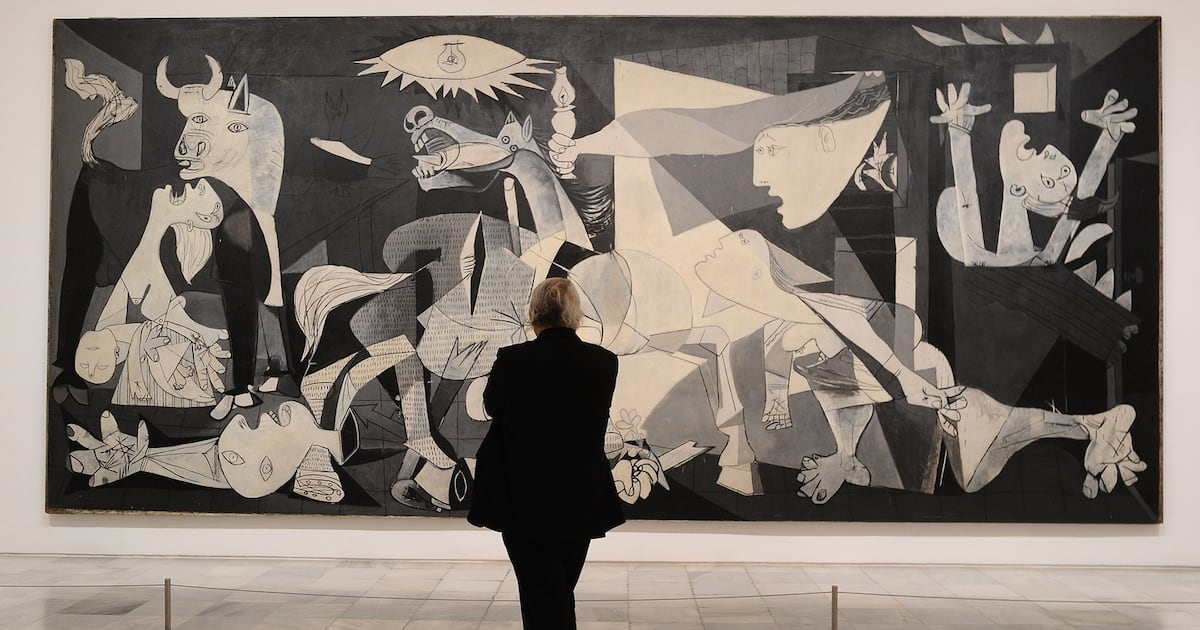
That trauma was particularly deep-rooted in the Basque Country, whose spiritual centre is Gernika, made famous by Picasso’s great painting of 1937. The town’s bombing by the Germans and Italians features early on, observed from a distance by Isidro, the “dark eggs” falling from the bombers’ bellies “like someone quickly tearing paper in half”.
Everything is torn apart in this book: families, lovers, decency and indeed the narrative itself. Zabalbeasco writes it through the voices of 20 different narrators, though he does not attempt the stylistic bravura of Donal Ryan’s 21 in The Spinning Heart and its follow-up Heart Be At Peace. That would not be appropriate here. Instead, there is directness, bewilderment and pain.
Such a structure risks being overly-fractured, but Zabalbeasco handles this skilfully by making Isidro the one character who features throughout, sometimes anonymously. He has stopped another fighter from shooting a captured German by putting his hand over the muzzle, and his middle and ring fingers have been blasted off. You wait each time for mention of a man with missing fingers.
But Isidro’s worst wounds are to come. Mariana is a young mother who writes anti-fascist pamphlets under the nom de plume Erlea. Their brief encounter in Bilbao results in the birth of a now-lost baby girl. His brother Xabier, the narrator of the fifth section, has as a priest taken a different path. When Isidro himself finally speaks, in the penultimate piece, he tells us of “my own defining story, the one that prods me still”. Their father beat them both in childhood, and now Xabier has been hanged by fascists in a San Sebastián cemetery.
Individual characters flare vividly in front of us for a few pages and then disappear into history – men, women and children, Republicans and Nationalists alike. What persists throughout is the place itself and its people. As a lieutenant says: “No people have ever been able to dislodge us. Not the Romans, not the Moors. And now Franco and his German and Italian friends are concentrating on our country. We are shooting bullets at our own sky. That’s fine. We were here before, and we will remain. It is our story.”
Julian Girdham teaches English at St Columba’s College in Dublin