
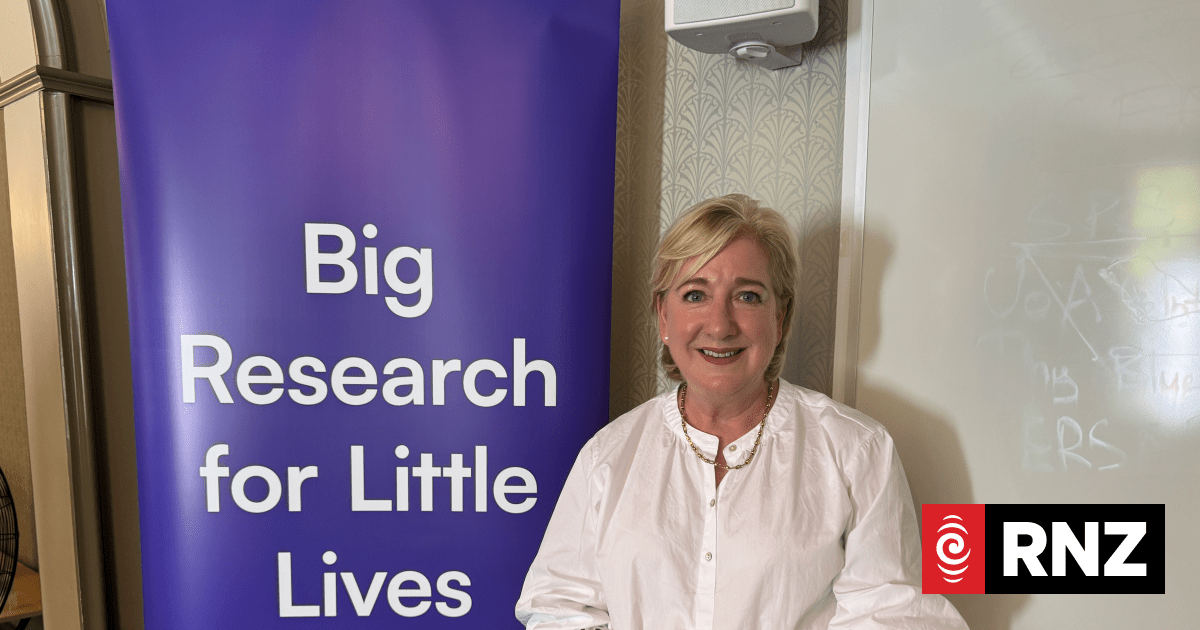
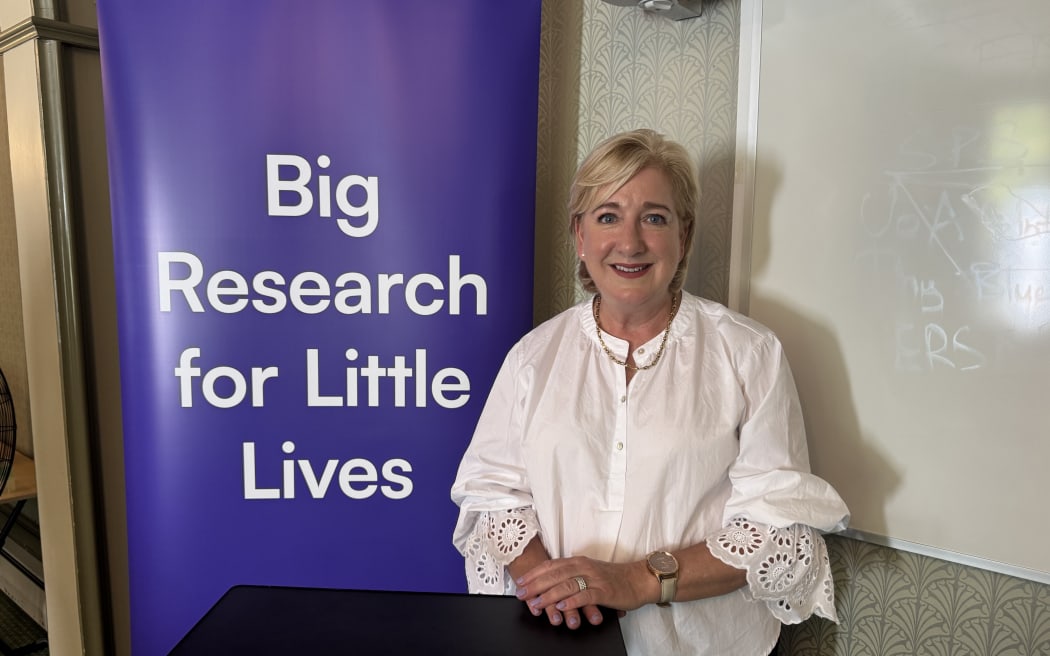
Cure Kids chief executive Frances Soutter.
Photo: RNZ / Pretoria Gordon
Cure Kids warns 60,000 children in New Zealand each year are admitted to hospital with a preventable disease.
It is calling for the government to take action, following the release of the fifth State of Child Health report on Friday.
The report found the hospitalisation rate for children with respiratory conditions had increased by 60 percent since 2000.
“These are not rare or unavoidable illnesses,” Cure Kids chief executive Frances Soutter said. “They are, in many cases, preventable and our youngest children are carrying the greatest burden.”
Soutter said those under the age of one accounted for half the children in hospital for a respiratory condition.
The report called for a vaccine against respiratory syncytial virus or RSV to be funded.
Auckland University professor of paediatrics and emergency medicine Stuart Dalziel said RSV was the leading cause of bronchiolitis, which hospitalised one in 12 children per year.
Nirsevimab would prevent that, Dalziel said.
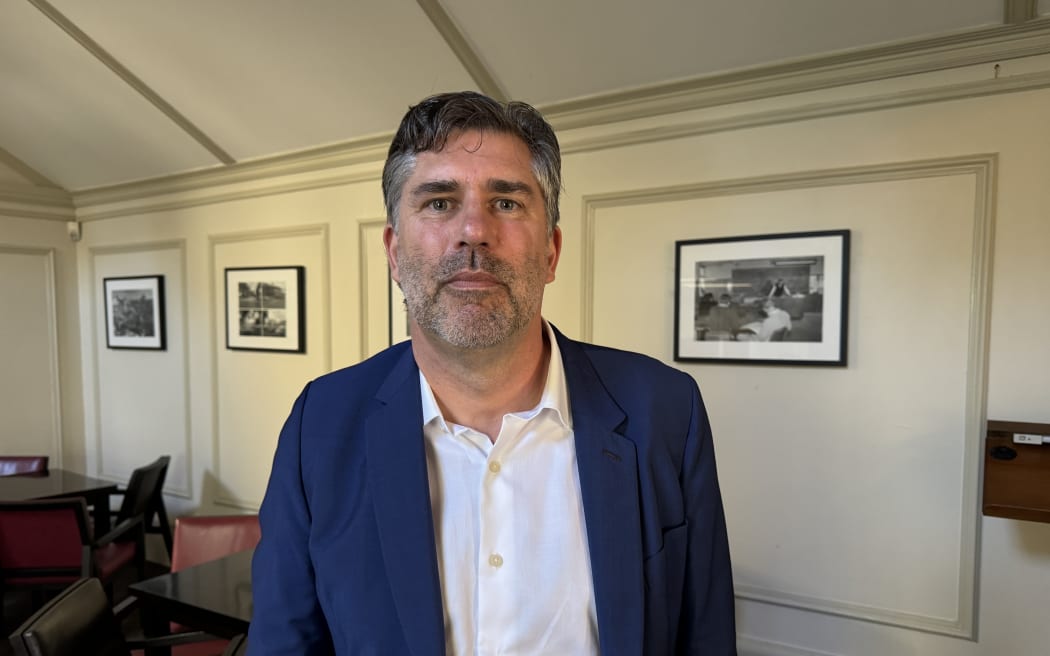
Auckland University professor of paediatrics and emergency medicine Stuart Dalziel.
Photo: RNZ / Pretoria Gordon
The report also called for the influenza vaccine to be funded for children under five.
“We know that young children have the highest hospitalisation rates for flu and it plays a major role in spreading it within communities,” Soutter said. “This is a really practical, really cost-effective step that would protect our children and those around them.”
Tamariki Māori and Pacific children were disproportionately affected in every health concern.
While the hospitalisation rate for those with rheumatic fever or heart disease had returned to the same level as before the pandemic, Pacific children were 43 times more likely to be admitted to hospital with the disease than other children.
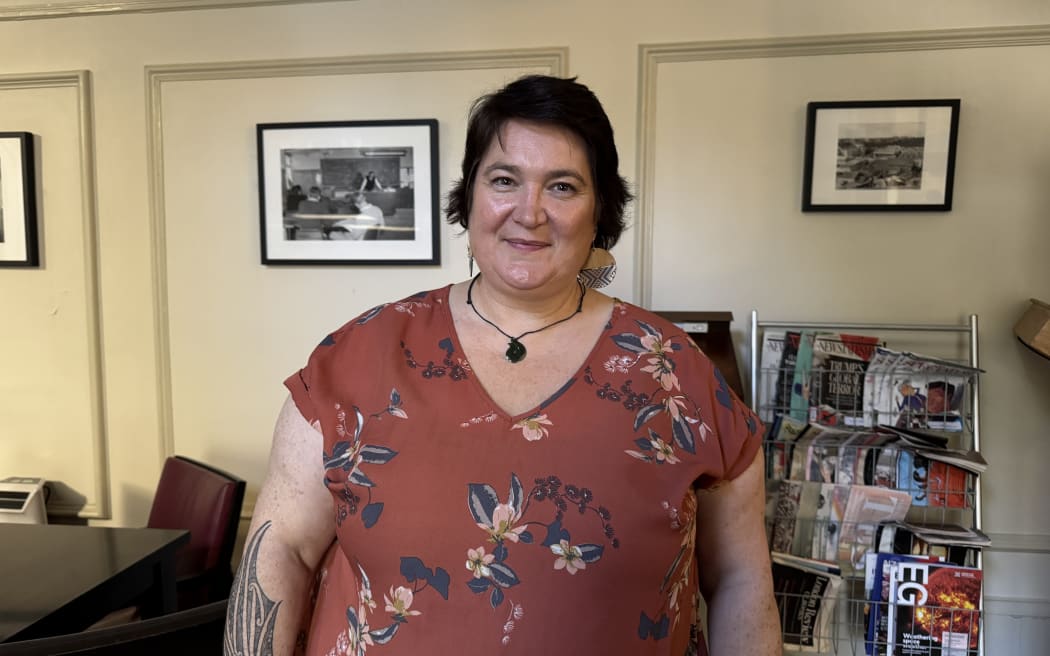
University of Auckland researcher, associate professor Anneka Anderson.
Photo: RNZ / Pretoria Gordon
University of Auckland researcher and associate professor Anneka Anderson said that rate could be reduced by more than 85 percent, if the inequities were eliminated.
“Rheumatic fever is one of our country’s most glaring health inequities, and the extreme disparities we see in hospitalisation rates for our tamariki Māori and Pacific children, compared to non-Māori, non-Pacific children, are unacceptable in a country with the resources Aotearoa has,” she said.
“With co-ordinated prevention strategies and sustained investment in research, this disease is entirely preventable.”
Health Minister Simeon Brown told RNZ that the government was focused on prevention, as well as improving the health of children and young people.
“Making sure children can access timely, quality healthcare close to home is a fundamental part of that.
“That is why we are so focused on ensuring families can see a doctor when they need to, including through free GP appointments for children aged 13 and under.”
Sign up for Ngā Pitopito Kōrero, a daily newsletter curated by our editors and delivered straight to your inbox every weekday.