
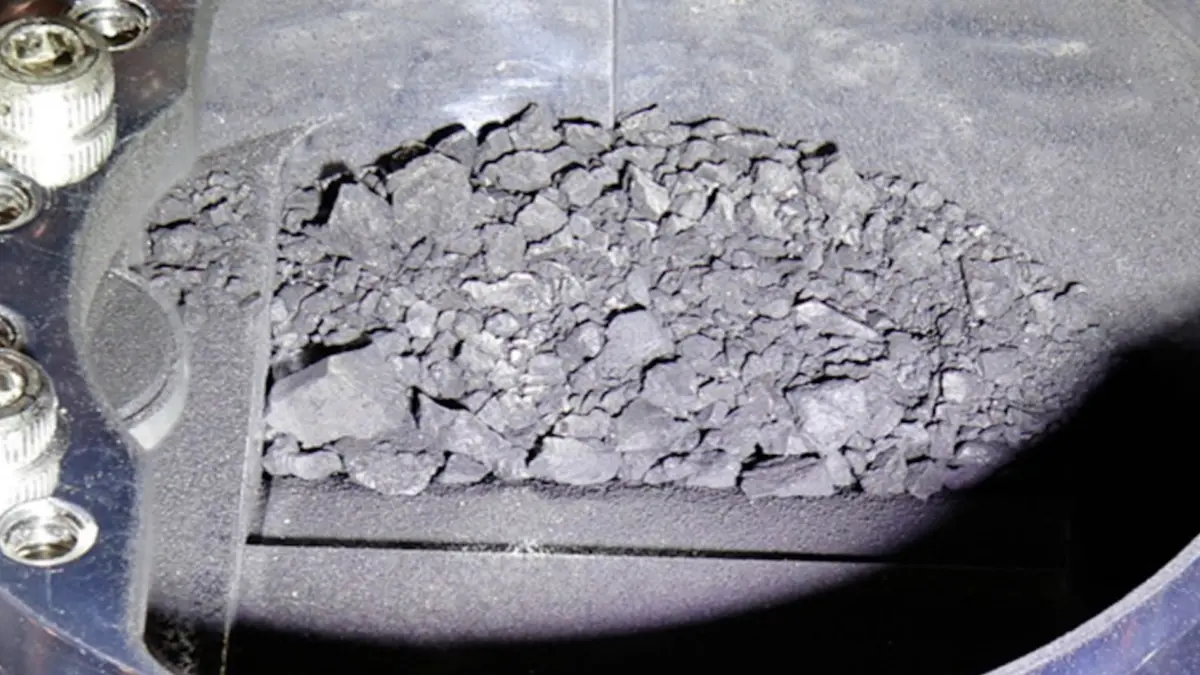
All five canonical nucleobases, adenine, guanine, cytosine, thymine, and uracil, have been identified in pristine samples returned from asteroid Ryugu, providing direct evidence that these compounds can form in extraterrestrial environments.
The samples were collected by the Japan Aerospace Exploration Agency’s Hayabusa2 mission and returned to Earth under contamination-controlled conditions.
The five canonical nucleobases consist of two purines, adenine and guanine, and three pyrimidines, cytosine, thymine, and uracil. These molecules encode biological information in DNA and RNA and participate in base-pairing mechanisms that enable replication and transcription in living systems.
Measured total nucleobase concentrations reached 1 577 ± 35 pmol g⁻¹ in sample C0370 and 507 ± 21 pmol g⁻¹ in sample A0480. The distribution of purines and pyrimidines showed ratios of approximately 1.1 and 1.2, respectively. These ratios differ from Chargaff’s rule, which defines a strict 1:1 relationship in biological DNA.
Together with other chemical indicators, this deviation supports an indigenous, non-biological origin for the Ryugu nucleobases.
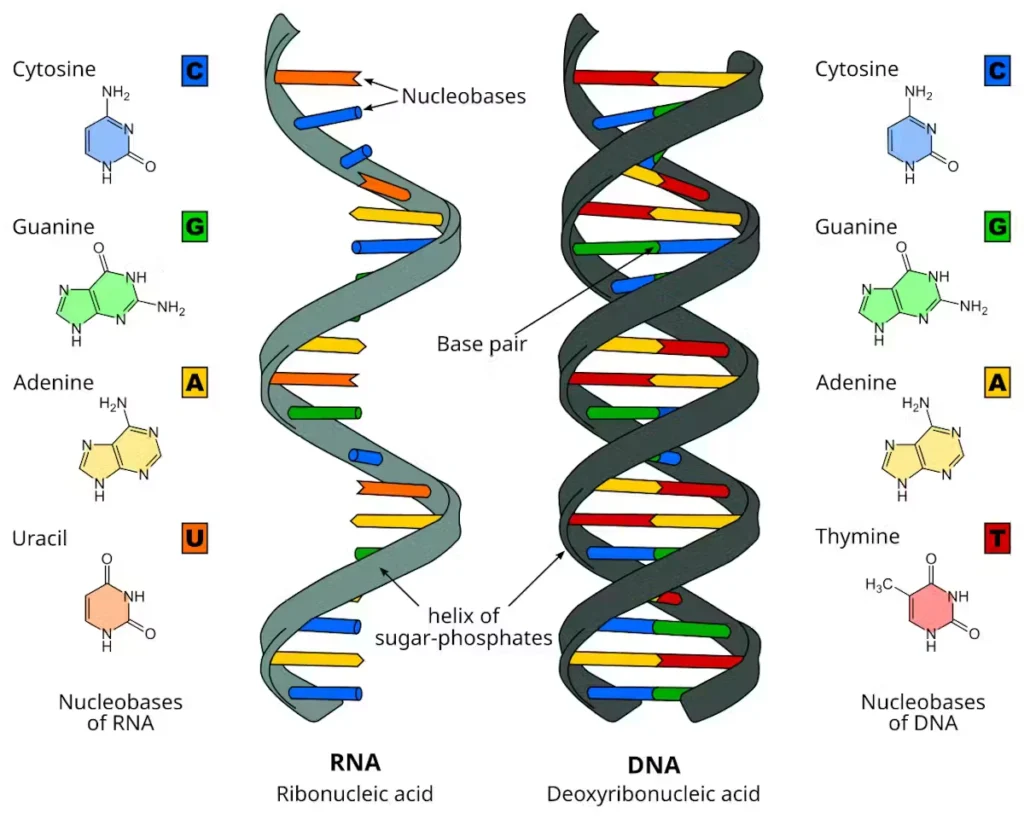 How the five nucleobases make up RNA and DNA. Credit: Wikimedia Commons
Researchers report a correlation between purine-to-pyrimidine ratios and ammonia abundance in the samples. The study proposes this relationship as a molecular indicator of non-biological nucleobase formation under ammonia-influenced conditions.
Chemical signatures confirm non-biological origin
The samples also contain structural isomers rarely observed in terrestrial biology, including 6-methyluracil, a positional isomer of thymine, and an unidentified hypoxanthine isomer. These compounds are not characteristic products of biological metabolism and support a non-biological origin.
The Hayabusa2 mission returned approximately 5.4 g (0.19 oz) of asteroid material from Ryugu. Laboratory analysis was conducted under strict contamination control protocols, confirming that the detected nucleobases originate from the asteroid material.
Comparisons with other carbonaceous materials show that nucleobase distributions vary between parent bodies. The Murchison meteorite is enriched in purines, whereas Ryugu contains nearly equal amounts of purines and pyrimidines. The study links these differences to variations in parent-body chemical environments, including ammonia abundance, rather than to a single universal formation pathway.
All five nucleobases have been identified in both asteroid Ryugu and asteroid Bennu. This confirms that these compounds occur in multiple carbonaceous asteroids rather than a single sampled body.
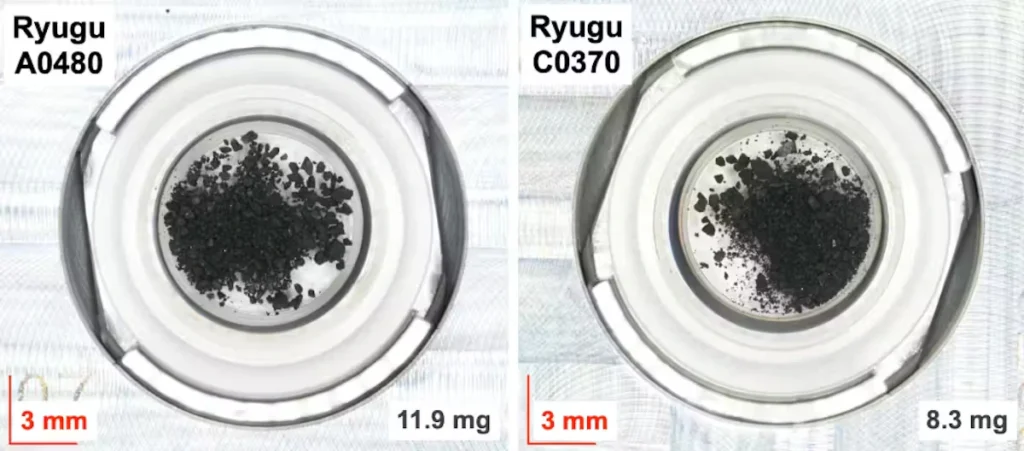 Microscope images of Ryugu samples collected from the first and second touchdown sites of the Hayabusa2 mission. Credit: JAXA/JAMSTEC
The presence of structural isomers and the measured nucleobase ratios support a non-biological origin for these compounds in extraterrestrial materials. The data further suggest that nucleobases can form through more than one pathway under differing physicochemical conditions recorded in carbonaceous asteroids and related materials.
The study references the RNA world hypothesis, which describes a stage in early Earth history where ribonucleic acid functioned as both a genetic carrier and a catalytic system. RNA molecules are capable of storing sequence information and catalyzing chemical reactions without proteins.
The identification of nucleobases in asteroid material provides a source of these compounds in prebiotic environments. The study discusses the relevance of such external inputs for early chemical systems on Earth without asserting direct causation.
Formation in interstellar ice and cosmic environments
Laboratory experiments and astrochemical models referenced in the study show that nucleobases can form through photochemical reactions in interstellar ice analogs. These ices consist of water, methanol, ammonia, and related molecules exposed to ultraviolet radiation and energetic particles.
Formamide is identified in experimental work as a precursor compound capable of producing nucleobases under irradiation. Controlled laboratory irradiation of formamide generates adenine, cytosine, and uracil, along with structurally related compounds. These reactions produce heterocyclic molecules consistent with those measured in meteorite and asteroid samples.
The study describes these processes as occurring prior to or during the formation of asteroid parent bodies, with subsequent aqueous alteration modifying compound distributions within the asteroid.
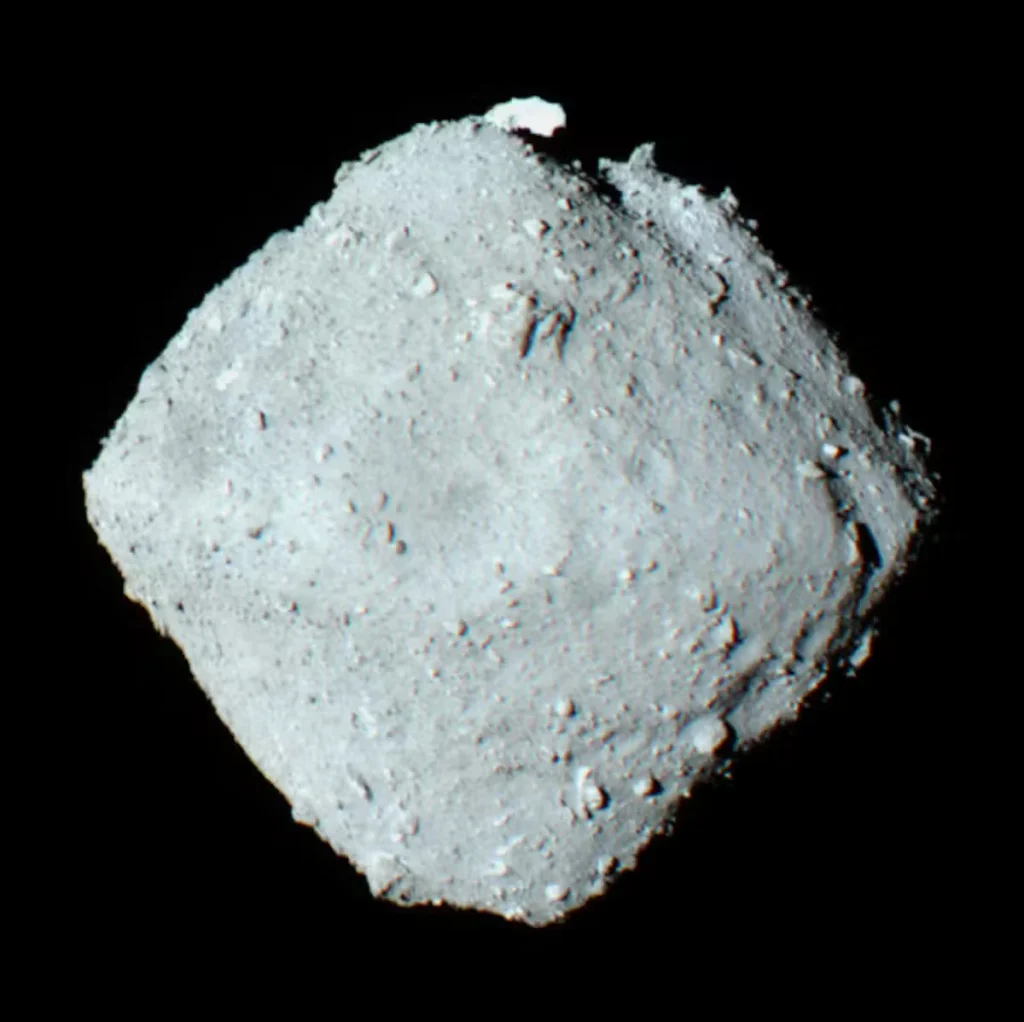 A coloured view of 162173 Ryugu taken by JAXA’s space probe Hayabusa2 in 2018. Credit: JAXA/Hayabusa2Constraints from asteroid sample data
The results are based on direct laboratory measurements of material from asteroid Ryugu and comparisons with published analyses of asteroid Bennu and meteorites. The conclusions are limited to the chemical composition and distribution of nucleobases within these sampled bodies.
The data demonstrate that nucleobases are present in multiple carbonaceous asteroids and that their formation can occur through non-biological chemical pathways under conditions recorded in these materials.
References:
1 Koga, T., Oba, Y., Takano, Y. et al. A complete set of canonical nucleobases in the carbonaceous asteroid (162173) Ryugu. Nat Astron (2026). https://doi.org/10.1038/s41550-026-02791-z