
Respect for staff. Sensitivity around questioning whether a council department needs to exist. Councillors were advised at a Dunedin City Council budgets meeting to be cautious over how they spoke about staff.
In the second article in a two-part series, Grant Miller looks into perceived stifling of debate.
As lunchtime neared on the second day of a two-day meeting about budgets, Dunedin city councillor Christine Garey flagged she was not comfortable with some recent discussion.
Comments about staff – or ‘‘what should go and what should stay’’ – were incredibly inappropriate, she said.
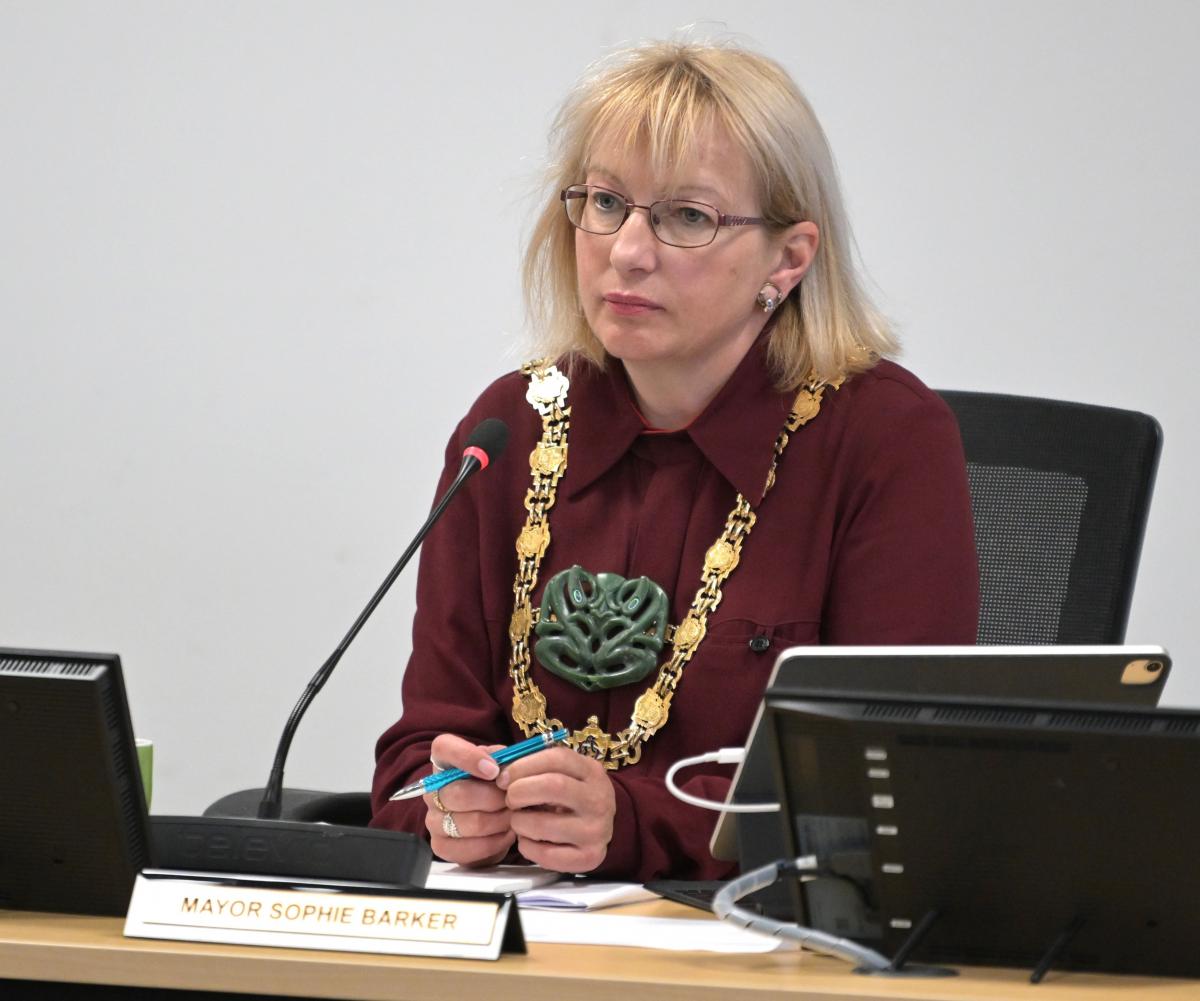
Cr Garey asked for guidance from the meeting chairwoman, Dunedin Mayor Sophie Barker.
Ms Barker highlighted one apparently ill-considered comment and then said: ‘‘Staff work here as part of our team to serve and deliver for our city so, please, please, respect staff. And don’t pick on departments – that is not OK.’’
Dunedin City Council chief executive Sandy Graham then spoke up.
‘‘We’re happy to be held to account and have the budgets critiqued,’’ she said.
However, the impact on staff from comments – such as a couple from the debate that had just been held – should not be underestimated, she said.
‘‘I would urge caution,’’ Ms Graham said.
‘‘General managers are now going back to the respective departments … just to shore them up, because staff watch these things, and when comments are made that their work could be done better by a different department, for example, that has a real impact on … engagement and on our staff.
‘‘If you want to have those discussions, there are mechanisms to go into non-public, where we can do it in a way where staff don’t hear it directly.
‘‘You’re our governors. The staff want to work with you and want to be delivering for you, but those kind of comments really do undermine that part of the process.’’
What had happened?
The council was going over the budgets in early March for its 2026-27 draft annual plan. A rates rise of 10.5% had been signalled.
On March 4, just before Cr Lee Vandervis walked out of the meeting over how debating rules were being interpreted, he listed a few items he considered to be ‘‘nice to have’’. One was the council still having a zero-carbon team when this activity was well established across the organisation – ‘‘no need for that nice-to-have’’, he said.
Cr Russell Lund made his own reference to this the next day when the proposed budget for a group known as resilient city was being discussed.
‘‘I believe that zero-carbon is now fully embedded in council projects and processes, and that we need to take a very hard look at that and whether that department is needed at all,’’ Cr Lund said.
He was not convinced the South Dunedin Future programme was as efficient as it could be.
Cr Lund described the budget for the resilient city group as ‘‘business as usual’’ and he did not support this. He also said the projected 10.5% rates increase was not acceptable.
In his speech, Cr Andrew Simms said if the council uplifted a large part of the resilient city budget and gave it to Three Waters, property and urban development general manager David Ward, ‘‘we would end up with much greater resilience for the city’’.
Cr Lund had earlier observed there was staffing in South Dunedin Future while a significant part of its work appeared to be contracted out.
‘‘As per the programme agreed by council,’’ Ms Graham said.
‘‘Clearly not by this council,’’ Cr Lund replied.
Ms Barker would come back to that. During the discussion about respect for staff, the mayor noted the ‘‘not by this council’’ comment and said ‘‘we are operating under a long-term plan that has been decided by a council’’.
Incidentally, during the debate, Cr Doug Hall said resilience was about reducing risk before it would become a crisis. Cr Mandy Mayhem said resilience was ‘‘critical to adapting to the future, ensuring safety of our residents and continuing vital services in light of climate change, pandemics and economic crises’’. Cr Steve Walker simply said: ‘‘Resilience is not a nice-to-have. It’s core infrastructure.’’
After the meeting, Cr Garey maintained her view that discussion in public about staffing levels and roles, and the way this was done, was ‘‘totally unacceptable and totally unprofessional’’.
Cr Lund was unmoved: ‘‘It’s expected that, as public servants, staff will take reasonable criticism in their stride as long as it’s not personal,’’ he said.
Cr Vandervis said it appeared to him some departments performed much better than others.
He referred to government plans to introduce a cap on rates increases.
‘‘Some serious picking on departments and reducing their costs is now necessary to reduce our unsustainable operational spend.’’
Ms Barker reaffirmed it was vital to treat staff with respect ‘‘while ensuring that we have the right structures in place to deliver council projects and services as effectively as possible’’.
The council’s code of conduct requires elected members to treat all employees with courtesy and respect and to avoid publicly criticising any employee.
The Otago Daily Times sought comment from the Free Speech Union. The lobby group’s chief executive, Jillaine Heather, said in-house counsel reviewed material, including video footage of the meeting.
An important distinction could be made between attacking the integrity of an individual staff member, which was prohibited, and questioning whether a particular council function or team should exist, she said.
‘‘The latter is core governance work,’’ Ms Heather said.
‘‘Councils routinely review, restructure and disestablish functions.
‘‘If elected members feel they cannot even raise whether a role or team is necessary without being told they are harming staff, that has a chilling effect on the democratic scrutiny ratepayers expect from their representatives.’’
Candidates for the city council by-election had various perspectives, but there was strong agreement staff members could not be singled out for public criticism.
Carmen Houlahan saw nothing unusual in councillors being pulled up for comments that might be considered rude, disrespectful or could cause staff concern about their jobs. She agreed with Cr Garey that raising staffing issues in public would be inappropriate.
Bill Acklin said the job of elected representatives was to guide or instruct staff with council resolutions.
‘‘If elected members feel that staff are not sufficiently carrying out those tasks, then maybe the council wasn’t clear enough with its direction.’’
Lync Aronson said the meeting procedures document known as standing orders kept things moving but ‘‘should never be used to shield a budget from proper scrutiny’’.
‘‘Cutting our cloth differently isn’t about targeting council staff – it’s about protecting those without jobs, such as our fixed-income pensioners, from unaffordable rates increases.’’
Lianna MacFarlane observed elements of frustration at the meeting and some comments that might have ‘‘momentarily exposed sensitivity around staffing and different departments’’, and that this was called out.
Financial reality needed to be faced, ‘‘so I can see and understand the great frustration as it certainly appears that only trimmings around the edges are occurring when a much tougher approach is needed’’.
Jo Galer referred to her career in communications for the Otago Regional Council, University of Otago and police.
‘‘You always had to live with staff restructures and reviews where possibility of job loss was on the horizon,’’ she said.
‘‘It’s never pleasant but, from experience, I think I speak for most in saying I’d rather hear the views of governors and upper echelons – and not have a false sense of security – so I can make wise and timely decisions about my future.
‘‘You have to be resilient when you work in a publicly funded institution. And governance groups and council must have the ability to discuss all options on the table.’’
Aaron Hawkins said staff needed to be able to answer questions, but attempts by councillors to try to catch them out, or embarrass them, contributed nothing to good governance of the city.
‘‘It just makes it harder to keep good people,’’ he said.
‘‘Officers shouldn’t need to be a protected species, but they also shouldn’t be thrown under the bus by politicians when it suits their own ends. We should want them to do well.’’
Mr Hawkins was Dunedin mayor from 2019 until 2022.
‘‘The chief executive does have obligations to their staff, in terms of maintaining a healthy working environment, and council as a whole wears the risk of personal grievances,’’ he said.
Councillors set strategies, budgets and expectations.
Mr Hawkins identified a significant power imbalance – ‘‘staff generally don’t have the opportunity to defend themselves in the public arena’’.
Conrad Stedman struck roughly the consensus position.
Councillors had to be able to ask questions and express concerns openly, he said.
‘‘Standing orders exist to guide debate, but there should also be reasonable latitude for councillors to scrutinise proposals, budgets and processes without fear of being shut down,’’ Mr Stedman said.
‘‘At the same time, I strongly believe council staff deserve respect and professional treatment. Challenging policy, budgets or processes should never cross into personal criticism of staff, and staff should feel supported in providing advice.
‘‘Balancing these two priorities, open debate and respect, is essential for good governance.’’