

I’ve spent the better part of the last few years defending technologies like DLSS. I think I just might continue doing that, because when it works, it really works. It turns otherwise unplayable games into smooth, responsive experiences without completely butchering image quality. It felt like a smart compromise instead of a shortcut.
DLSS 5, though, feels like something else entirely. Sadly, it’s not about performance anymore, and now, DLSS is changing how games look, feel, and present themselves. The more I’ve seen of DLSS 5, the harder it has been to ignore the uncomfortable realization that DLSS enhancement has now become more about replacement. It’s sloppy (pun very well intended), and at worst, it looks like the countless AI-generated “art” that plagues the internet today.
Related
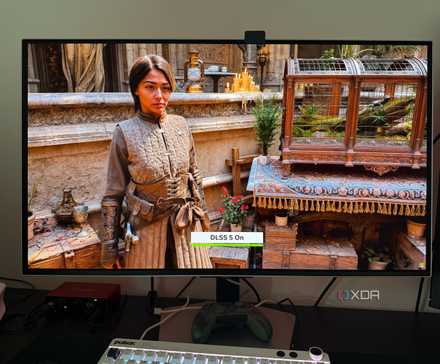
DLSS 5 is further proof that rasterization’s days are numbered
For better or worse, rasterization continues to be buried, and it won’t be long until games are unrecognizable
People aren’t thrilled about DLSS 5
Why isn’t Nvidia’s upscaler upscaling anymore?
Credit: Nvidia
We must not forget that DLSS started life as a clever workaround for extracting more performance from games. It renders at a lower resolution, upscales using AI, and claws back more performance without sacrificing too much visual clarity. Over time, it has certainly evolved into something far more ambitious, with frame generation and increasingly convincing reconstruction techniques. But through all of that, the goal never changed, which was to approximate the original image as closely as possible.
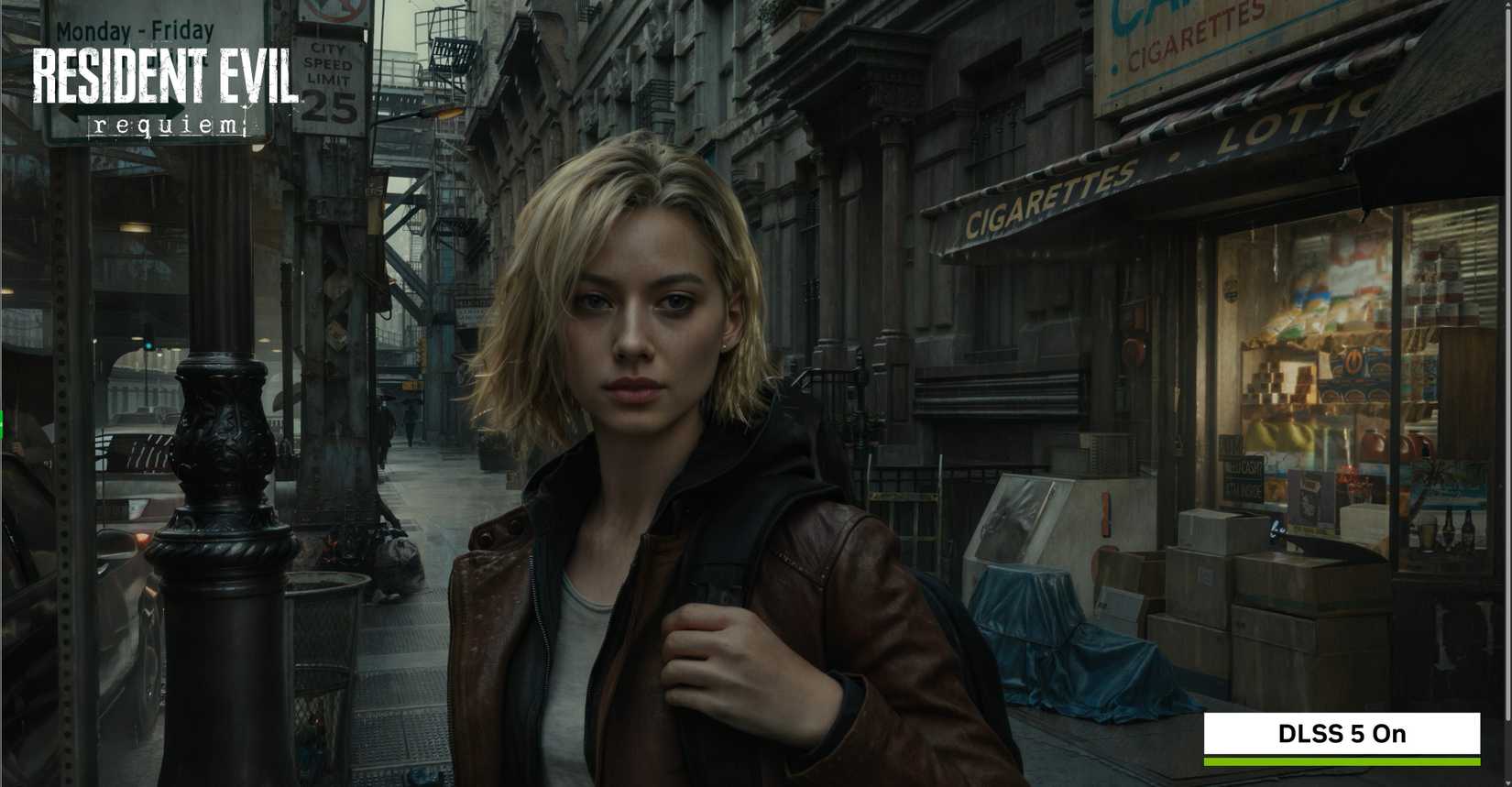
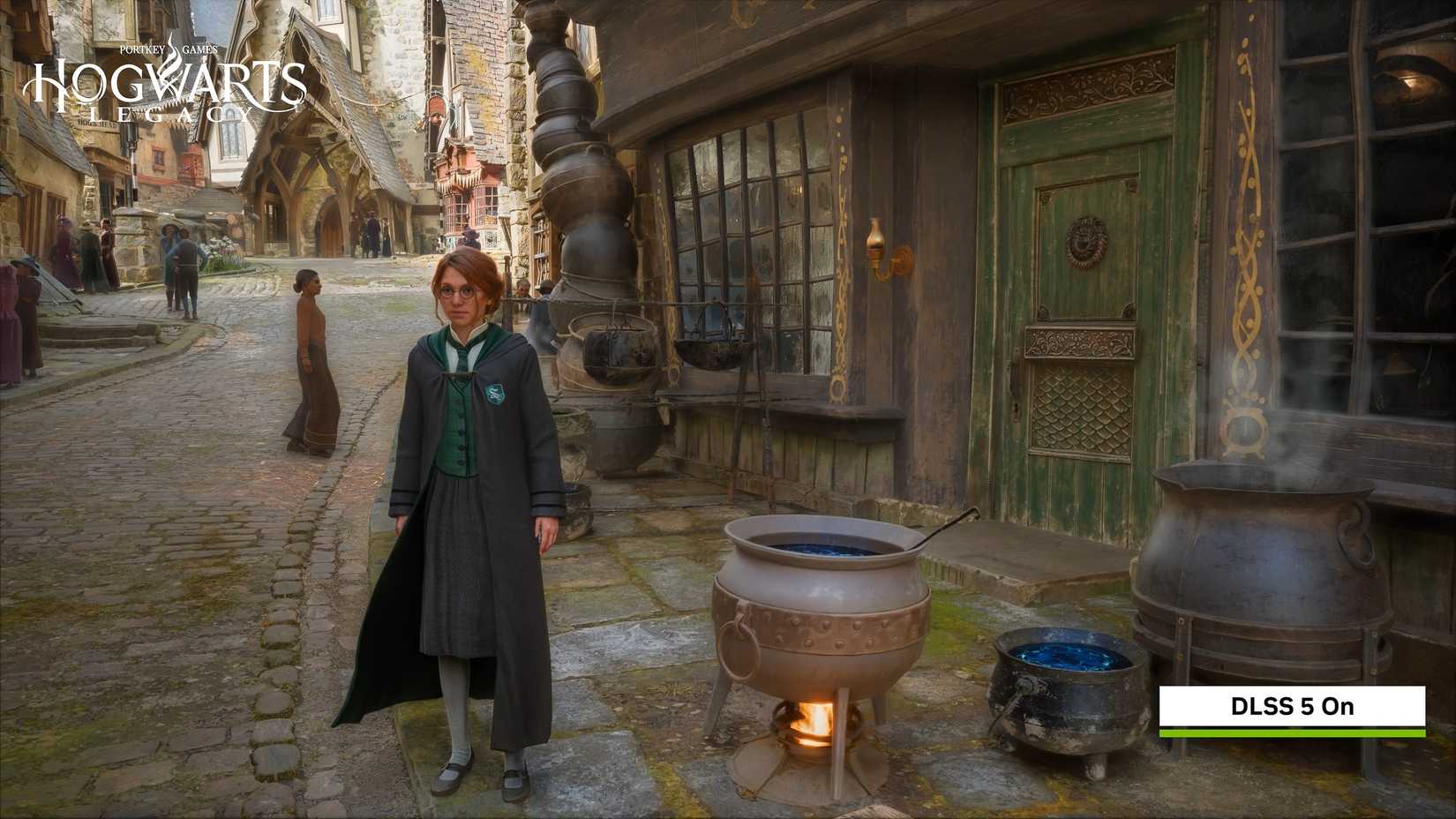
At GTC 2026, however, Nvidia just unveiled DLSS 5, which breaks that philosophy completely. Instead of reconstructing what’s already there, DLSS now actively reinterprets scenes in real time. When you look at it, you see lighting getting rebalanced, materials being altered, and faces can end up looking… different. Of course, that shift didn’t go unnoticed, because how could it? Across forums, videos, developer circles, and threads, the reaction has been uneasy, to say the very least. Words like “AI slop” get thrown around a lot, but beneath the hyperbole is a real concern. If the final image isn’t even what the game actually rendered, then what exactly are we looking at, folks?
It feels like the soap opera effect, but worse
DLSS is now rewriting instead of smoothing
It’s been rather tempting to compare DLSS 5 to motion smoothing, that infamous “soap opera effect” that TVs force on you out of the box. Sure, there’s a shared vibe here because both of these “technologies” make things feel unnaturally processed, overly clean, and just a little off. I’m aware that comparison doesn’t go all that far, considering how motion-smoothing interpolates frames without fundamentally changing the image, since you can always turn it off and get the original content intact under all that artificial fluidity.
On the other hand, DLSS 5 doesn’t really give you that safety net. For starters, we’ve already seen that not only does it currently take two RTX 5090 GPUs, but it’s also terrible at capturing motion with the “AI slop, Instagram filter” unlocked. So, not only is it changing the underlying visual information, but it also fails to make motion smoother, with shadows shifting around and highlights blooming differently. Oh, and the characters themselves take on a god-awful, strangely polished look that wasn’t there before. I’ll be the first to admit that the environments and lighting look significantly better with DLSS 5 on, but that’s not the elephant in the room.

Released
February 27, 2026
ESRB
Mature 17+ / Intense Violence, Blood and Gore, Strong Language, In-Game Purchases
Developer(s)
Capcom
Publisher(s)
Capcom
Related
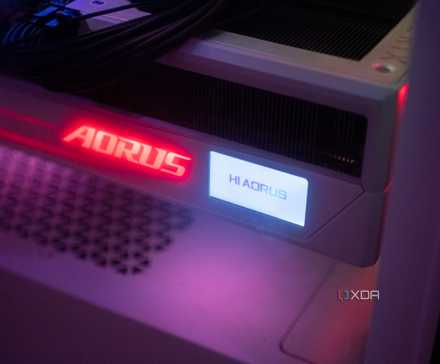
I love my RTX 5090, but its built-in screen is the most pointless GPU feature ever made
Part of your price premium is for an extra screen you’ll never look at.
This AI look threatens every game’s individuality
Passing through the same neural filter would make everything look the same
Anyone who has ever played even a halfway-respectable amount of games would know and agree that art direction far supersedes sheer visual fidelity. When games have their own unique visual identity and style, they manage to set themselves apart. However, if you spend enough time looking at DLSS 5 footage, you’ll see that the “AI look” is completely rampant here, with perfect faces, and an oddly uniform sheen on skins.
Now, Nvidia CEO Jensen Huang himself has clarified that developers will exercise a degree of control over their games’ DLSS 5 look, but that’s still control after the fact, not authorship at the source. Those are two very different things. If different art styles, from gritty shooters and moody horror games to stylized RPGs and quirky racers, all start drifting toward the same visual baseline, the imperfections that gave a game its identity begin to disappear.
Related
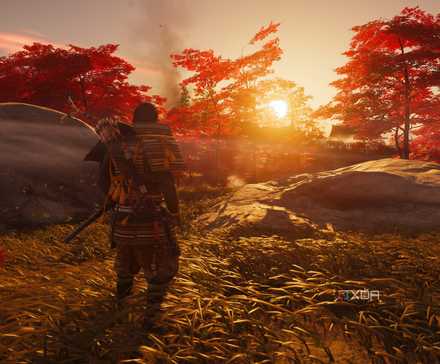
4 PS4 exclusives that proved that art style always trump graphical fidelity
It’s never just about the polygon count. Heart and soul in a game’s visual design can immortalize it.
There’s a very dangerous future lurking here
DLSS was not supposed to decide how games look
Credit: Nvidia
By actively altering lighting, materials, and even character detail, DLSS is starting to step into territory that traditionally belonged to artists and developers. The final image on your screen should always just be the result of the game engine and artists. It shouldn’t be a “collaboration” between the devs’ intent and Nvidia’s model.
That’s enough to make anyone uncomfortable, because then, who gets the final say? Once a technology begins to override artistic decisions (even if it does that subtly), it stops being a tool and starts becoming an influence. Developers might design a scene with a specific mood in mind, only for DLSS 5 to reinterpret it into something cleaner, brighter, or more “appealing.”
We’ve already seen how games launch in rough shape, with performance all over the place, and then the solution boils down to “just turning on DLSS.” There’s no denying that the rise in upscaling tech has presented a lot of cases where developers optimized their major AAA games lazily, knowing that DLSS or FSR would do the heavy lifting. DLSS 5 can make that precedent even more dangerous, because if AI can not only improve performance but also “enhance” visuals, then the incentive to optimize games, and fine-tune lighting systems will start to fade. After all, why do all that when an AI layer can smooth things over afterward?
Related
We have reached the GPU ceiling, and AI tricks like DLSS are how companies pretend we haven’t
Silicon alone can only do so much without software bearing the load
At what point did enhancement stop meaning improvement?
If DLSS 5 takes us toward a future where almost every game looks the same, that’s not progress.
With each new DLSS iteration, we expect massive improvements in the upscaled image quality, with perhaps a couple of new features here and there that only serve to enhance the user experience with more performance. DLSS 5, technically, is a step forward in rendering tech, but it’s more a shift in philosophy. It seems to be trying to take the visuals of any game and put them into the hands of algorithms instead of the artists, and that comes with trade-offs that are impossible to ignore.
I’m not trying to be a Luddite here who rejects new technology outright. However, when a tool starts changing the thing it was meant to support, voices have to be raised. If the end results no longer reflect the original vision, and it slowly takes us toward a future where almost every game looks the same, then that’s not progress at all.