
Tarei and the young woman connected through their shared Christian faith, but what seemed like it could be a promising relationship ended up marred by sexual assaults – four rapes, including one that involved him strangling her.
At Tarei’s sentencing in the Tauranga District Court on Thursday, Alison spoke of the physical injuries she had suffered – internal injuries, and ongoing pain in her neck – and the impact on her mental health.
She also spoke of the damage to her faith, and the way Tarei had used her faith against her.
“You told me I didn’t pray enough, that demons were attached to me, that I smiled at too many people,” she said in her victim impact statement.
“You would pray in front of me, claiming to be supportive and loving while directly insulting me … I still panic whenever somebody tries to pray for me.”
She had withdrawn from church communities, as she couldn’t cope with people greeting her, nor seeing people praying and worshipping.
“All I see is you on your knees, singing your heart out, while I sit there still in pain from the last assault.”
While her faith had previously been a “source of comfort and strength”, now the “shame and confusion” she carried made it difficult “to feel worthy of that connection anymore”.
After Alison, and her mother, had read their victim impact statements and the judge had heard from the lawyers, Tarei, who was appearing by audio-visual link, indicated he wanted to say something.
After a short adjournment, his lawyer Peter Attwood told the court Tarei had written a letter of remorse.
Tarei was permitted to read it, and it began with him apologising and seeking forgiveness.
Then he began to pray.
“I bless you in the name of Jesus,” Tarei read.
“May God’s plan for your life come to fruition… that you will become the woman, the mother, and the wife that God has proposed for you to be… His grace and favour be upon you.
“I break any curse and anxieties in Jesus’ name.”
The prayer went on, asking God to heal “all wounds of the heart… wounds of rejection… and all the emotional abuse you have suffered from my actions”.
He concluded by saying, “I pray that God, as the source of hope, will fill you completely with joy and peace as you trust in Him.
“Once again, I’m truly sorry and remorseful for my actions.”
While the man read the letter, the young woman turned her face away, and it appeared to redden as she folded her arms tightly, and looked down.
Speaking to NZME after the sentencing, the young woman explained that each time Tarei would assault her, he would “pray over [her]”.
“When he prayed over me via his apology letter, it brought me right back to the place of each assault. He showed no remorse or accountability to me at all. All it did was reignite my trauma.”
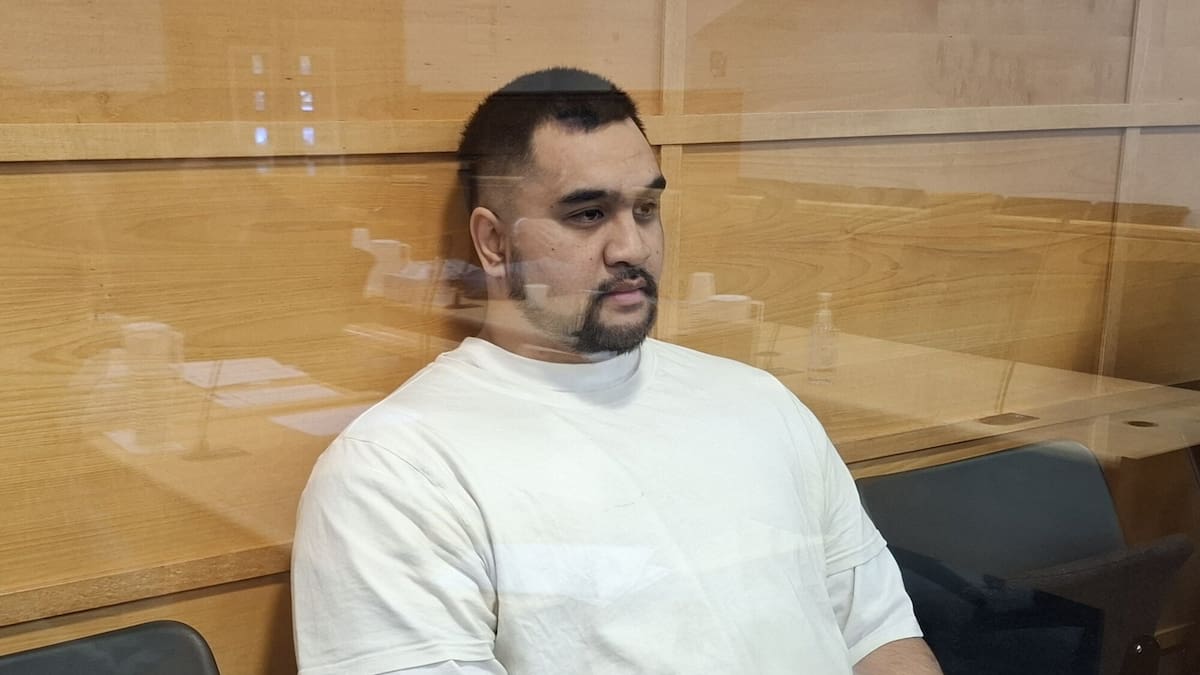
Rikki Tarei was found guilty of four rapes, and a charge of strangulation, following a jury trial in November 2025. Photo / Hannah Bartlett
‘My body and my mind isn’t waiting for justice, it’s waiting for safety’, victim says
Before sentencing Tarei, Judge David Cameron outlined the circumstances related to the four rapes for which the 34-year-old had been found guilty by a jury last year.
The first happened when Tarei visited Alison at her home, and they had been kissing on her bed when he tried to take things further.
As he pulled down her pants, she said, “No, I don’t really want to”.
As she pulled her pants back up, the summary of facts said his behaviour changed from “kind to grumpy”.
He told her to “shut up” and she tried to push him away but he raped her.
The second rape happened when he visited her while she was housesitting and, after falling asleep watching a film, she awoke to him pulling her pants down.
She asked what he was doing, and the summary of facts said he replied, “nothing, go back to sleep, you’re dreaming”, before he raped her.
The other two rapes happened on the same night, when they were staying at a motel in another town.
During the first, he forced himself on her despite her saying no.
Then he tried to initiate sexual contact a second time and when Alison again refused, saying “stop” and rolling to the edge of the bed, he placed his hand around the her throat lightly at first, using the other hand to try and remove her shorts.
He squeezed her throat tighter until she could not swallow or breathe, and lost consciousness.
When she came to, she was being raped.
Both Alison and her mother said, in their victim impact statements, that the incidents had hugely impacted their family and their ability to trust others.
Alison’s mother said when her daughter was out of town with Tarei, she’d had “an awful pit in [her] stomach” and had cried “off and on all weekend”, not understanding why.
She had known her daughter didn’t want to go, but as she was over 18, she didn’t feel it was her right to stop her.
She struggled with “immense guilt” over this decision and, having trusted Tarei with her daughter, questions her ability to “form accurate assessments of people”.
Alison said her relationships with male family members had been impacted.
“Not because I think they would hurt me, but knowing they could.”
She struggled to do basic tasks that previously had been effortless, needed support around her home, and had panic attacks most days.
It had put an end to her plan to pursue university qualifications.
“People tell me that once court is over, I can heal,” she said.
“And I tell myself that too. But my body and my mind isn’t waiting for justice, it’s waiting for safety.”
Ongoing effects include night terrors, insomnia and paranoia
Crown prosecutor Molly Tutton-Harris sought a starting point for the rapes and strangulation of between 13 and 14 years’ imprisonment, taking into account totality.
She pointed to aggravating features that included planning and premeditation, victim vulnerability, and the violence and degree of violation.
The Crown sought a three-month uplift for previous offending, as Tarei had previous convictions for violence.
Tutton-Harris also asked for a further five-month uplift because he’d been serving community work sentences at the time of the offending.
Attwood acknowledged that in a pre-sentence report, prepared before Tarei had written a remorse letter, he continued to deny the offending.
However, he highlighted that Tarei had expressed willingness to engage in rehabilitative programmes.
Judge Cameron adopted a starting point of 10 years’ imprisonment for the rape charges and the strangulation charge.
He acknowledged the high degree of victim vulnerability and the ongoing effects of the offending, including the young woman’s night terrors, insomnia and paranoia.
He did not accept there had been premeditation, however.
He uplifted the starting point by four months for Tarei’s previous convictions.
He gave a 5% discount for prospects of rehabilitation, and 5% for the limited expressions of remorse.
He sentenced Tarei to nine years, three months and 14 days’ imprisonment.
*Not the victim’s real name.
Hannah Bartlett is a Tauranga-based Open Justice reporter at NZME. She previously covered court and local government for the Nelson Mail, and before that was a radio reporter at Newstalk ZB.