
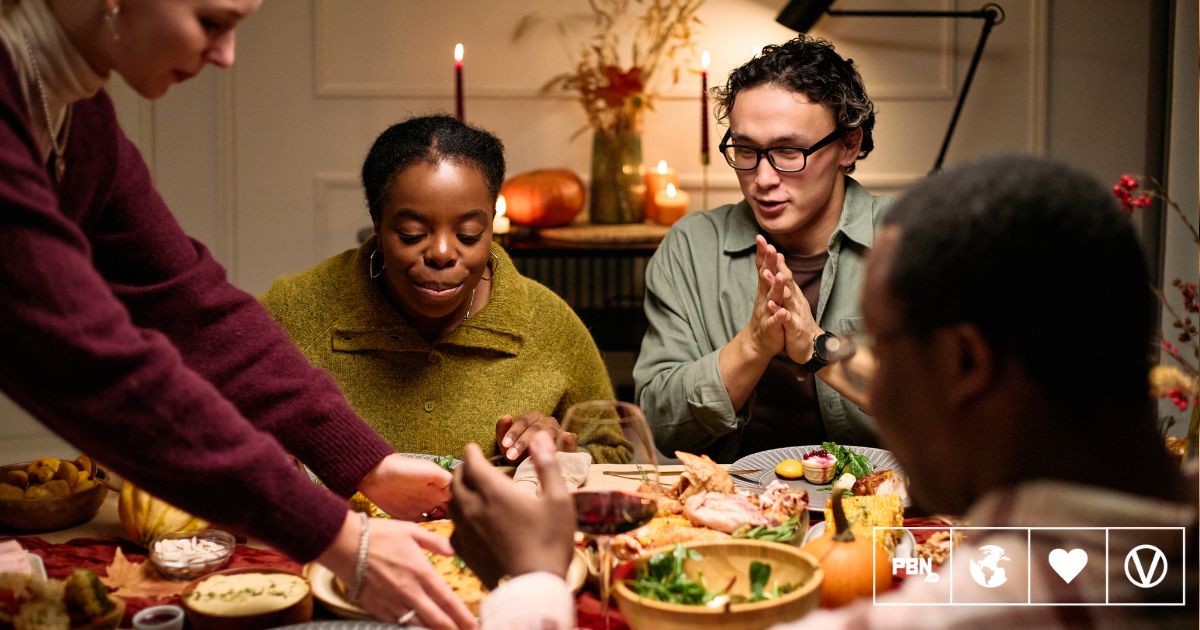
Vegans use several different types of social skills to adapt and “survive” difficulties in a predominantly meat-eating world.
A study by two Concordia University researchers has examined how vegans navigate relationships and society when differences in diet and ethics can cause tension and “fractures” with their friends, family, and others.
Read more: ‘Greener By Default’ Hospitals Reduced Food Emissions By 22% With Plant-Based Meals
The study identified three types of social conflict for vegans. These take place around shared activities, such as meals and gatherings, within the vegan community itself, where people may disagree on what choices are acceptable, and in the marketplace, where finding vegan-friendly products and menus can be difficult.
The study also found that people who follow vegan diets often employ four distinct behaviors to navigate shopping, cooking, and eating with meat-eaters.
These include: “Decoding,” which is when vegans learn about food labeling, menus, and common non-vegan ingredients, and attempt to explain their choices and overall lifestyle to non-vegans; “Decoupling,” which is when vegans bring their own meals and ingredients to gatherings to share space but avoid the friction that can come with sharing food; “Divesting,” which refers to an uncompromising approach favored by vegans who avoid relationships and shared meals with non-vegans entirely; and “chameleoning”, which is when vegans attempt to balance their beliefs and lifestyle with conflict avoidance – similar to code switching – in order to get along.
Non-mainstream ethical choices can cause ‘friction’
The study builds upon the dissertation of Aya Aboelenien, one of the study’s authors and an associate professor of marketing at HEC Montréal in Quebec, Canada. The study’s co-author, Zeynep Arsel, is a professor and research chair at West Montréal’s John Molson School of Business, and Aboelenien’s former PhD advisor.
“If you stand apart from the norm for ethical reasons, like driving an electric car or trying to live a green, sustainable life, others may take it as you trying to impose a moral lens on practices they’ve had for a long time,” Aboelenien told Phys.org.
The Journal of Consumer Research published the study, which is titled Surviving as a Vegan in a World of Omnivores: Relational Fractures in Shared Practices, last year.
Read more: Scientists Just Discovered A Way To Make Your French Fries Healthier
Many study participants reported ‘retreated’ from veganism due to stress
 Adobe Stock Some vegans choose to “divest,” meaning that they avoid shared meals with non-vegans altogether
Aboelenien collected data by conducting 21 long interviews with current, aspiring, and lapsed vegans, some of whom followed the diet for a few weeks and some who had been vegan for 13 years. All of the interviewees were motivated by ethical concerns, and those who were vegan for health or religious reasons were excluded.
Aboelenien also collected and analyzed vegan life stories and additional secondary data from newspapers, blogs, social media, podcasts, YouTube videos and comments, books, and documentaries. She attended market events, vegan festivals, sit-ins, and protests, conducting field interviews and recording observational data.
“Many of the people I spoke to really wanted to discuss the personal struggles they faced, which in many instances discouraged them from maintaining a vegan lifestyle,” Aboelenien said. “Many of them just retreated from veganism because of the stress in their personal relationships.”
Last year, Dr Gemma Newman, a senior partner at a family medical practice, a public speaker, and the author of The Plant Powered Doctor, shared a video in which she discussed the symbolic “threat” that vegans can present to meat-eating identities.
“No one likes to feel judged,” she said. “It instantly raises our defences and threatens our sense of self, and this threat is so powerful that the judgement doesn’t even have to be real for us to react strongly.”
Read more: Dr Gemma Newman Explains ‘Why People Seem To Hate Vegans’ And What To Do About It