
It comes as food processors Watties and McCain plan to close some of their plants.
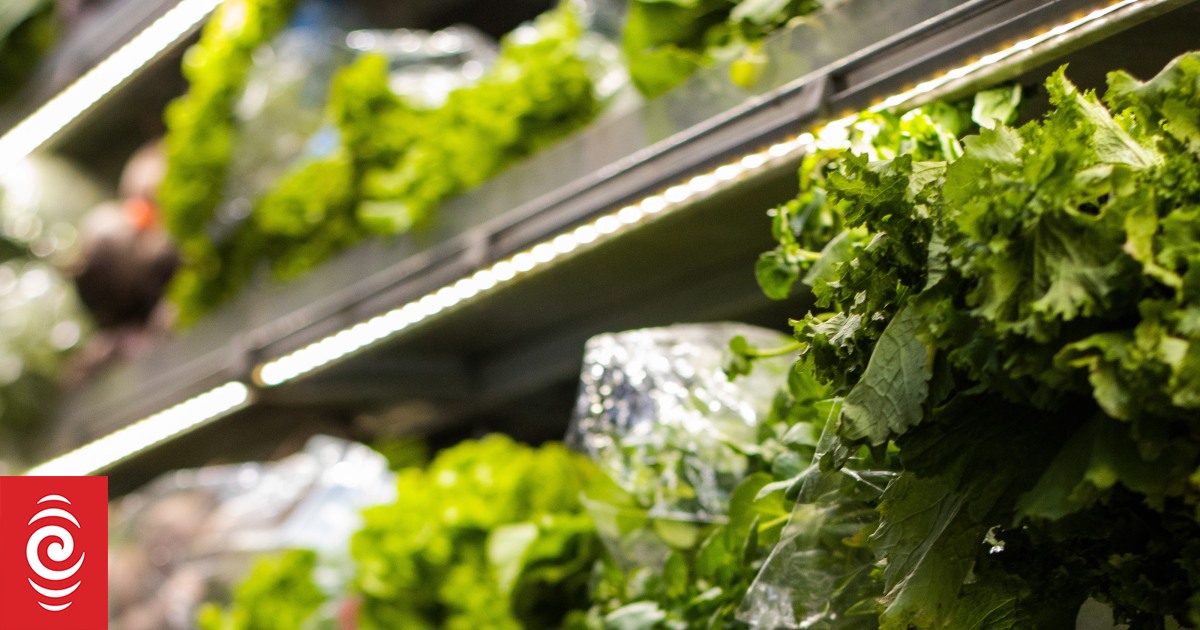
Photo: Unsplash / Eduardo Soares
There is currently no requirement for supermarkets to keep locally produced food on the shelves, with an advocacy group calling for change before it’s too late.
Eat New Zealand has renewed calls to prioritise more food for domestic consumption.
It comes as food processors Watties and McCain plan to close some of their plants.
Eat New Zealand chief executive Angela Clifford said the group would like a strategy to support both commercial manufacture destined to be sent overseas, and secure domestic food supplies for New Zealanders.
Eat New Zealand has a membership base made up of farmers, fishers, food manufactures and consumers.

Eat New Zealand chief executive Angela Clifford says New Zealand’s food system has become financialised.
Photo: Supplied
Clifford told Nine to Noon that while exporting food was a big part of the economy, it had led to the centralisation of the food system.
“We have continued to see the lack of ownership of our food system in recent years. You know, we have no security plan, no vision to feed our own people.
“In food systems we talk about the need for redundancy – that is so we don’t find ourselves in a situation with just a few manufactures, because if anything goes wrong, say like a global fuel crisis, it means that you run out of options.
“When we see global companies not invest in the infrastructure of our manufacturing plants here in New Zealand, we sort of lead to this diminishment overtime… and we are at that stage now.”
Financialisation of food
Clifford said New Zealand’s food system had become financialised.
“Our food system is to make money from, it’s not to feed us.
“So we have these examples of that, we have these supermarkets that are making really significant profits, but don’t really have any guard rails or priorities in terms of feeding us.”
She called for decentralisation, which she said could include the creation of regional food hubs, community or public markets.
“As a country we really need… a regionalisation of our food system.”
It wasn’t about replacing export, but focusing on smaller local food systems, she said.
Foodstuffs responds

Foodstuffs says New Zealanders can be confident that food supply remained secure, even amid current cost pressures.
Photo: Belinda Feek/Open Justice
In a statement, Foodstuffs told Nine to Noon New Zealanders could be confident that food supply remained secure, even amid current cost pressures.
It said they had long-standing relationships with New Zealand growers and manufacturers, including partners like Wattie’s, who have produced a significant portion of their Own Brand frozen vegetables.
“That reflects both a strong local growing sector and our preference to offer customers New Zealand-grown produce.
“We value the role local growers play and recognise how important it is to keep food production viable in New Zealand.”
Sign up for Ngā Pitopito Kōrero, a daily newsletter curated by our editors and delivered straight to your inbox every weekday.