
“Despite extensive efforts, these categories remained unviable and not sustainable for the business in the long term.”
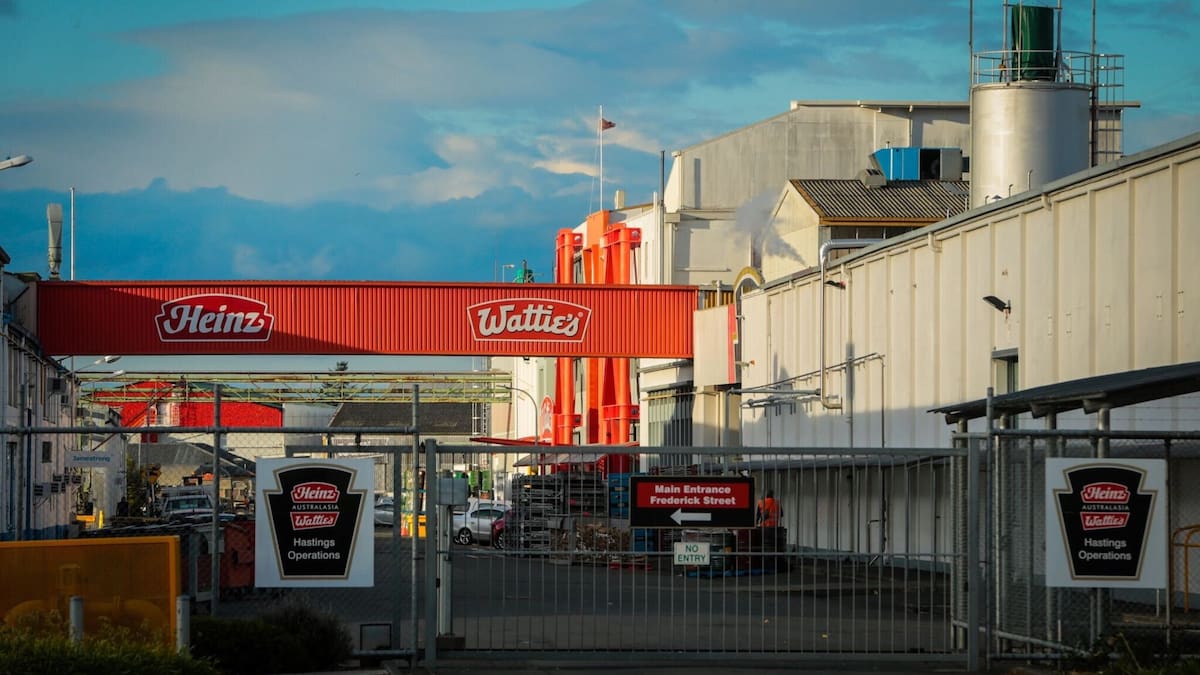
Wattie’s New Zealand managing director Andrew Donegan has shared some insight behind the company’s decision to close several factories.
Donegan, who has been leading the New Zealand operation since October 2024, said the decision was made locally, although noted that as part of a larger group the business is accountable for its own performance.
Financial records show H.J. Heinz Company (New Zealand) made losses over the past three years and took an impairment of more than $210 million in 2024.
The business also paid more to its suppliers and employees than it received in customer payments in its last financial year.
“We experienced rising input costs such as gas, increasing around 300% over the last seven years; energy, which has roughly doubled in the same timeframe; diesel, which has doubled in the last five years and commodity hikes such as coffee increasing up to 135% more recently, to name a few.
“The overall impact of increases has resulted in a 20%-40% cost per tonne increase in an environment which has seen significant volume declines of around 20%.”
The business has not been able to pass on all of its input cost increases to consumers, particularly with the prevalence of cheaper product choices.
This has meant that several categories and sites have consistently lost money over the past few years.
But Donegan was pleased the business will be able to redeploy nearly all of those affected by the frozen vegetable site’s closure.
He said redundancy packages exceeding the requirements under New Zealand law are being provided to those affected, with career transition and outplacement services, as well as counselling being made available to staff.
“We will work closely with employees throughout the transition period to ensure they get the support that they need.”
As for the impact of the supermarket duopoly on pricing, Donegan said he appreciated that Wattie’s operates in a competitive retail environment.
“Like us, supermarkets are experiencing increasing costs as well as pressure from consumers to keep prices as low as possible. We will continue to work with our retail partners across the 11 categories in which we sell a variety of products.”
Competitor McCain New Zealand has also announced the closure of its Hastings food processing plant.
McCain is also facing financial pressure, with the New Zealand business operating at a loss for three out of its past five financial years, with borrowing from its international parent doubling in the past year.
Tom Raynel is a multimedia business journalist for the Herald, covering small business, retail and tourism.
Stay ahead with the latest market moves, corporate updates, and economic insights by subscribing to our Business newsletter – your essential weekly round-up of all the business news you need.