
In this edited extract from Tell Me Where It Hurts, Rachel Zoffness writes that the link between trauma and chronic pain two offers hope for treatment. To read Niki Bezzant’s interview with Zoffness, go here.
Trauma and chronic pain are best friends, co-occurring up to 80%
of the time: people with chronic pain frequently have a history of trauma, and people who have experienced trauma frequently develop chronic pain. In fact, the presence of one is known to increase the likelihood – and the severity – of the other.
In 2002, groundbreaking research known as the ACE [Adverse Childhood Experiences] Study revealed childhood traumas were common, destructive and among the most important determinants of physical health ever uncovered. Exposure to ACEs significantly increased risk of developing diseases like obesity, cancer, depression, migraine and lung disease. And as the number of childhood traumas increased, so did the physical and mental health issues.
The same pattern has been found with chronic pain. The more traumatic events we experience, the greater our risk of developing chronic pain and disability. Among adults who have experienced adverse childhood experiences, the incidence of chronic pain is double that of those who’ve survived none. But pain after a trauma doesn’t always wait until we grow up. In a study of nearly 50,000 children, those with one ACE were 60% more likely to have chronic pain compared to those with none. And children who’d experienced four or more ACEs were 170% more likely to have chronic pain.
Traumas that occur in adulthood are also risk factors for developing chronic pain – including car accidents, domestic violence and abuse, life-threatening health conditions and military combat. When a group of traumatised veterans was assessed to determine the impact of war on their clinical needs, a whopping 97% were in pain.
The ACE Study was one of the first to show that trauma is unequivocally linked to health and disease. It has since been replicated hundreds of times across 22 countries, incorporating data from more than half a million people. These findings raise awareness about the impact of trauma and its long-term physical effects. They’ve also led to the development of interventions aimed at reducing the prevalence and impact of trauma on our health.
But what hidden aspects of our neurobiology explain this puzzling pain-trauma overlap?
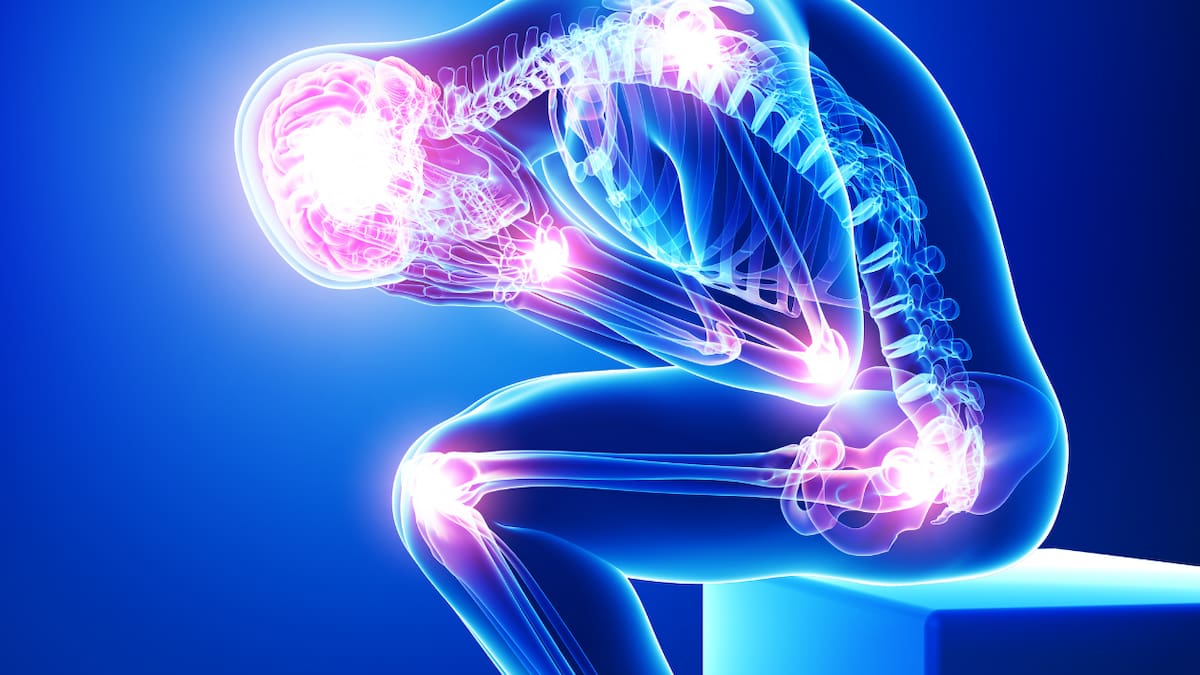
Trauma may be a social determinant of health, but it isn’t just environmental, and it isn’t just psychological. It also changes our bodies, disrupting the functioning of our nervous, endocrine and immune systems. It also creates a neurological “imprint” that makes us more susceptible to developing chronic pain. Neuroscience studies reveal that trauma can alter brain pathways and neurotransmitters, rewire the amygdala [the emotional centre in the brain], and send the pain system into overdrive. Together, these neurobiological changes can create a heightened, intensified and chronic stress response – which is why the “S” in PTSD stands for stress. A nervous system stuck in survival mode continues to amplify danger messages even after the danger is gone.
Because trauma makes the brain extrasensitive, small bits of harmless sensory data from the body can be interpreted as potentially threatening – triggering loud pain messages even in the absence of actual danger. When benign bodily sensations are persistently misinterpreted as dangerous, this is a recipe for chronic pain.
Now, not everyone who experiences a trauma will develop PTSD, just as not every-one who experiences trauma is doomed to develop chronic pain. But the overlap between pain and trauma has powerful – and surprisingly hopeful – implications for treatment. Because treating one naturally lends itself to treating the other.
Indeed, research bears this out: multiple treatments have been developed that can simultaneously reduce symptoms of both.
Yet, despite all we’ve learnt, trauma remains one of the most overlooked pain ingredients. To our great detriment, we continue to proceed with the dangerously reductive belief that trauma is simply a “mental health” diagnosis, and nothing more. In truth, we’ve known that the body keeps the score for a long, long time. l
Extracted with permission from Tell Me Where It Hurts: The New Science of Pain and How to Heal, by Rachel Zoffness (Allen Lane), out now on e-book and audiobook and due for hardback release on May 5.
SaveShare this article
Reminder, this is a Premium article and requires a subscription to read.
Copy LinkEmailFacebookTwitter/XLinkedInReddit