
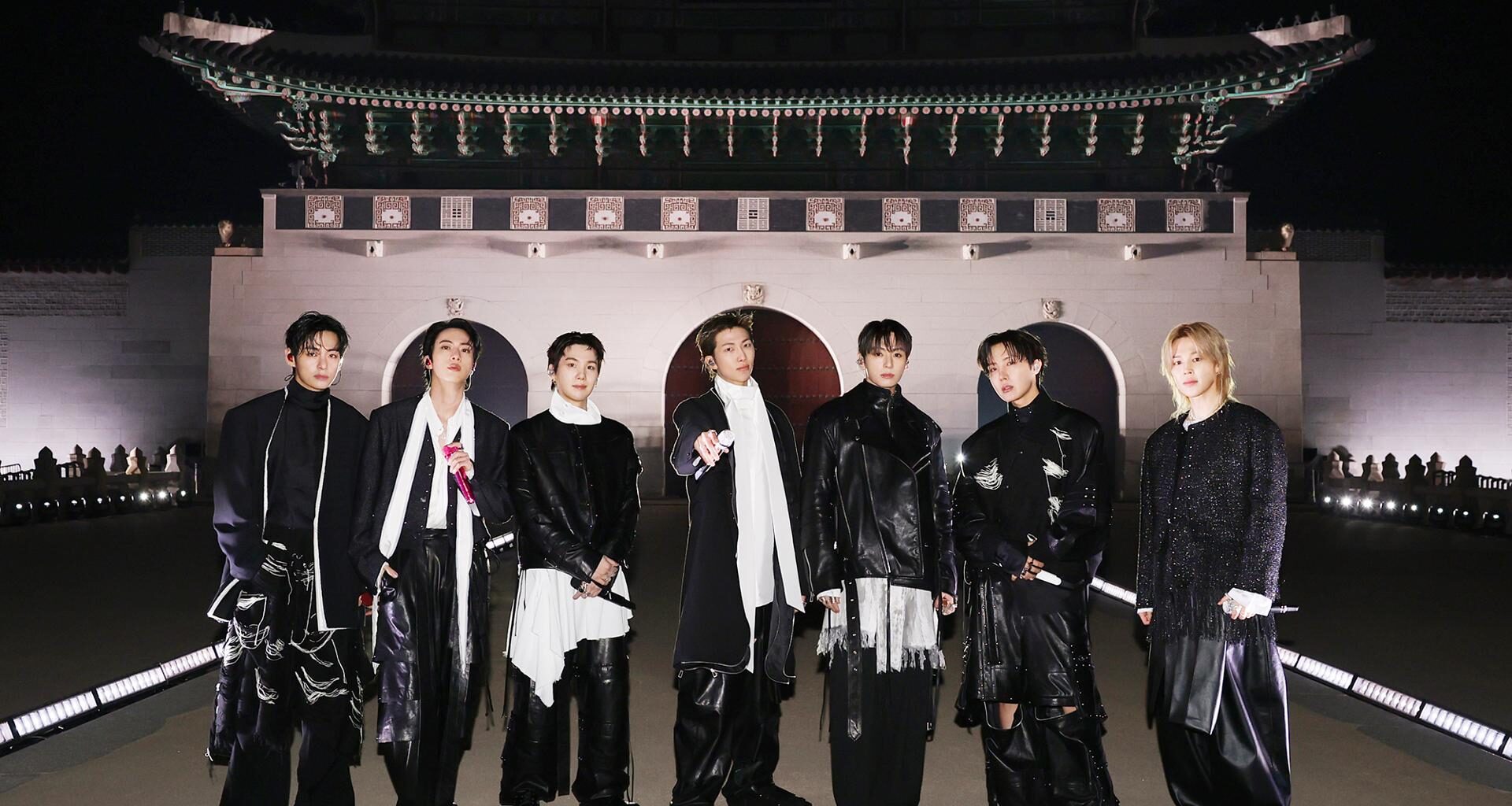
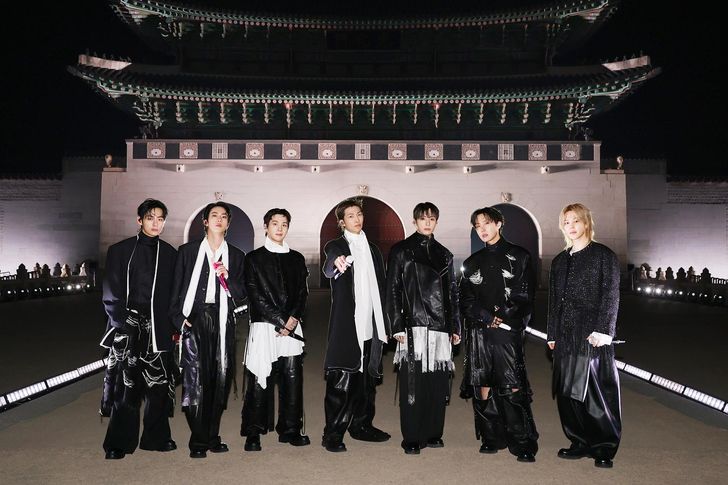
The members of BTS pose during the group’s comeback concert at Gwanghwamun Square in central Seoul, March 21. Courtesy of BigHit Music/Netflix
K-pop has fortified its status as the most influential symbol of Korea for nearly a decade, showing that the country’s global identity has unquestionably shifted from associations with geopolitical risks to popular culture, according to a government survey released Monday.
The 2026 Overseas Hallyu Survey by the Ministry of Culture, Sports and Tourism and the Korean Foundation for International Cultural Exchange (KOFICE) showed that K-pop has maintained its position as the first image that comes to mind when people overseas think of Korea for the ninth consecutive year, dating back to 2018.
The survey, which polled 27,400 consumers of Korean content across 30 countries between November and December last year, found that 17.5 percent of respondents picked K-pop as the top representative image of Korea.
This was followed by Korean food at 12.1 percent, dramas at 9.5 percent, beauty products at 6.2 percent and films at 5.9 percent. This ranking remains identical to the previous year, highlighting the consistent dominance of the five leading K-culture sectors.
K-pop’s long-term popularity has changed global perceptions of Korea. Earlier associations like the 1950-53 Korean War and North Korean nuclear threats are no longer in the top 10. Instead, the global public now identifies Korea through its pop culture rather than its security risks.
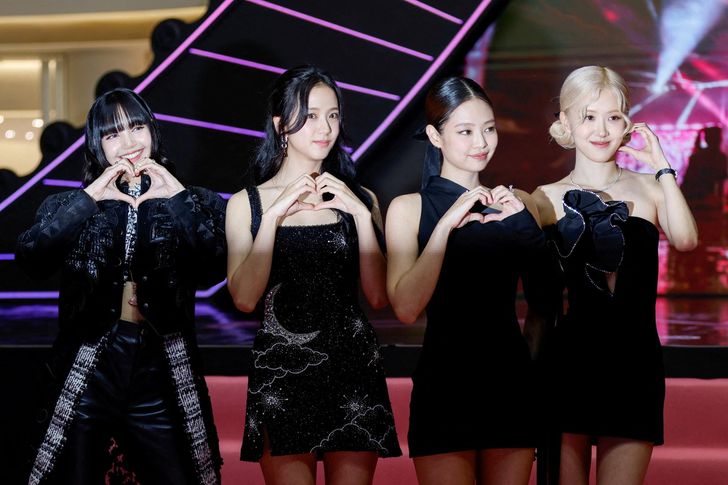
The four members of BLACKPINK pose at the premiere of their world tour film “Born Pink,” marking the group’s eighth anniversary, in Seoul, Aug. 9, 2024. Reuters-Yonhap
The appeal of K-culture continues to widen, with 69.7 percent of respondents expressing their interest in Korean content.
The Philippines (87 percent), India (83.8 percent) and Indonesia (82.7 percent) remain strongholds of favorability toward the Korean wave, or hallyu.
However, the survey showed a significant surge in interest among developed markets. The U.K. saw the highest growth in favorability, up 8 percentage points from the previous year, followed by Japan (6.4 percentage points), Spain (6.2 percentage points) and the U.S. (6.1 percentage points).
In a newly added survey question regarding the most influential hallyu figures, global sensation BTS took the top spot with 6.9 percent.
Actor Lee Min-ho ranked second with 4.6 percent, while K-pop girl group BLACKPINK and BTS member Jung Kook tied for third at 3 percent. Fifth was Lisa of BLACKPINK at 2.1 percent. Notably, esports legend Lee “Faker” Sang-hyeok joined the top ranks with 1.9 percent, sharing the sixth spot with singer-actor IU.
Hallyu’s influence extends far beyond the screen, significantly impacting the consumption of Korean goods and services. Nearly 65 percent of respondents said that their interest in hallyu influenced their purchases of Korean products, a figure that has risen steadily from 57.9 percent in 2023 and 63.8 percent in 2024.
While quality remains the primary reason for choosing Korean brands (61.8 percent), the halo effect of hallyu stars and content has become a crucial driver, particularly in the fashion, beauty and food sectors.
The average monthly time spent on Korean cultural content was 14.7 hours, up from 14 hours the previous year. Drama consumption was the highest at 18.3 hours, followed by variety shows at 17.7 hours. In terms of average spending, fashion led the way at $33.90 per month, followed by beauty products at $29.70.
However, the rapid spread of hallyu has also created some negative perceptions. The percentage of respondents who agreed with negative statements about hallyu remained at 37.5 percent, the same figure as in 2024.
The most common reasons for this were overly commercialized content (16.1 percent) and tensions from national division and North Korean threats (12.9 percent). The highest rate of negative perception was found in the Middle East (51.1 percent), and among consumers in their 20s (42.9 percent).
The ministry said it plans to use these findings to further strengthen the foundation of the K-culture industry.