
March 31, 2026 — 3:59pm
Save
You have reached your maximum number of saved items.
Remove items from your saved list to add more.
Save this article for later
Add articles to your saved list and come back to them anytime.
Got it
AAA
Occasionally, I’ll get asked something like – “What would you tell your younger self?” For most people who work in the financial space, common answers tend to be things like: “Start investing as soon as possible.” “Save more, spend less.” “Get on top of your superannuation.”
Those are valid answers. Any one of those things can add a solid six-figures to your net worth long term if you start young enough. But none of those would be my answer.
 So, the real question isn’t – what do I need to learn? It’s really – how quickly am I willing to let go of the version of me that is incompatible with the goals I want?Simon Letch
Now, generally, I believe you do the best you can at any given moment, given your level of awareness and circumstances. So, I don’t see a lot of point in regretting your past.
However, if I’m playing along, my answer would be: I’d tell myself – “The life you want is going to require you to change how you think about yourself and the world, quite significantly.”
So much of the focus is on the external actions you have to take – learn X strategy, sign up for Y tool, read Z book. So, I was prepared for figuring out that part.
The bit I was woefully unprepared for was how much I would have to change myself – my core beliefs about myself and the world, and my mental and emotional patterns.
There is this internal transformation that has to take place for you to be able to create and sustain a new level of financial results.
I didn’t start out with much enthusiasm for finance. Back in 2010, I wrote in a social media post: “If stock analysis and finance are where the money is, I’m not so sure if I want money any more.”
I can’t remember what inspired the post, but I suspect it was the quantitative finance subject I was studying at university. I was never very mathematically inclined, and that subject broke me.
So I ended up switching majors from finance to economics. After that, I didn’t know what I’d end up doing with my career, but I was pretty sure it would have nothing to do with finance.
Editor’s pick
Fast forward over 15 years since that post, I have helped countless clients create life-changing financial results through my teaching and coaching. Crazy how life works out, right?
That change didn’t just come from “learning” a few things. Yes, I had to figure out how to invest, how to optimise my super, and what on earth asset allocation meant. Yes, I had to “learn” things. But what enabled any of that to occur in the first place was I had to change myself.
I had to let go of many limiting beliefs. Especially after switching out of my finance major, I was sure I just “wasn’t cut out” for the world of finance. I thought it was too complicated, especially given numbers weren’t exactly my forte.
It turned out that it wasn’t that complicated, and it didn’t take much maths at all. It was far simpler than my university subjects had led me to believe.
I had to change my world view. I had many misconceptions about the whole thing. I thought “investing in the sharemarket is risky” (now, I know anything can be risky if you don’t know what you’re doing).
I thought being financially responsible meant not spending, or spending as little as possible (now I know, you can enjoy spending, and be financially savvy at the same time).
I had to change my mental and emotional patterns. I had to unlearn penny-pinching, and train myself to focus on bigger, longer-term wins (i.e. stop focusing on the $10 problems, and start focusing on the $100,000 problems).
I had to learn to trust my own financial decisions, and not let “all the noise” throw me off – the doom-and-gloom headlines, the well-meaning opinions of friends and family, or the flashy too-good-to-be true promises of social media influencers.
Looking back, I feel like a different person to the 2010 version of me who wrote that post. I also hear this from my clients often. “I feel like I’m a totally different person”.
Editor’s pick
This surprises countless people. You start the journey just wanting to change your bank balance. But along the way you realise there is this internal transformation that has to take place for you to be able to create and sustain a new level of financial results in your life.
The version of you who is scared to invest, is not the same (mentally and emotionally) as the version who is a confident investor. The version who thinks finance is complicated, is not the same as the version who manages their money with ease.
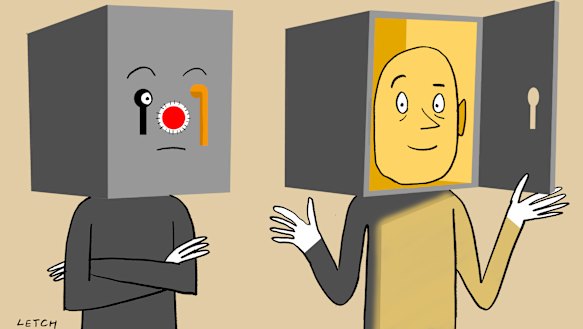
So, the real question isn’t – what do I need to learn? It’s really – how quickly am I willing to let go of the version of me that is incompatible with the goals I want? The less you resist letting go, the faster and smoother you’re able to bring your goals to life.
Paridhi Jain is founder of SkilledSmart, which helps adults learn to manage, save and invest money through financial education courses and classes.
Advice given in this article is general in nature and not intended to influence readers’ decisions about investing or financial products. They should always seek their own professional advice that takes into account their own personal circumstances before making any financial decisions.
Expert tips on how to save, invest and make the most of your money delivered to your inbox every Sunday. Sign up for our Real Money newsletter.
Save
You have reached your maximum number of saved items.
Remove items from your saved list to add more.
 Paridhi Jain is the founder of financial education platform, SkilledSmart, which has helped hundreds of adults become financially confident by teaching them practical strategies to manage, save and invest their money.From our partners