
“Capacity growth scheduled for March, for example, has eased to 3.3% from earlier predictions of more than 5%.”
New Ministry of Business, Innovation and Employment data showed New Zealand had 46.2 days of jet fuel as of Sunday.
That compared to 50.4 days’ jet fuel since the previous update two days ago.
O’Brien said New Zealand should examine more onshoring of fuel stocks and whether or not it could produce biofuel, she said.
Airlines have generally said they did not have the expertise or desire to become fuel producers or refiners.
“It has to live in the place in the supply chain where it’s appropriate to live. We’re not going to start doing these other parts of the supply chain,” O’Brien told the Herald.
“It’s also for the Government to ensure that the nation is appropriately resilient.
“Once the head of this crisis has passed us by … We can really start to talk about this in the cold light of day.”
She said electric aircraft would also be part of the solution, at least for short-haul flights.
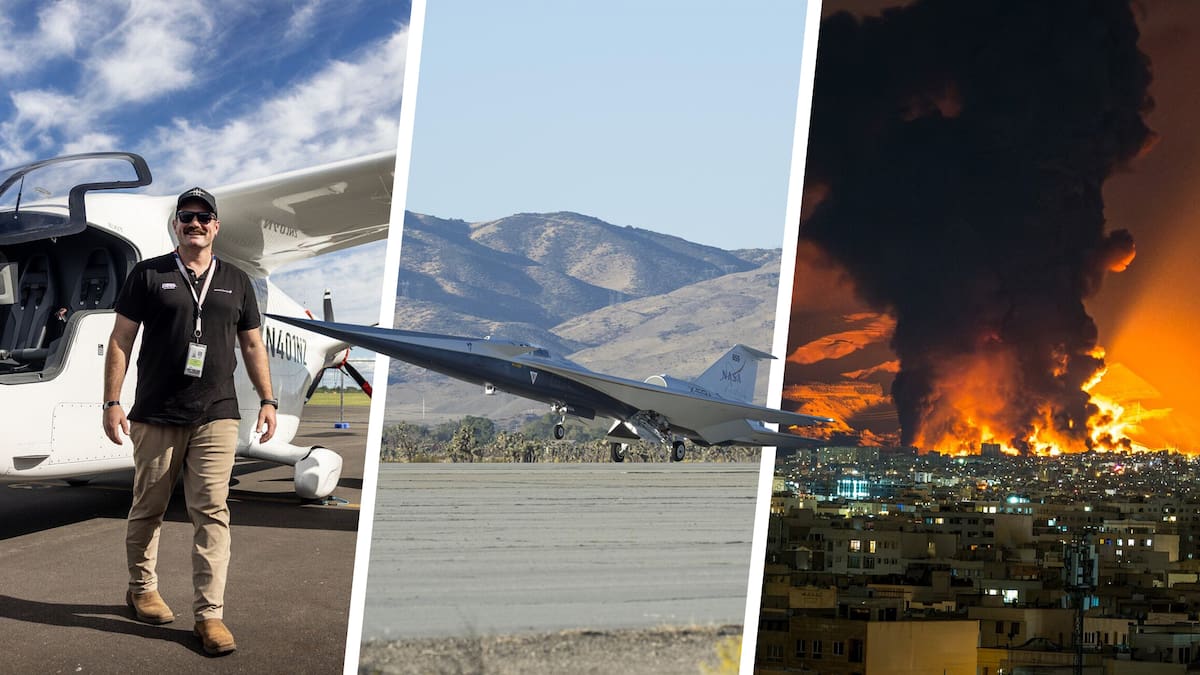
Air New Zealand and pilot Nate Dubie started test flights of the Beta Alia CX300 electric aircraft in November. Photo / Mike Scott
For transtasman and long-haul flights, aircraft for the foreseeable future would use fossil fuels or sustainable aviation fuel (Saf), she said.
That was because battery technology was not currently viable for long-haul flights.
Air New Zealand has said it could be operating the Beta Technologies Alia CX300 electric plane as soon as 2028.
Hawaii’s Surf Air Mobility last month ordered 25 all-electric Alias and acquired options for up to 75 more.
Airlines operating into New Zealand had been voicing concerns about jet fuel prices, O’Brien said.
“New Zealand traditionally operates in aviation what we call long, skinny routes. We’re a small nation, far away.”
That isolation made New Zealand expensive to travel to even before the war, she said.
“That is why we argue for things like Ōhakea to be available.”
O’Brien said making the Ōhakea Air Force base available at all times for the biggest passenger aircraft could save international airlines four to six tonnes of fuel per flight.
At Asia and Oceania jet fuel prices for the week ending March 27, that would equate to savings of $11,480 to $17,220 per flight.
Minister of Finance Nicola Willis on Monday said Associate Energy Minister Shane Jones would bring a proposal to Cabinet relating to Channel Infrastructure increasing storage at Marsden Point.
Willis on Monday said fuel stocks were within “normal” ranges.
“The market is being completely molested by the war,” Jones said, describing why the Government was making interventions.
“It ain’t pleasant” trying to run an airline with only 30% of the fuel it needed, Prime Minister Christopher Luxon added.
Jones said the changes would probably require some regulatory relief.
Airlines in a bind
Forsyth Barr head of research Andy Bowley told the Herald airlines did not have the same ability to pass on price rises that freight or courier companies had.
“Airlines typically accept or mitigate the risk of fuel price changes themselves without passing that on to customers.”
Bowley said freight and courier companies typically had adjustment factors, meaning customers paid for higher fuel costs.
Those higher costs for freight and courier companies might lag, but perhaps only by weeks, with a variable fuel factor reflected in invoices.
“It’s just part of the customer relationship for a courier or freight business.”
Bowley said whereas airlines often served individuals with unpredictable booking behaviour, freight firms gave many regular services to regular business customers.
“Maybe it’s part of the dynamic of serving customers versus serving businesses. You have a much broader relationship.”
Mainfreight group managing director Don Braid last month said diesel pricing was the biggest issue facing the company, confirming surcharges were already in effect.
Freightways chief executive Mark Troughear said all Freightways businesses had a fuel adjustment factor to recover fuel costs, with some kicking in immediately and others lagging.
Supersonic comeback?
Nasa’s X-59 quiet supersonic research aircraft lifts off for its first flight last October from US Air Force Plant 42 in Palmdale, California. Photo / Nasa, Carla Thomas
Meanwhile, new aircraft will soon have to meet more demanding environmental rules after the International Civil Aviation Organisation (Icao) council adopted new technical standards.
The CO2 emissions standard was made 10% more stringent on Friday and would apply to new aircraft type designs from 2031.
Regarding subsonic aircraft, these more stringent Icao standards were developed to cut aviation CO2 emissions and aircraft noise globally.
The new rules introduced more stringent noise limits to ensure quieter aircraft, raising the bar by six decibels for large aircraft and two decibels for smaller ones.
“The new subsonic standards are expected to encourage further worldwide investment in fuel efficiency and noise reduction technologies across the aviation sector, generating benefits for passengers, communities and the climate alike,” Icao said.
But Icao also said it was preparing for a potential return of supersonic aircraft by addressing their noise impact first.
“As of 2029, these aircraft will need to comply with the noise limits that apply to today’s subsonic aircraft.”
With formal adoption of new standards now complete, the Icao council said August 3 was the effective date and January 1 next year was the point from which the new requirements would apply globally.
The US House of Representatives on March 24 unanimously overturned a ban on overland supersonic flights.
The Supersonic Aviation Modernisation Act said regulators must allow civil aircraft to operate at speeds greater than Mach 1 in the national airspace without special authorisation, as long as no sonic boom reached the ground in the United States.
Nasa’s X-59 quiet supersonic research aircraft aims to replace the intense shockwaves from Concorde with a low-amplitude thump.
Built by Lockheed Martin Skunk Works to a Nasa design, the X-59 aimed to gather real-world acoustic data that could enable supersonic air travel.
Currently in testing, it first flew on October 28 and was expected to have its first supersonic flights in the next few months.
Stay ahead with the latest market moves, corporate updates, and economic insights by subscribing to our Business newsletter – your essential weekly round-up of all the business news you need.