
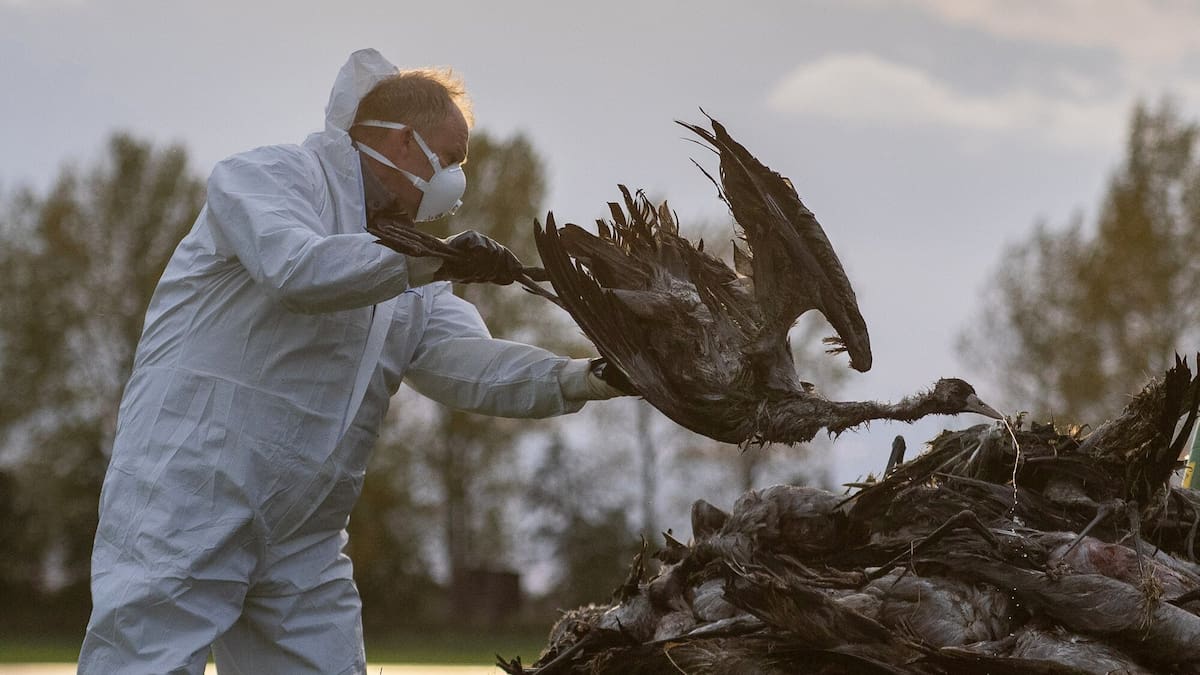
The current H5N1 strain is unprecedented in both scale and scope.
Its host range now spans hundreds of bird species and an increasing number of mammals, including foxes, mink, cattle and marine mammals. This expansion reflects increased exposure and the virus’s ability to adapt to new hosts.
Geographically, the virus has spread across Europe, Asia, Africa, the Americas and, more recently, the Antarctic and sub-Antarctic regions, with sustained transmission among wild bird and mammalian populations.
Yet Oceania has so far remained free of H5N1 2.3.4.4b. This is largely because of geography and bird migration patterns. Many migratory birds that carry H5N1 move along northern hemisphere flyways and do not typically reach New Zealand.
Rapid detection, strong biosecurity, and preparedness are crucial to protect wildlife and primary industries. Photo / Getty Images
However, New Zealand hosts large numbers of migratory birds via the East Asian-Australasian Flyway, including shorebirds that can carry avian influenza viruses, although they are considered a lower-risk reservoir.
There is also the possibility of a “growing our own” problem. Low pathogenic influenza viruses circulate naturally in wild birds in New Zealand. Under the right conditions, particularly in poultry, these can evolve into highly pathogenic forms.
This risk is not hypothetical. A recent poultry outbreak in New Zealand caused by an H7N6 subtype likely arose from local low-pathogenic viruses in wild birds.
While distinct from H5N1 incursion, the consequences could be similarly devastating. Although this outbreak was contained to a single farm, it underscores how quickly events could escalate if early transmission is not controlled, stretching resources and prolonging response efforts.
Given the close proximity of New Zealand’s poultry and cattle populations, transmission to dairy cattle could challenge our key primary industries. This has happened independently on several occasions in North America.
New Zealand’s wildlife is particularly vulnerable to H5N1. Many native species are already under pressure from habitat loss, climate change and introduced predators.
The arrival of a highly pathogenic avian influenza virus would add a new and potentially severe threat, particularly for small or isolated populations.
New Zealand’s geographic isolation has so far prevented H5N1 incursion, but the risk remains. Photo / Alex Burton
Taonga species, including seabirds, shorebirds and endemic waterfowl, may be especially at risk. New Zealand wildlife has had little to no exposure to these viruses, and therefore limited opportunity to develop any resilience.
Species that breed in dense colonies, such as tītī, albatross and penguins, could be particularly vulnerable to rapid spread and mass mortality events.
The risks are not confined to birds. The impact of H5N1 2.3.4.4b on marine mammals has been severe. This is well illustrated by the plight of elephant seals.
Recent deaths of northern elephant seals in critical breeding colonies in California are concerning, but the impact of the virus on southern elephant seals threatens the viability of populations in South America and the sub-Antarctic.
Transmission between marine mammals may be important, highlighting risks to other vulnerable populations.
Southern elephant seals and pakake, the New Zealand sea lion, share similar habitats, including beaches in New Zealand’s South Island. An outbreak of H5N1 in breeding colonies in the sub-Antarctic and populations in Otago and Rakiura could set back recent conservation efforts.
Vaccination has been explored internationally, particularly in poultry, as a way to reduce disease burden and transmission.
In New Zealand, precautionary vaccination programmes have been implemented for a small number of taonga species held in captivity.
However, vaccination is not currently a practical or effective option for free-ranging wildlife populations. As such, prevention and early detection remain the primary tools available.
Wildlife surveillance has increased in recent years, including targeted sampling of wild birds and environmental monitoring at high-risk sites. To date, there is no evidence of H5N1 2.3.4.4b in New Zealand.
However, surveillance systems are limited in their ability to detect rare or early incursions. Ongoing vigilance, including public reporting of sick or dead wildlife, will be critical for early detection and response.
Ultimately, New Zealand’s strongest defence remains time and preparedness.
The country’s geographic isolation has bought it a window to strengthen surveillance, improve coordination across wildlife and agricultural sectors and build public awareness. But that window will not remain open indefinitely.
The global trajectory of H5N1 suggests that incursion is a matter of when, not if.
Ensuring rapid detection, strong biosecurity measures and the capacity to scale interventions will be critical to limiting impacts on Aotearoa’s wildlife, primary industries and ecosystems.
Jemma Geoghegan is Professor and Webster Family Chair in Viral Pathogenesis at the University of Otago. Nigel French is Distinguished Professor of Infectious Disease Epidemiology and Public Health at Te Kunenga ki Pūrehuroa – Massey University.
This article is republished from The Conversation under a Creative Commons licence.