
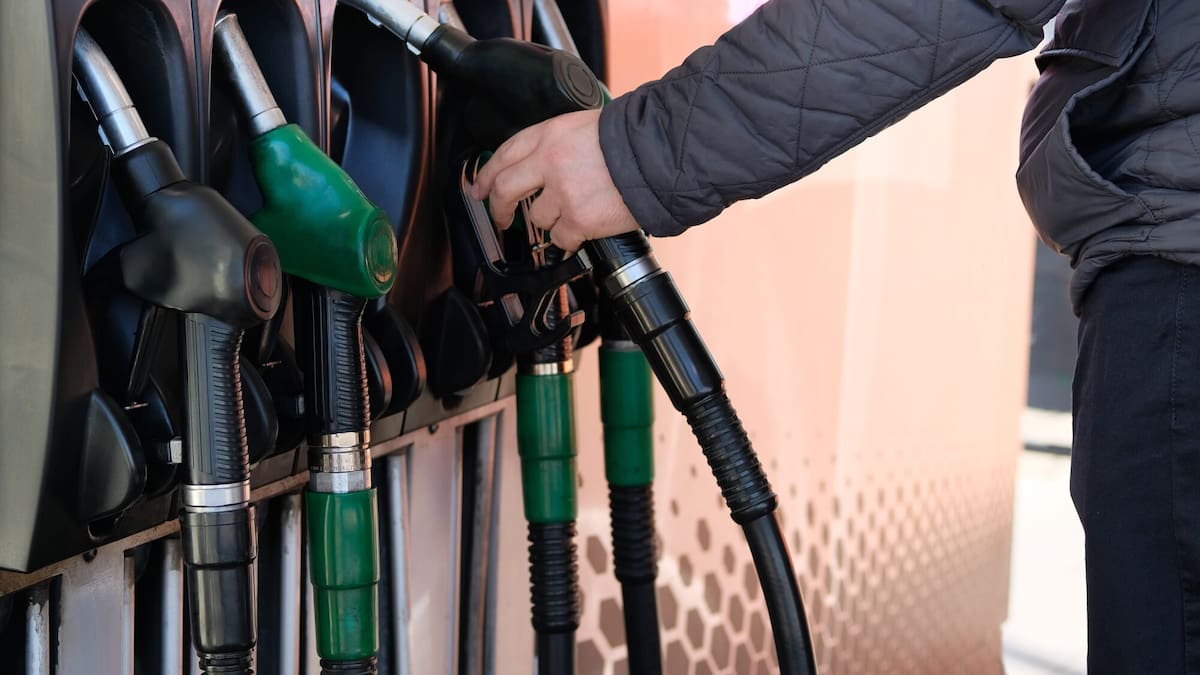
In New Zealand on Wednesday morning, the Gaspy website showed the price of diesel was $3.51 on average – more expensive than the price of unleaded 91 priced at $3.43.
David Hill, general manager of Hawke’s Bay’s Emmerson Transport, said its fuel bill had gone up 110% and the company had no choice but to pass that on to its customers.
“In the 35 years I’ve been involved in the road transport industry, we’ve never seen increases of this magnitude,” he said.
“Most operators obviously are having issues with funding that.”
Hill said prudent operators would take into account the “fuel adjustment factor” (Faf) and set their rates at the end of the month for the following month.
However, he said some operators were on fixed price arrangements – such as quarterly pricing – and would not be able to adjust their prices.
Hill said his company had taken a hardline approach to Faf, and its customers had been understanding.
“Most responsible corporates these days accept what the situation is and work with their providers,” he said, and the company would not do anybody any favours, “the stakeholders or our staff”, if it goes out of business over not having recovered the Faf.
Hill said the current situation was comparable to the diesel spike during the Global Financial Crisis – but even then, the New Zealand currency had a stronger exchange rate to the US dollar than now.
Tour bus operator forced to implement fuel surcharge
Meanwhile, a tour bus operator has had to implement a fuel surcharge to accommodate the growing diesel prices.
Ready 2 Roll offers tours and airport transfers in the central North Island.
Director Carleen Dahya told Morning Report it had seen nearly a $100 increase at the pump in just over a week.
“Already a vehicle that was costing us $140 to fill up a week-and-a-half ago is now $250.”
Dahya said the company was currently charging a 12% surcharge, but the effects would take time to flow through.
The surge is driven by disruptions in the Strait of Hormuz, a key route for about one-fifth of global oil and gas. Photo / 123rf
“We’re not going to start to recover that until sort of a month’s time, because we’ve honoured bookings that we’ve already got because it’s not their fault – it’s not our fault, but we’re the ones who have to wear it.”
She said even with adding the 12% on, with the cost of diesel, the numbers were tight.
“It’s going to be an interesting process moving forward, how many times we have to increase our surcharge to keep up with the fuel increases.”
Dahya said the current situation was a nightmare.
“With the diesel prices as well as road user [charges], it’s going to kill us.”
She said the company was also seeing a trend of people cancelling because of disruption the fuel crisis was having on their travel plans.
Finance Minister says tax relief won’t work
Finance Minister Nicola Willis has rejected any tax relief for the transport industry, saying it would not work.
She acknowledged the diesel price was very high, because diesel was one of the fuels that had been most disrupted by the crisis in the Middle East.
“Its cost to get into New Zealand has gone up considerably and that’s where you’ve seen the biggest price rises,” Willis said.
Finance Minister Nicola Willis. Photo / Mark Mitchell
Diesel users pay their road tax through the road user charge, whereas petrol users just pay it at the pump, as the tax is added to the price of their fuel, she said.
“The challenge we face is that if we were to take away that tax, that would put a half-billion-dollar hole in our road funding, which would only multiply every time you extended that reduction … and then we would simply not have enough funding available to maintain our roads.”
Willis said officials have also been clear that there may come a time when road users would be asked to conserve fuel.
“Our officials have been very clear that sending a price signal that you’re taking away a tax at the same time as you’re asking for restraint doesn’t make sense, it’s very contradictory.”
– RNZ