
Biofuels are being touted as the solution to Europe’s dwindling oil supplies, as the war on Iran continues to send prices soaring.

ADVERTISEMENT
ADVERTISEMENT
European Commissioner Dan Jørgensen has urged nations to outline measures to reduce the use of oil and gas, particularly in transport. It comes after ministers gathered on Tuesday (31 March) to address a global shortage of 11 million barrels of oil per day.
Much of the panic revolves around the effective closure of the Strait of Hormuz – one of the world’s biggest fossil fuel chokepoints – which carries around one-fifth of the world’s oil supply. Around 20 per cent of diesel consumed in the EU and UK comes from the Gulf region, according to commodity trading company Alkagesta.
In a letter seen by Euronews, the EU has been advised to consider biofuels as an alternative to fossil fuels, a sentiment that has been gaining momentum since the conflict in the Middle East began.
What are biofuels?
Targets for biofuels existed long before the US-Israel war on Iran. Under the revised Renewable Energy Directive, EU countries are required to achieve a 29 per cent share of renewable energy in transport by 2030, including a sub-target for renewable hydrogen and advanced biofuels of 5.5 per cent.
Biofuels are made from plant materials, and are categorised by their source.
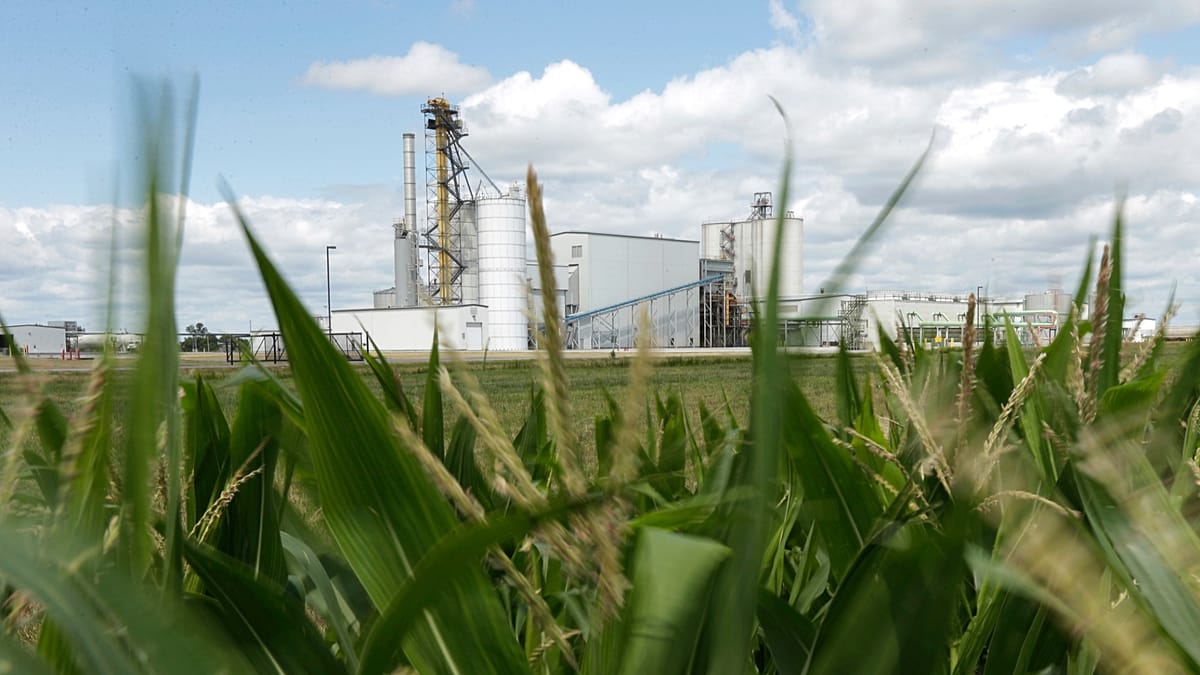
First-generation biofuels come from food crops such as corn and sugar cane, while second-generation biofuels are derived from inedible vegetation and agricultural waste. Third-generation biofuels are derived from algae.
Using plants (aka biomass) as fuel still emits CO2 into the atmosphere, but many biofuel companies claim this is the same level of CO2 that was sequestered from the atmosphere by producing the crop.
While biodiesel (made from plant oils) can go straight into your car, bioethanol, which is made by fermenting sugar and wheat, cannot be used without modifying the engine first.
Could biofuels replace fossil fuels?
A recent study by Karlsruher Institut für Technologie (KIT) declares that Europe has enough renewable resources to power transport without fossil fuels in the long term.
“If we use residual and waste materials efficiently, we can make road traffic less dependent on energy imports while reducing CO₂ emissions,” says Professor Thomas Hirth at KIT.
The report, which was commissioned by BMW AG (which has long touted the use of biofuels) found that “especially large amounts” of residual and waste materials can be used to create fuels, such as straw from agriculture, wood scraps from forestry and organic waste.
It also identified energy crops that grow on low-yield land and do not compete with food production as potential sources of biofuel.
“The really great potential is in materials like plant residues and wood fiber, which are produced in many processes anyway and can provide sufficiently climate-friendly fuels,” Professor Tomas Kock from KIT’s Institute of Internal Combustion Engines (IFKM) says.
“But that can only be successful if the production of advanced reFuel biofuels is given the necessary priority by governments and the public.”
However, climate experts are dubious that this will work. Lucien Mathiew, cars director at Transport & Environment, tells Euronews Earth that e-fuels are at best a “niche solution” in road transport, arguing that transitioning to electric vehicles (EVs) is a more sensible move.
“In EVs we have a clean, efficient technology that is cheap enough for the mass market,” Mathiew explains.
“European lawmakers should be focusing on industrial policies to deliver battery factories, secure the supply of critical raw materials and build an EV industry that can compete globally with China.”
Why are biofuels so controversial?
Biofuels are often touted as the silver bullet to weaning the world off fossil fuels, but they do come with a slew of disadvantages.
Many biofuels are made from staple crops like corn and soybeans, which can lead farmers to prioritise growing fuel over food. This can drive up global food prices and deepen food insecurity, particularly in low-income countries.
Last year, an investigation in Congo found that an EU biofuel project risked the nation’s food security, despite claims that only “degraded lands” were being used.
According to a 2023 study commissioned by T&E, Europe wastes land the size of Ireland on crops for biofuels. This land could be used to feed 120 million people, or could absorb twice as much CO2 if given back to nature.
Using an area equivalent to just 2.5 per cent of this land for solar panels, on the other hand, would produce the same amount of energy – the report found.
It’s why some climate experts describe biofuels as a “failed experiment”, and instead choose to focus on the transition to clean power through wind and solar.
“Right now we surrender vast swathes of land for crops that we simply burn in our cars,” says Maik Marahrens, T&E’s biofuels manager.
“This land could feed millions of people or, if given back to nature, provide carbon sinks rich in biodiversity. Crop biofuels are probably the dumbest thing ever promoted in the name of the climate.”
While biofuels are classed as renewables in theory, growing crops like sugarcane, soy and corn for energy has also been linked to deforestation in crucial environments such as the Amazon rainforest.
This casts doubt on whether biofuels really are carbon neutral, as growing, harvesting and processing these crops requires a substantial amount of energy (which often derives from fossil fuels).