
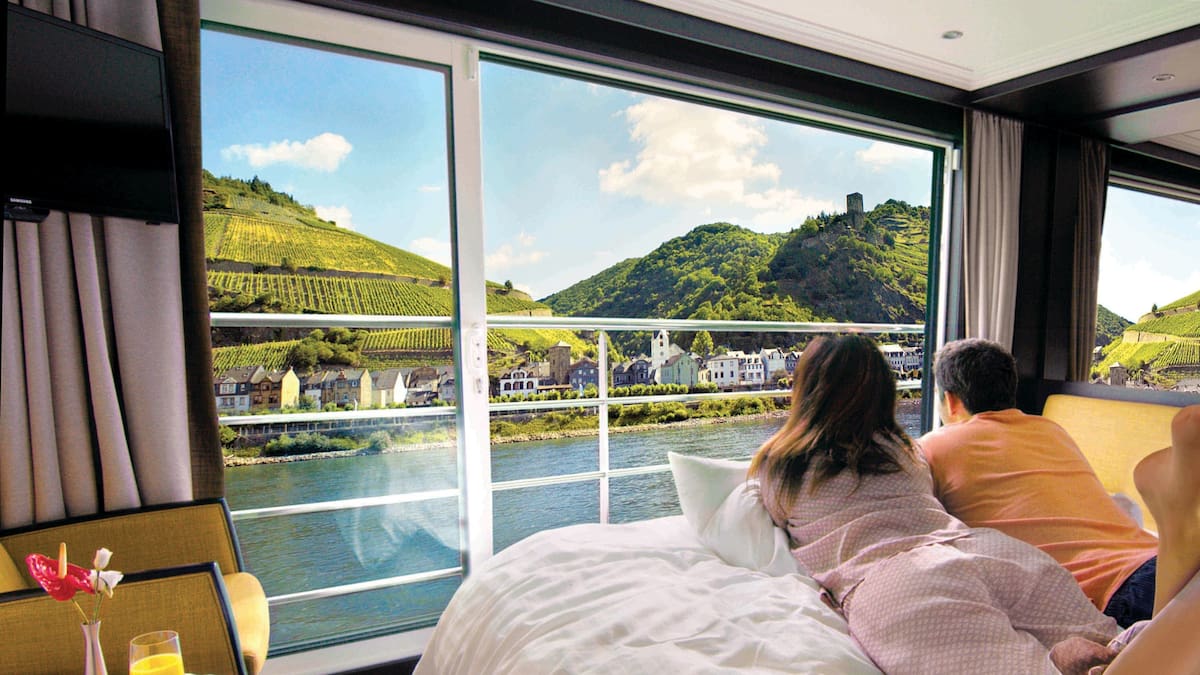
Whether it was hilltop castles in the Rhine Gorge, the burnished gold of grapevines in autumn or just watching the bustle of life on the river, the world was always spooling past us.
There’s always something to look at when you’re travelling by river, where it’s all about the journey. Photo / Joanna Wane
But cold weather meant time on the top “sun deck” was limited. It was also off-limits for several days on sections of the river where bridge clearances are particularly low.
Apart from a small gym and a modest entertainment programme, there were no “onboard attractions” and few places to escape to, other than your cabin.
At port briefings and pre-dinner cocktails, all 160 of us gathered in a single open-plan lounge. After two weeks, my social introvert side began to emerge and I started to find it all a bit claustrophobic.
At the other extreme, mega-cruisers are like floating resorts, with dozens of restaurants, pools, shops, shows, saunas and water slides. The Icon of the Seas, the world’s largest ocean cruiser, carries up to 7600 passengers and has an ice-skating rink.
A colleague in her late 20s recently went on a cruise to Alaska and loved it. There was always somewhere to escape to for time on her own, and she never felt bored.
Here are a few other things to consider if you’re trying to decide whether river or ocean is the best option for you.
Compared to riverboats, large cruise ships have more amenities – and far more people.
Which is better value for money?
The upfront fare for a river cruise is usually higher, but chances are you’ll spend a whole lot less once you’re on board. Apart from the odd massage or souvenir, the retail temptations are minimal – the only riverboats with casinos are the ones permanently anchored in port.
Depending on the level of luxury, cost estimates for a river cruise range from US$300 to $600-plus (NZ$500-$1000) per day, but typically that includes daily excursions, food and drinks, Wi-Fi, tips and featured “signature events”.
Ocean cruises are cheaper, at US$100 to $250 a day, with food and beverage packages on top of that. Tips (or gratuities) add another US$16 to $23 per person, per day.
In a recent story on Forbes.com, US travel writer David Nikel says ocean cruisers who don’t drink much, prefer casual buffet dining and like to explore ports independently can keep costs surprisingly low.
“For vacationers who want the ship itself to be the destination or who are simply seeking the lowest possible fare for a week at sea, ocean cruising will continue to win.”
Do river cruises attract a different crowd?
River cruising is a sedate way of travelling that typically appeals to travellers aged 65-plus, although some itineraries, such as EmeraldACTIVE, are tailored for those wanting a little more adventure.
River cruises cost more upfront but usually include tours, drinks and Wi-Fi. Photo / Viking
On my trip, some of the couples I spoke to were a bit shocked, at first, to see so many older people with limited mobility. However, more active passengers signed up for the occasional hike, and guided e-bike trips were always oversubscribed.
The only other Kiwis were a group of four women, a decade or two my senior, who were headed to Barcelona next. They were a riot and looked like they were having a blast.
Ocean cruising attracts a more diverse demographic and is specifically targeting younger generations with themed trips and a less formal, party vibe.
River cruises appeal to older travellers, while ocean cruises target younger generations with themed trips and a party vibe. Photo / Unsplash
According to the Cruise Lines International Association, the average age has fallen to 46 – with 36% younger than 40. Of course, that’s skewed by families with young children. Riverboats are strictly adults only.
What if I’m travelling alone?
Ocean cruises are cheaper, with diverse demographics, more onboard activities, and options for solo travellers. Photo / Unsplash
On Viking cruises, the number of passengers who travelled solo doubled from 6% in 2023 to 12% in 2024, reflecting an industry-wide trend. The market has responded by introducing dedicated trips for singles, discounting prices and offering more purpose-built solo cabins – although these sell out quickly.
Now, river cruises are getting in on the act, too. Next year, Riviera Travel is launching the first-ever ship dedicated entirely to catering for singles, the MS George Eliot, which will take up to 68 guests on a seven-night European river cruise – waiving the usual (and often extortionate) single supplement.
On the social side of things, it’s easier to make connections in the more intimate setting of a riverboat, where open seating in the dining room also lends itself to sharing a table. The crew on my trip paid special attention to guests they knew were travelling alone, checking in with them regularly and introducing them to other people.
Large cruise ships can’t offer that personal touch, but often put on special events for solo travellers. There’s also a lot more to do on board, so you can choose whether to socialise or take off on your own.
I’m prone to motion sickness – how worried should I be?
It’s almost physically impossible to get seasick on a river cruise. In fact, most of the time, you’ll barely notice you’re moving. Ocean cruising can get rough, but most people find their sea legs pretty quickly.
You’ll feel the sway less in a mid-ship cabin on a lower deck. If you’re especially susceptible, avoid trips that involve a lot of time on the ocean. Good options are European cruises that sail along the Mediterranean Sea and Alaska’s Inside Passage, where the marine life you’ll see is extraordinary.
If I get sick or hurt, are there medical services on board?
Cruise ships have the equivalent of a fully staffed medical clinic onboard and can handle most situations, from minor injuries to more serious emergencies. We’re talking EKG (electrocardiogram) machines, basic X-ray facilities and a stock of common medications.
Apart from carrying a defibrillator, that’s not the case for riverboats. Crew will have first-aid training, but need to dock for shoreside medical support if required.
When one of my fellow passengers collapsed in the lounge room, we quickly pulled into port and a team of paramedics came on board. He was taken to hospital, where pneumonia was diagnosed, and rejoined the boat at our next scheduled stop later the same day.
Our cruise director was also kept busy picking up supplies from local pharmacies for a variety of minor coughs and colds.
Bugs spread quickly in close confines, but according to the Cruise Lines International Association, there’s about a one in 5500 chance of developing a gastrointestinal illness on a cruise, and you’re more likely to catch norovirus from a restaurant on land.
Scenic Crystal, Budapest The Scenic Crystal riverboat arrives in Budapest, the final destination of a 15-day cruise from Amsterdam.
New Zealand Herald travelled courtesy of Scenic on a 15-day Jewels of Europe river cruise from Amsterdam to Budapest. Scenicnz.com