
If the founder of modern nursing, Florence Nightingale, paid a spectral visit to any hospital today, she would be amazed at the advances that have taken place in medical care since her days on the wards.
Improved diagnostics and groundbreaking treatments have been hugely positive for patients, but this progress has come at an environmental cost. In the area of consumables alone, the use of heavily packaged disposables and single-dose products has skyrocketed.
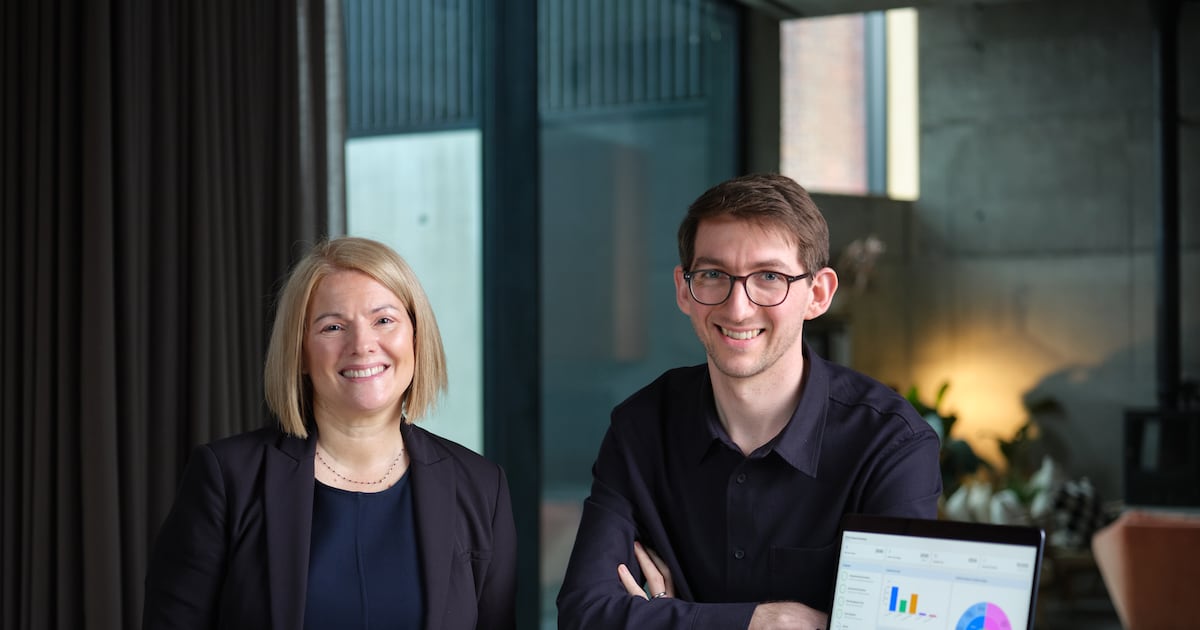
“We’ve now reached a point where healthcare and its supply chain produce more carbon emissions than the aviation sector. Between them, they are responsible for over 5 per cent of global carbon emissions, and around 70 per cent of that footprint sits with suppliers,” says Rosemary Durcan, co-founder with Dónal Adams of Nocomed, a sustainability platform built specifically for the life sciences and healthcare sectors.
The Nocomed platform is designed to do the heavy lifting on measuring, reporting, and reducing carbon emissions and is aimed at medtech and pharma manufacturers as well as those supplying and distributing within the sector.
Being able to provide measuring, reporting, and reduction information is quickly becoming crucial for these companies as healthcare organisations across Europe (and beyond) are stepping up demands for sustainability reporting as part of their tendering process. Those hoping to land contracts with the NHS in the United Kingdom, for example, must have a carbon reduction plan in place and backup data to prove it’s working.
This sounds straightforward enough. In reality, it’s easier said than done because of the heavy burden of regulation placed on the sector and the prevailing old-fashioned recording methods.
“Surprisingly, most healthcare suppliers still rely on spreadsheets, consultants, or generic tools to calculate their emissions,” Durcan says. “This in turn results in poor visibility, high costs and very little in terms of real emissions reduction. Generic carbon tools don’t work well in regulated supply chains, and Excel sheets don’t scale well either.
[ Innovation in The Irish Times: All you need to knowOpens in new window ]
“With healthcare buyers already factoring sustainability into tenders, those without credible, auditable data are being left behind,” Durcan adds. “Healthcare exists to improve human health, yet its supply chains contribute significantly to pollution and climate-related health risks. If we don’t address the emissions issue, we’re solving one problem while worsening another.”
Nocomed is a spin-out from the founder’s programme at Dogpatch Labs. This programme takes those with business skills, technical skills and bright ideas and brings them together as a group to explore start-up opportunities.
Not all participants will find a potential co-founder at Dogpatch, but Durcan and Adams quickly discovered a shared sustainability vision and complementary strengths. Durcan brought commercial acumen and the germ of an idea to the table, while Adams was able to provide the tech know-how backed up by long experience of building scalable SaaS products.
Durcan is originally a scientist who segued into the business world. She spent time with Ibec and also worked in development and strategic marketing with Enterprise Ireland before moving into private healthcare. Adams originally studied music and French at Trinity College before redirecting his focus to information technology. He has an MSc in computing and artificial intelligence from Imperial College London and has worked in software engineering roles with Apple, Nitro and FoodCloud.
“Dónal was one of the first people to stand up at Dogpatch and express his interest in getting involved in a sustainability project. So, we connected and talked at length about the possibilities of bringing my idea to life,” Durcan says.
“Before I started the founder’s programme, I had a pretty good idea of the problem we were trying to solve, having spoken to a lot of life science companies about the challenges they were facing. The challenge that cropped up most frequently was sustainability, and I began teasing out what this might look like in an industry where you can’t easily switch out products or raw materials or even change packaging without consulting the regulator,” says Durcan, who adds that in many cases, companies felt the power to make decisions related to sustainability was out of their hands.
 The difficult choices that could dramatically increase housing supply in Dublin
That said, she found a general willingness to engage with the sustainability agenda. The problem was that many of the companies she spoke to didn’t know where to start in terms of implementation. Durcan saw this gap as an opportunity to step in with a suite of industry-specific solutions that could help companies get on top of complex supply chains, streamline sustainability reporting and identify and prioritise carbon reduction projects.
Nocomed, which now has a team of seven, was founded in 2024 and has been revenue-generating since the end of last year. The company has raised €850,000 to date, including €100,000 in pitch prize money from Dogpatch, pre-start seed funding of €100,000 from Enterprise Ireland, and a further €650,000 from high-potential start-up investment and funding from private industry backers, some of whom have also become advisers to the company.
Nocomed recently rolled out its platform’s launch feature, which is aimed at those supplying the NHS. This feature allows them to automate the measurement and reporting of carbon emissions. A second feature (a carbon reduction simulator) is being piloted with customers.
The company’s revenue model is subscription-based and calculated according to customer size and the amount of help and platform features they want to use. “For us, the most important thing is building solutions alongside our customers because unless you’re actually sitting with them, there are things you can’t possibly know about their business,” Durcan says.
“I think the sustainability conversation has moved on. It’s no longer about just becoming greener. It’s now about how companies make their businesses more sustainable in themselves while reducing carbon emissions and costs and increasing efficiency and competitiveness.”