
In a famous paper titled “Fear of Floating” from 2002, Guillermo Calvo and Carmen Reinhart describe how a reflexive fear of exchange rate volatility keeps emerging markets (EM) from allowing their currencies to float freely. A lot has changed in the years since then. Most EMs these days are close to having freely floating exchange rates, restricting intervention to episodes of extreme volatility like COVID.
There’s a few notable outliers to this. Argentina is the obvious one in Latin America. China has been moving back towards a Dollar peg after embracing more FX volatility over a decade ago. In the Middle East and North Africa (MENA), Egypt has been the most prominent pegger. Egypt’s enthusiasm for pegging the Pound to the Dollar has been a perennial pain. Global shocks come along regularly and invariably put upward pressure on energy and food prices. Egypt is a big importer of both. In the past, Egypt resisted ensuing depreciation pressure, sticking with the Dollar peg until the drain on central bank reserves grew unsustainable. An explosive devaluation followed, causing recession and years of hardship.
Yesterday’s post flagged how Egypt has broken with this tradition now. It’s allowed the Pound to fall sharply and early against the Dollar, avoiding the kind of turbulence that’s inevitably engulfed the country at a later stage in past years. That’s incredibly commendable. Devaluation is politically costly. It adds to price pressures in the short term as imports become more expensive. But it’s infinitely preferable to the kind of explosive devaluation that’s bedeviled Egypt in the past. So I want to give a really big shout-out to Egypt and its government. They’re doing the right thing.
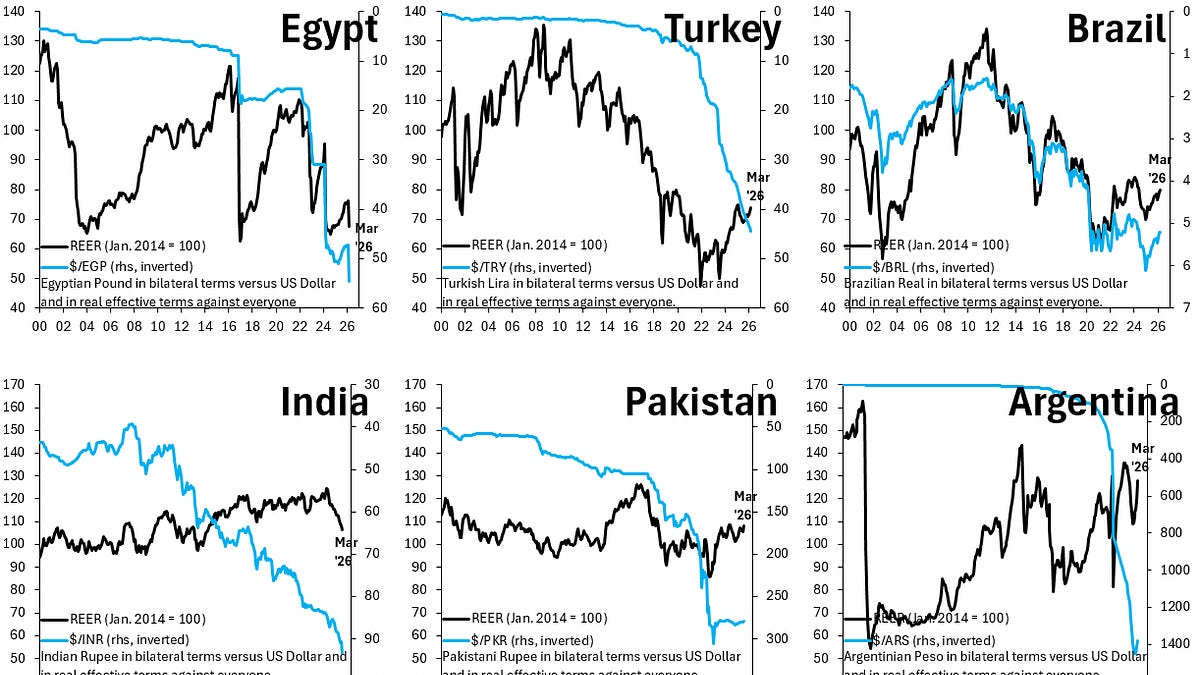
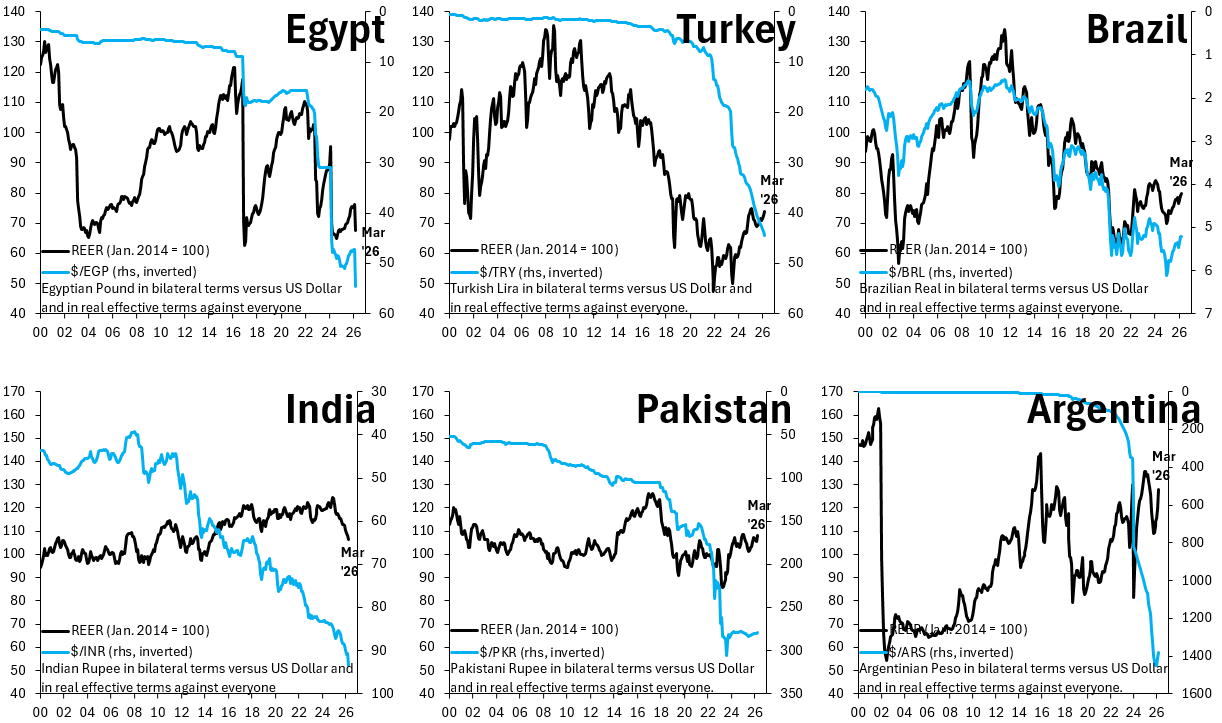
The panel of charts above shows just how unusual Egypt is. Turkey is busy fighting depreciation pressure and has even sold and swapped some of its gold to bolster its official foreign exchange reserves. Pakistan is also stuck pegging to the Dollar. Among energy importing countries in the charts above, only India has allowed its currency to fall, though it’s always had less “fear of floating” than Egypt or Argentina. It’s really impressive how Egypt has broken with the past in this shock.